


Today is Chapter 19 of my serially published Book on Substack, “From Volcanoes to Vitality.”
Black Friday Sale for Aurmina: Lisa, Scott, and I just learned that tomorrow is something called Black Friday—a day when even remotely competent businesses offer nice discounts to their customers. We are new at this, so we’re not entirely sure whether the tradition is about generosity, psychology, or not-so-gentle “arm-twisting.”
Our intentions, for what it’s worth, are simple: gratitude!
Aurmina is taking off, people are sending the kindest messages in appreciation of the product, and we’re honestly just thrilled (and not entirely shocked) that this little company we built is helping people.
So we’re offering 25% off every bottle, with no limit on how many you can purchase.
Now get this: The marketing geniuses at Aurmina are starting something called “Thankful Thursday,” which begins today, runs through Black Friday, and continues through Cyber Monday! Enjoy.
Discount codes: THANKFULTHURSDAY, BLACKFRIDAY, CYBERMONDAY (can use any)
Note, the discount is better than those included in the 3-pack and 6-pack bundles we were selling before we realized how any of this works. So please take advantage, my purified, structured, mineralized water-loving friends.
And in the spirit of complete transparency—and humor—if there were any chapter in this book that might look like a psychological trick to get you to buy a water purification and structuring product… it would be this one.
Fun fact: a draft of this chapter was written before we even created Aurmina. So if it’s a marketing scheme, it’s the most accidental one in publishing history.
Ok folks, we’ve now examined the growing crisis in our soils: widespread trace-mineral depletion combined with rising heavy-metal burdens. Now we turn to something even more concerning: our drinking water.
Yes, it gets worse. But don’t despair. This book isn’t about doom—it’s about solutions, and this chapter is where they start to become visible.
The Problem
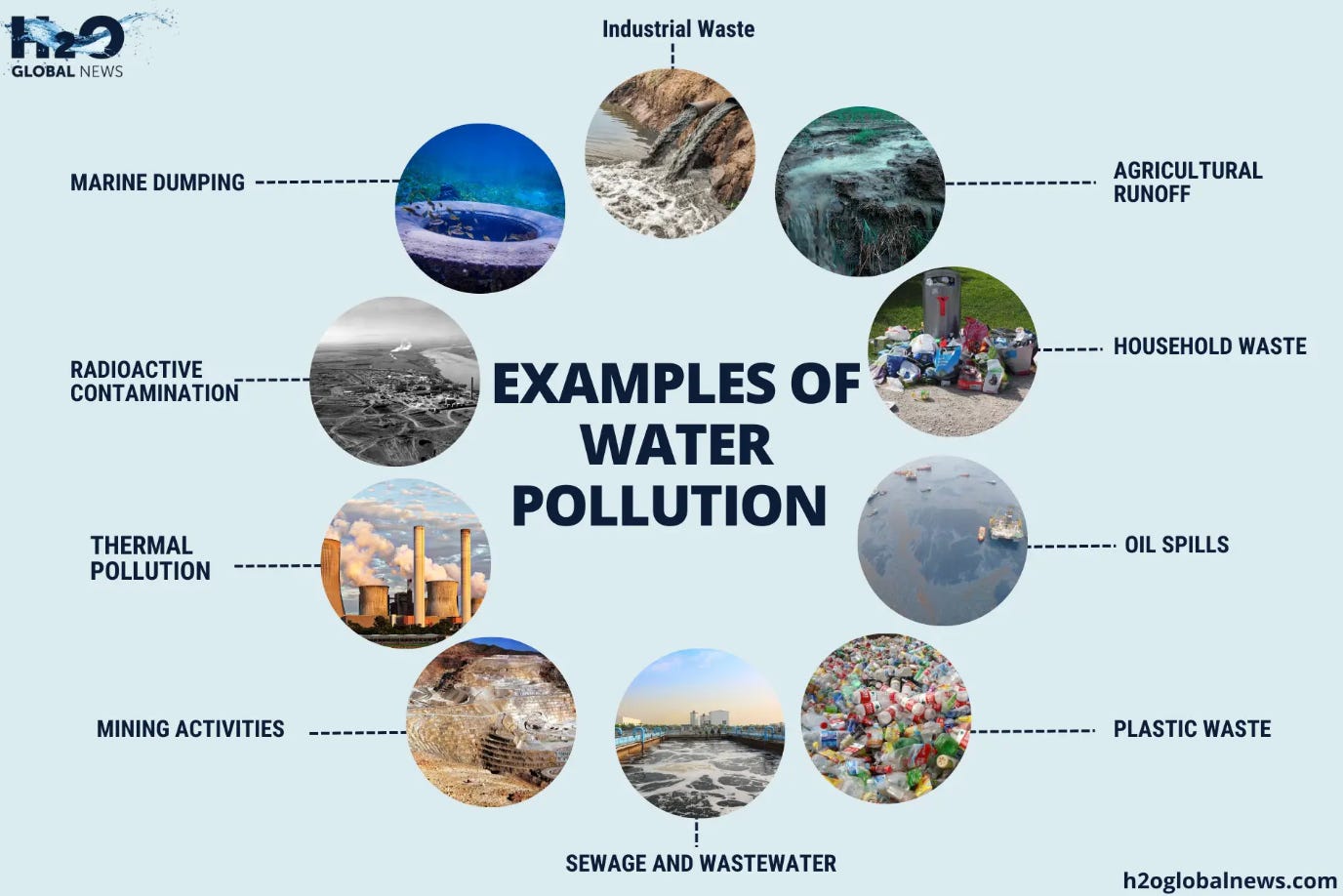
Testing of U.S. aquifers has detected thousands of different chemicals in drinking water. More than 100,000 chemicals are used today, with over 1,000 new ones added each year. The range of substances that end up in our water is staggering — from heavy metals and industrial byproducts to pharmaceuticals and microplastics.
Municipal water treatment plants remove many of these pollutants to varying degrees, but substantial gaps remain, especially for “contaminants of emerging concern” that aren’t routinely tested or regulated.
How Polluted Drinking Water Sources Have Become
Globally, over 1.7 billion people rely on drinking water sources contaminated by feces and other pathogens, and an overall 26% of people worldwide lack access to safe drinking water.
In the US, millions depend on sources contaminated with excessive heavy metals and per- and polyfluoroalkyl substances (PFAS) —a large family of man-made chemicals used since the 1950s for their nonstick, water- and grease-repellent properties (think nonstick cookware, stain-resistant fabrics, food packaging, firefighting foams). They’re nicknamed “forever chemicals” because the carbon-fluorine bond makes them extremely persistent in the environment and in our bodies.
Other major contributors include untreated wastewater, industrial discharges, agricultural runoff, and deteriorating infrastructure. Up to 80% of the world’s wastewater returns to the environment without proper treatment. Oof.
Commonly detected contaminants include arsenic, lead, uranium, PFAS, pharmaceuticals, pesticides, nitrates, fracking fluids, disinfectant byproducts, microplastics, pathogens (bacteria, protozoa, viruses), and more.
What Water Treatment Removes—and What It Doesn’t
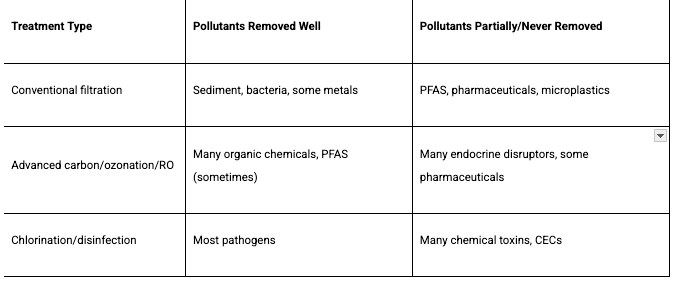
Conventional municipal water plants typically remove 85%+ of solids, most pathogens, some heavy metals, nitrates, and disinfect most bacteria. Advanced treatments, such as carbon filtration, ozonation, reverse osmosis, or advanced oxidation, can reduce specific “contaminants of emerging concern” (CECs) and micropollutants (like pharmaceuticals, PFAS, and some pesticides).
Still, removal rates vary from <50% to ~99% depending on substance and plant technology (Editor note: you might want to call your local plant to see how “high-tech” they are - or you can just “take matters into your own hands” and purify it yourself using Aurmina).
Many toxins—including endocrine disruptors, pharmaceuticals, antimicrobial-resistant bacteria, microplastics, and some industrial chemicals—are only partially removed or pass through most plants.
Pollutants/Toxins Not Routinely Tested For
Despite water safety laws, thousands of chemicals found in the water supply are not routinely monitored or regulated. These include:
Pharmaceuticals (antibiotics, hormones, antidepressants)
Endocrine disruptors (phthalates, bisphenol A)
Industrial byproducts (PCBs, volatile organics)
Microplastics and nanoplastics
PFAS and related fluorinated compounds (many are still unregulated)
Newly identified “contaminants of emerging concern” (e.g. flame retardants, illicit drugs, new pesticides)
Many natural toxins (algal toxins, mycotoxins)
Resistant pathogens and genetic material (viruses, antimicrobial gene fragments)
Uncharacterized organic/chemical pollutants from agriculture, fracking, mining
Municipal vs. Bottled Water: Differences in Contaminant Management
Municipal Water Industry
Regulations: Must test for a list of ~100 EPA/Safe Drinking Water Act-regulated pollutants; must meet maximum contaminant levels (MCLs).
Testing: Routine, but limited to what the law requires. Most emerging pollutants, pharmaceuticals, PFAS, and microplastics are omitted
Treatment: Multistep (coagulation, filtration, disinfection, sometimes advanced processes), but most don’t have technologies to remove all CECs efficiently.
Transparency: Utilities publish annual water quality reports.
Bottled Water Industry
Regulations: Regulated by the FDA; only required to test for about half as many contaminants as municipal systems.
Testing: Focused on pathogenic microbes, lead, arsenic, and major contaminants. Frequently less stringent than municipal rules.
Treatment: Can range from basic filtration/disinfection to advanced reverse osmosis or distillation.
Sources: Can include municipal tap water, well/spring water, or other; the source may still be vulnerable to untested/unregulated pollutants.
Transparency: Typically discloses less data; seldom tests for PFAS, microplastics, pharmaceuticals, pesticides, etc.
The most common contaminants in tap water and bottled water vary somewhat, but there is significant overlap. Here’s a breakdown of typical contaminants found in both:
Most Common Contaminants in Tap Water
Chlorine & Chloramine - added as disinfectants. Can react with organic matter to form disinfection byproducts (e.g., trihalomethanes).
Lead - from aging pipes, especially in older homes or cities. Highly toxic, particularly to children.
PFAS (Per - and polyfluoroalkyl Substances) - “Forever chemicals” used in non-stick, waterproof, and stain-resistant products, linked to cancer, hormone disruption, and immune system effects.
Nitrates/Nitrites - often from agricultural runoff (fertilizers). Dangerous for infants (can cause “blue baby syndrome”).
Microorganisms (Bacteria, Viruses, Parasites)- rare in treated water but possible with infrastructure failures or floods.
Heavy Metals (Mercury, Arsenic, Cadmium) - naturally occurring or from industrial pollution.
Fluoride — added for dental-health purposes in some regions. Although often described as “controversial,” in my view it shouldn’t be: it simply doesn’t belong in our drinking water (a point I discuss further in the book).
Most Common Contaminants in Bottled Water
Microplastics - found in the majority of bottled water brands. Originates from bottle packaging and caps.
Disinfection Byproducts - If bottled water is sourced from municipal supplies (as many are), it may contain residual chemicals like chlorine or byproducts.
BPA and Other Plastic Leachates - from the bottle itself, especially when stored in heat or sunlight. BPA is an endocrine disruptor.
PFAS - Found in some bottled waters. Can enter through source contamination or bottling process.
Heavy Metals - depending on source and bottling practices.
Fluoride - some bottled water brands contain added fluoride; others do not.
Bacterial Contamination - less common, but has occurred due to poor storage or handling.
The Kory Family “Commercial Bottled Water” Purity Test
OK, now we are going to give an example of what precipitates out of various commercial bottled water brands, and it is going to unsettle you.
Again, as above, municipal water is regulated by the EPA and must be tested for levels of over 100 contaminants, while the bottled water industry is regulated by the FDA, which appears to be more “corporate-friendly” (understatement) because it only requires testing for half as many contaminants as the EPA.
Luckily, most bottled water is just filtered tap water that is put into plastic bottles. Shocker right? Here you were, thinking that your bottled water was “better than tap water.” Right. Sure.
The Purity Test
A few weeks ago, Lisa and I were experimenting with mineral supplement dosing. Know that I am a sparkling water/carbonated water addict (have my own carbonator and drink nothing else). Please don’t start with me on the supposed harms of this habit of mine? Please?
Anyway, we were on a trip, staying at a friend’s guest house in Maui, and had gone to the supermarket to buy a bunch of sparkling water for the week. Lisa loves the “ABC” brand, while I love the “XYZ” brand (or did). I asked her to make me a “supplement drink,” so she filled a glass with ABC and another with XYZ, then added two teaspoons to mine and one to hers.
She drank hers while I was doing something else, and when I finally came to the kitchen to drink it, I noticed my glass of XYZ water had turned yellow. “Why is it yellow?” I asked. “Does the higher dose of minerals make it yellow? She looked at her glass, then looked at mine, and she said, “I don’t think so because mine is clear. I don’t know why yours is yellow.”
I took a sip, and it had that usual “lemony” taste you get with higher-dose minerals. But the yellow tint bothered me. Then I realized the difference might be simple: the ABC brand was likely “cleaner” than the XYZ brand—whether in terms of actual contaminants or just benign mineral hardness, clay, or microscopic organic particles that are harmless but not invisible..
Then, a brilliant idea popped into my head. “Hey Lisa, you know what we should do? Let's buy up all the brands at the supermarket, treat each one with Aurmina, let them sit overnight, and then video them to see how different they are, so we can find out which ones are the “purest.”
What we found was… not good (solely in terms of a visual assessment, not necessarily chemical). Either way, though, it leaves you with the opposite emotion of “reassuring.”
In the “bottled sparkling water test” I will share below, note that I ensured no brands could be identified in the screenshots I took from the video (I don’t really need the entire bottled water industry after my ass).
Out of the ten we tested, only one remained clear, which, oddly, was the exact brand Lisa had always bought at the store (her famous “intuition” rears its head again).
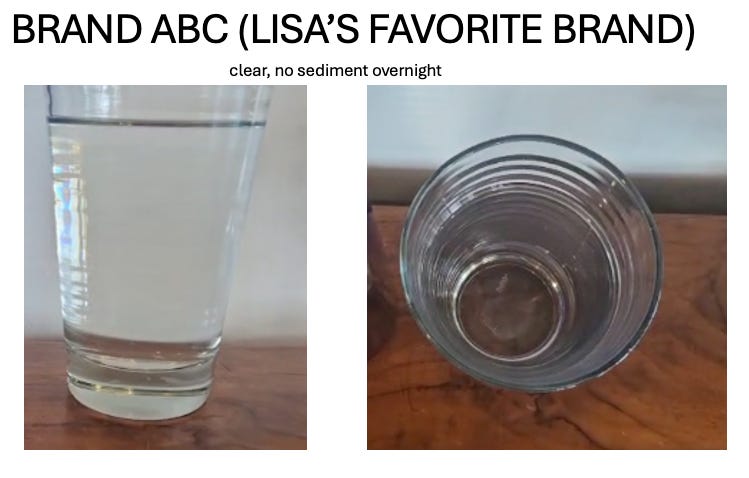
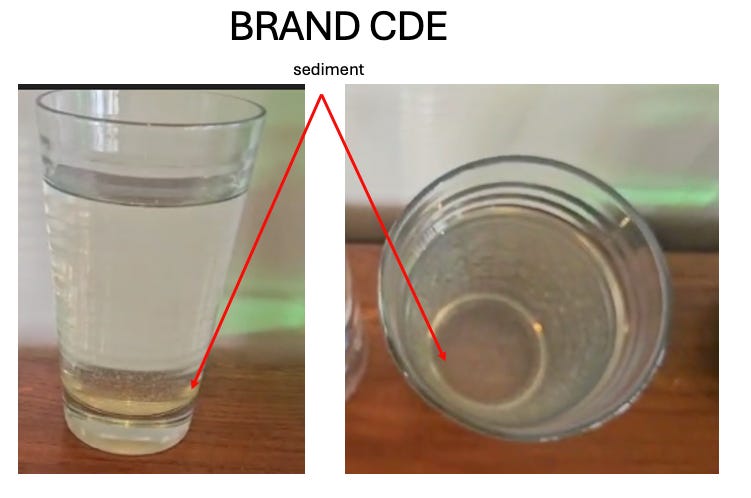
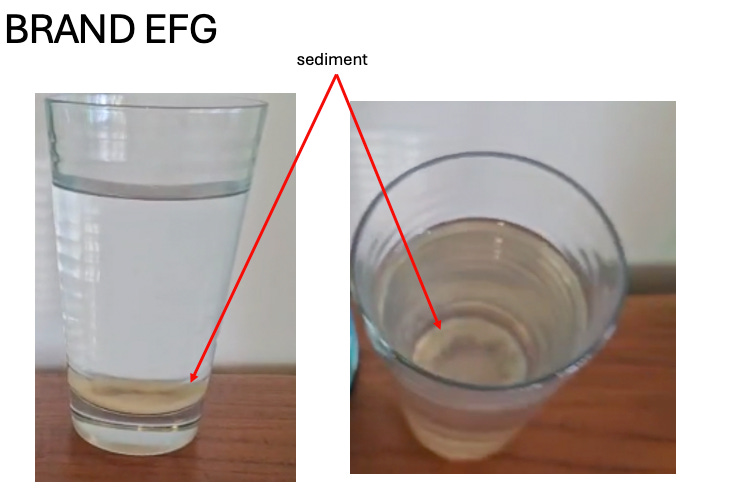
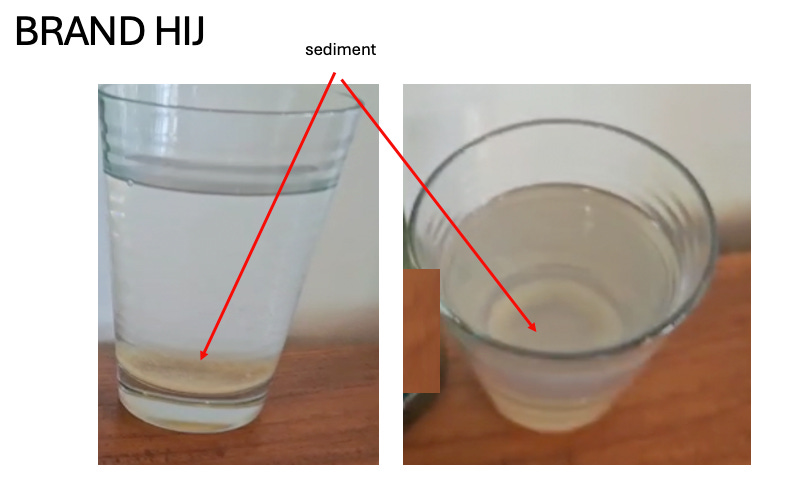
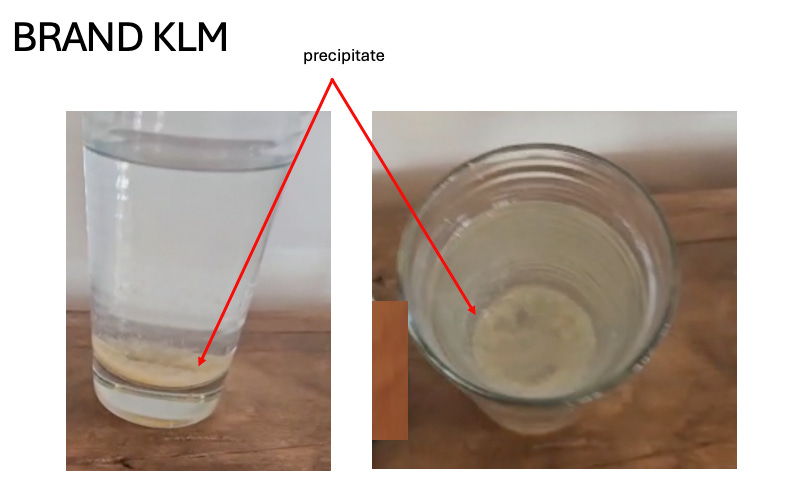
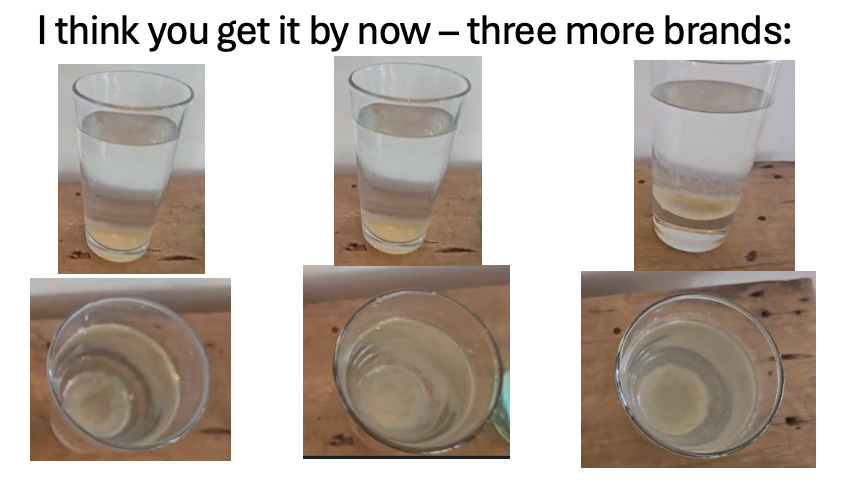
**Disclaimer - we did not test the precipitates that formed to identify the composition of potential contaminants. Reason: It is expensive and burdensome because you have to test each contaminant individually.
All I can say is that Lisa now refuses to drink anything but ABC brand sparkling water. When we go to dinner, if they don’t have it, she doesn’t drink any water. Meanwhile, I grin and bear it, order the XYZ, and try to block the images above from entering my brain. Yeesh.
Now, although we didn’t test the precipitants, it was abundantly clear to me that it doesn’t even matter as long as I treat my water with Aurmina first and then filter it; all the disturbing possibilities of what could have been in there are removed. The phrase “out of sight, out of mind” has never before held such importance.
The List Of “Disturbing Possibilities” That Aurmina Removes
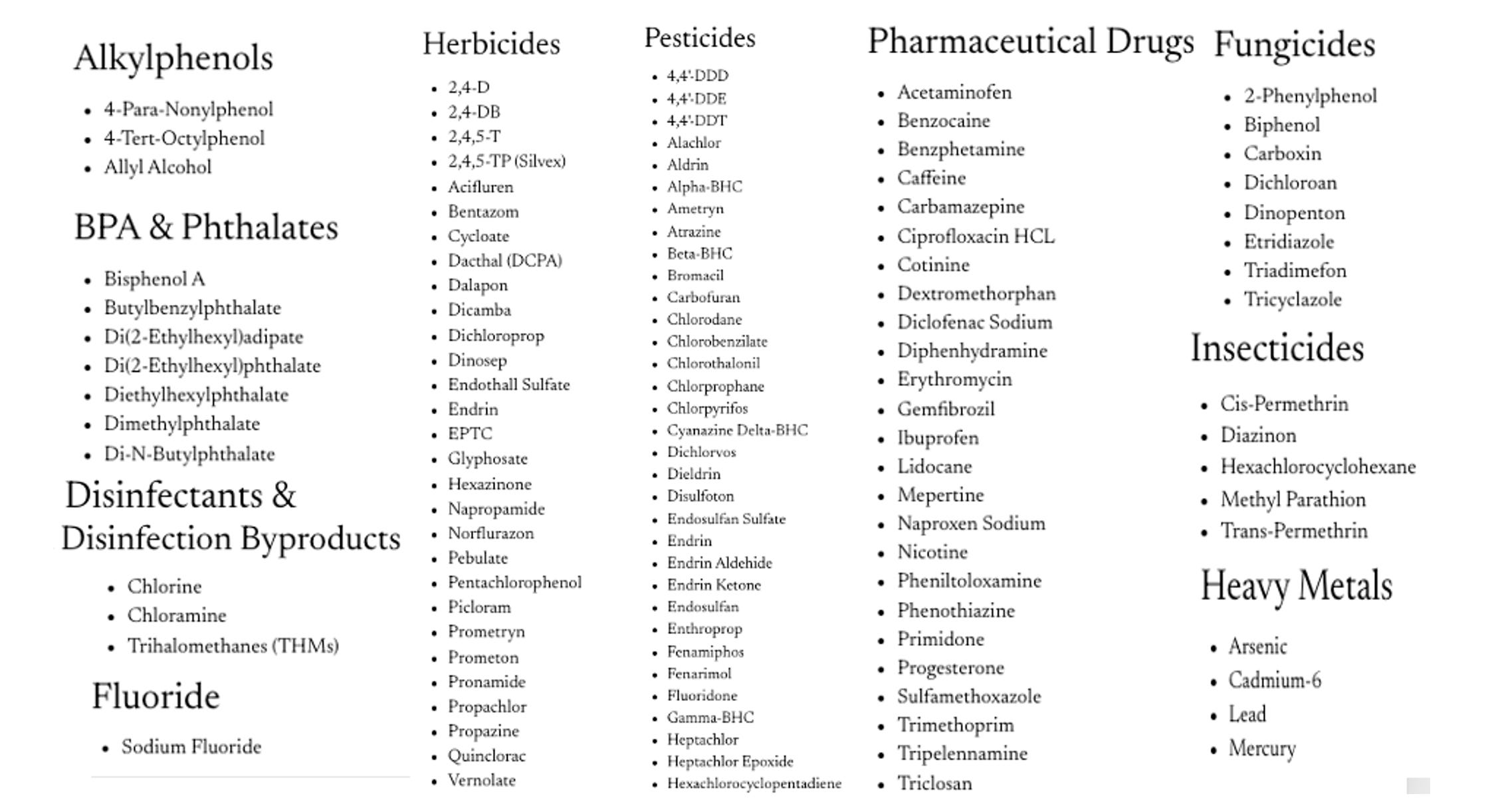
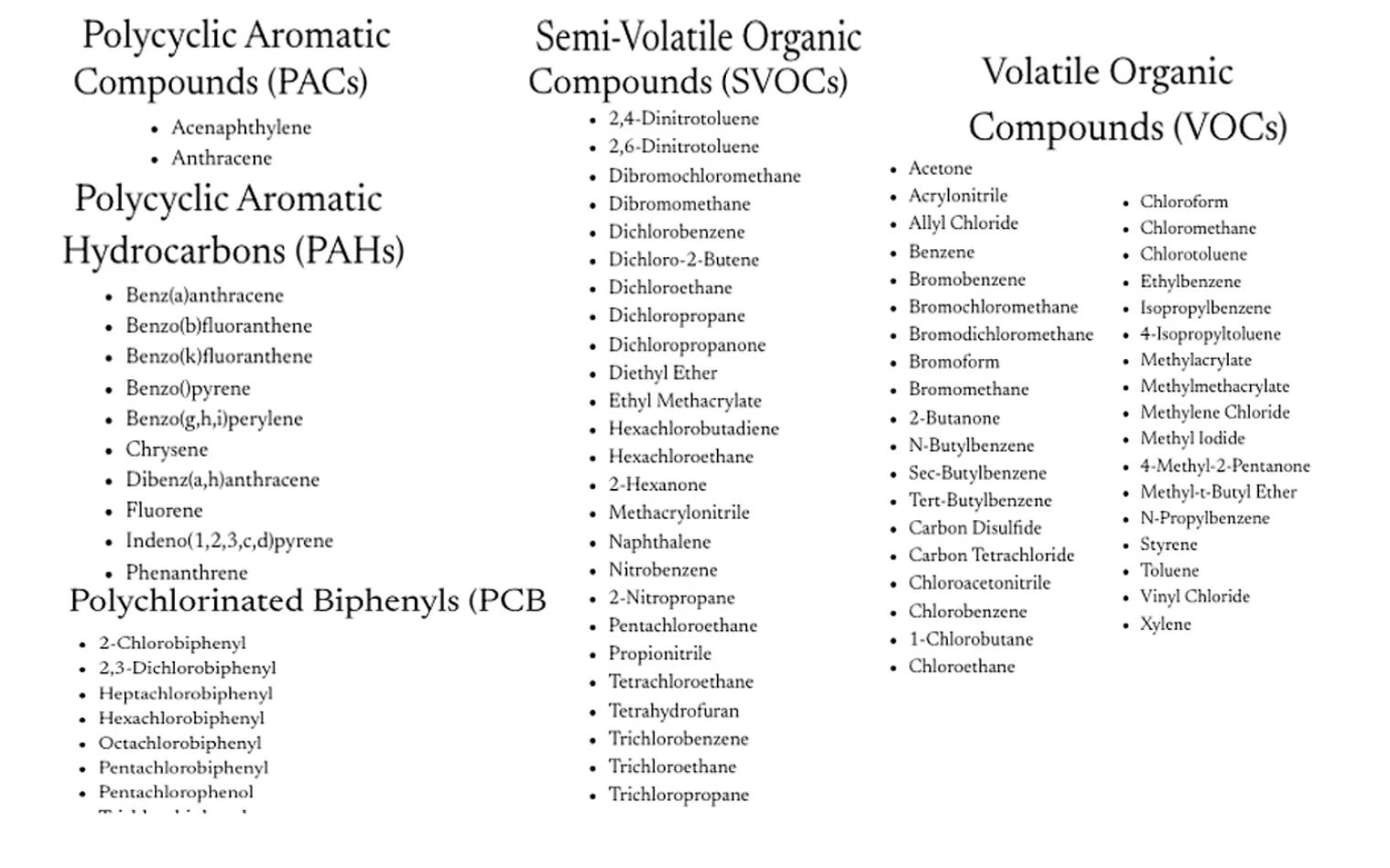
What I want “out of sight” is the below list of the 250+ contaminants that Aurmina can neutralize and/or remove from your water (shown via extensive, 3rd-party testing):
Why This Matters
Our water supply faces serious contamination issues that demand action. Small amounts of toxins may seem tolerable individually, but the cumulative effect over time can be disastrous.
The reality is that most of us drink from sources contaminated with a wide variety of substances, many of which are only lightly regulated or not removed at all by standard water treatment and bottling processes. Many new or unregulated toxins — microplastics, pharmaceuticals, endocrine disruptors — routinely pass through, and testing lags far behind the reality of what’s in the water. Bottled water often proves even less stringent and transparent than municipal tap water.
The Problems With Reverse Osmosis and Distilled Water
Many people have long been aware of the problem of water purity and have thus purchased home R.O. filter systems or countertop distillers. By contrast, I am new to both recognizing (and caring about) the scope of this issue.
But if you R.O. and distiller types thought you were ahead of the game, sorry, but what you are about to learn will not be reassuring.
Health Impacts Of Drinking Purified, “Mineral-Free” Water
There is a disturbingly large body of scientific evidence of the negative health impacts of drinking demineralized water. From this review article by Frantisek Kozisek, M.D., Ph.D. et al, titled “Health Risks From Drinking Demineralized Water”, published by the Centre of Environmental Health, State Health Institute, Prague, Czech Republic, 2004, if you look at the reference list, you will see a large number of frighteningly titled studies reporting a diverse array of negative health impacts from poorly mineralized water.
Their summary of the evidence base of R.O. water studies:
From the above, consuming R.O. water for even a few months can lead to side effects such as tiredness, weakness, muscular cramps, and potentially impaired heart rhythm due to low levels of magnesium and calcium. Epidemiological studies link long-term consumption of low-mineral water to cardiovascular disorders, hypertension, osteoporosis, and complications during pregnancy and infancy. Mineral loss is compounded during food preparation, as RO water can pull minerals from foods cooked in it, further decreasing dietary intake.
Further, the commonly used ways of remineralizing R.O. water (or distilled) don’t appear to solve the problem either, from the same review:
“Possibly none of the commonly used ways of re-mineralization could be considered optimum (Ed: hello Aurmina!), since the water does not contain all of its beneficial components. In the case of borderline deficiency of a given element, even the relatively low intake of the element with drinking water may play a relevant protective role.”
Remineralization Of Reverse Osmosis, Distilled, and High-Grade Filter Systems
Remineralization filters are added to reverse-osmosis systems for one primary purpose: to improve the taste and corrosivity of water stripped to near-zero mineral content. These filters work by slowly dissolving simple mineral media—usually calcium carbonate and small amounts of magnesium oxide—into the purified water.
But the amounts they add are quite small, typically raising the TDS of RO water by only 10 to 40 ppm, which translates to roughly 5 to 20 mg/L of calcium and 1 to 10 mg/L of magnesium, depending on flow rate and contact time.
Some cartridges use sea-mineral blends or ceramic “mineral balls,” but in practice, these deliver only trace smatterings of other ions and rarely at meaningful biological levels. In short, remineralization cartridges are designed to adjust pH and hardness, not to restore the complex mineral spectrum inherent to natural groundwater or volcanic aquifers.
Basically, they add a bit of alkalinity, they soften the “flatness” of RO water, and they prevent mildly corrosive effects on plumbing. Drinking two liters per day of typical remineralized RO water might supply a handful of milligrams of calcium and a token amount of magnesium—physiologically trivial amounts, especially given that the forms they provide (carbonates and oxides) are among the least soluble and least bioavailable.
There are also legitimate concerns with the cartridges themselves. Because this is a largely unregulated corner of the water-filter market, quality varies enormously. Low-cost ceramic “mineral balls,” particularly those imported from overseas, may contain undesirable metals, and some products can create excessively high pH water without providing any nutritional benefit.
Most importantly, the presence of a remineralization filter often gives consumers a false sense of security—that their RO water is now “mineral-rich” or that it somehow replaces the nutrition lost during purification. This is simply not true. Remineralized RO water is still mineral-deficient by any biological or geological standard. It contains only a narrow handful of ions, delivered inconsistently and in forms that contribute taste and alkalinity rather than meaningful repletion.
Aurmina Minerals Actions on R.O and Distilled Water
Like remineralization filters, as I mentioned in my book, Aurmina also doesn’t add enough minerals to “supplement.” Instead, it “activates” the water, giving it a vitality akin to that of untouched natural springs. If the following sounds like marketing, it is (info taken from Aurmina website), but it is also scientifically valid.
Even at tiny doses, Aurmina’s volcanic, ionic, sulfated mineral complex reintroduces nature’s organizing intelligence into purified water through several synergistic actions:
Naturally Clarifies and Polishes Water
Aurmina’s ionic minerals form charged hydroxide “flocs” that attract and bind trace impurities, residual metals, and organics that R.O. membranes may miss — allowing them to settle out and leaving the water clearer and fresher.Encourages Structured, Coherent Water
Aurmina minerals promote the organization of H₂O molecules into more stable, hexagonally arranged clusters — sometimes referred to as structured or EZ (fourth-phase) water. This ordered state supports greater clarity, stability, and energetic harmony.Restores Natural Charge Balance
By influencing the oxidation-reduction potential (ORP) and electrical conductivity (EC) of water, Aurmina helps restore an electrochemical balance similar to that found in untouched natural springs — water that “feels” more vibrant and balanced.Revitalizes “Flat” Purified Water
Through its ionic matrix, Aurmina restores R.O. and distilled water's ability to hold and transfer subtle energy — reconnecting them to the natural vitality of living water systems.
In short: R.O. water and distilled water are clean, but Aurmina water is alive — electrically balanced, self-cleansing, and dynamically structured. Think of it not as adding minerals for nutrition, but as teaching your water how to behave like nature intended — clear, energized, and harmonized.
Point of Confusion When Using Aurmina With R.O. Filtered and Distilled Water Sources
Some people observe a yellowing of the water or staining of their glass when they add Aurmina to their R.O. or distilled water. What is going on? Isn’t such water supposed to be “pure” and thus nothing should precipitate out? Yes and no. There are two possibilities in such a situation:
The R.O. filter needs to be changed (or more rarely, the post-R.O. filter pipes), or the water is not truly distilled (unlikely).
It reflects the everyday actions of Aurmina in pure but “dead” water.
You see, reverse-osmosis (R.O.) water and distilled water, although highly pure, are also chemically “empty.” By removing everything from the water, it strips away not only contaminants but also the natural ionic minerals and charge balance that give spring and mountain waters their structure, taste, and vitality.
Thus, if you see yellow, it is occurring due to a combination of factors unique to distilled and reverse osmosis (RO) water:
These waters are mineral-free, so ionic minerals in Aurmina—such as trace iron—can more easily interact with the glass surface or they precipitate out as visible residues in the water.
Distilled and RO water have very low buffering capacity, causing their pH to fluctuate more easily when Aurmina is added. This pH instability can promote oxidation or precipitation of trace metals, resulting in a yellow or rusty color.
This can then lead to staining of the glass - The microscopic composition and texture of glass surfaces can influence how minerals bind or stain, especially under these low-mineral, variable pH conditions.
This staining is harmless and does not affect water safety or quality. It can be removed with a vinegar soak, using either plain vinegar or a 1:1 water-to-vinegar mixture. This staining does not occur when using tap, well, or other fresh water sources that contain minerals.
To help prevent staining:
Simplest:
Add the Aurmina. If the water turns yellow, pour it through a filter before drinking.More Involved:
Add about 10% fresh water (tap/well/spring) to your distilled or RO water. Then add Aurmina, let it sit for 24-48 hours, then filter.
Ultimately, the solution is to integrate a purification, structuring, and mineralization method tailored to your drinking water source. There are a few ways to do this, some easier (and more expensive) than others. To learn more about these methods (and how the Korys do it), please take a look at Chapter 23 for the products to purchase and the protocols to follow.
Next: Chapter 20: From Volcano to Validation: Independent Science Validates Themarox Purification
If you value the late nights and deep dives into all the “rabbit holes” I then write about (or the Op-Eds and lectures I try to get out to the public), supporting my work is greatly appreciated.
A Few Announcements
1) Aurmina
If you want to learn more about the water purifier we made from Shimanishi’s volcanic-mineral complex, go to Aurmina.com.
2) Upcoming Book Publications
Yup — not one, but two books are dropping from yours truly (at the same time? What?)

If, instead of (or in addition to) this Substack version, you prefer the feel of a real book—or the smell of paper—or like to give holiday gifts, pre-order From Volcanoes to Vitality, my grand mineral saga, shipping before Christmas.
And if you want to read (or gift) another chronicle of suppression, science, and survival, grab The War on Chlorine Dioxide—the sequel you didn’t see coming—shipping mid-January. On this one, I say: “Buy it before they ban it.” Hah!
Thank you for all your research and the strength of your own convictions to stand up for the truth and your values. Very thankful there are a few good men still in medicine.
Hi! I just bought a bottle and Im wondering how do you filter it (if after leaving it overnight there is some yellow water/residue)? Just a normal sieve?
and also, i understand you dont want to name the water brands that didnt come clean, but would love to hear if you can share the prefered brand from your wife, that did have good results?
Thanks!