


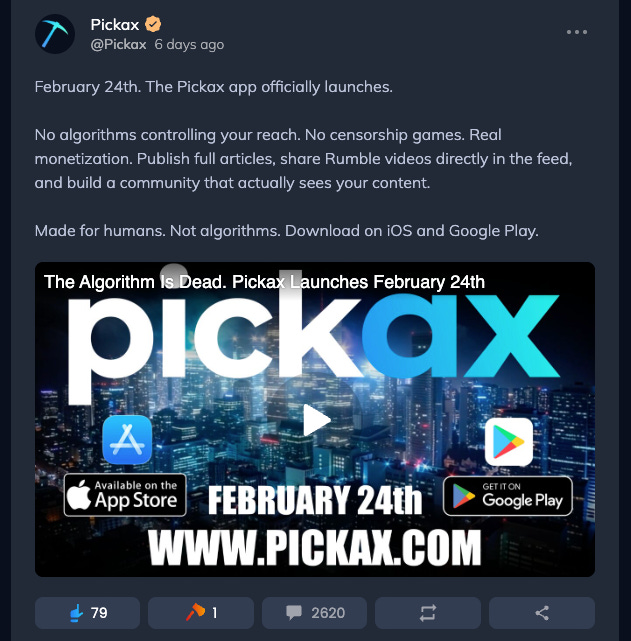
A New Platform for Human Voices (and Why I’m Joining It)
Over the last few years, many of us who write and speak publicly have learned a hard lesson: the modern internet is not a neutral space. Throttling, curating, algorithms, outright censorship, and propaganda boosting. Genuine human dialogue is drowned out by bots, trolls, and invisible moderation policies that shape what can and cannot be seen.
So when Jeff Dornik, one of the best (and most censored) podcast interviewers I’ve had the chance to speak with, and with whom I’m doing a launch interview on Pickax today at 4:30 p.m. EST, told me he was building a new creator platform around a simple idea - let humans decide what matters, not algorithms - I paid attention.
For transparency, I have no financial relationship with Pickax. I’m supporting this launch simply because I believe in the idea and in the people building it.
The platform is called Pickax. Its premise is straightforward but also radical: no algorithmic manipulation of reach, the ability to publish full-length articles (not just fragments), embedded video content directly in the feed, and a verification system intended to ensure you are interacting with real people, not anonymous accounts or automated noise. Just as importantly for writers and independent thinkers, the business model is aligned with creators: revenue sharing, affiliate opportunities, and paywalled content options that reward meaningful work rather than outrage-driven engagement.
What resonated most with me was the philosophical core. The stated goal is not to harvest data to train AI models or to engineer controversy for clicks, but to build a more human-centered digital commons where voice, authorship, and thoughtful exchange can actually flourish. That last part is key. I’m sick of the polarizing two sides to every argument when, to be honest, there are pieces of truth and honest perspectives on both sides.
Given my own experience over the past several years and the audience we’ve built together here, that vision is one I want to support. I’ll be setting up my account and publishing there as well. For those who are already paid subscribers to this Substack, I plan to offer complimentary access to any paid content I post on Pickax as a thank-you for supporting my work here (not functional yet, but will be soon).
We all benefit when more platforms exist that are aligned with creators and readers rather than control systems. I’m hopeful this one succeeds, and I’m willing to lend my voice to help it try.
Thanks for listening and hope you guys check out… Pickax!
P.S The Jeff Dornik Show on Rumble can be found here and on Spotify here (fun fact: Jeff had been kicked off Spotify prior to their bringing Joe Rogan on, after which they decided they would let free speech do its thing, and let him come back).
If you value the late nights and deep dives into all the “rabbit holes” I write about (or the Op-Eds and lectures I try to get out to the public), your support is greatly appreciated.
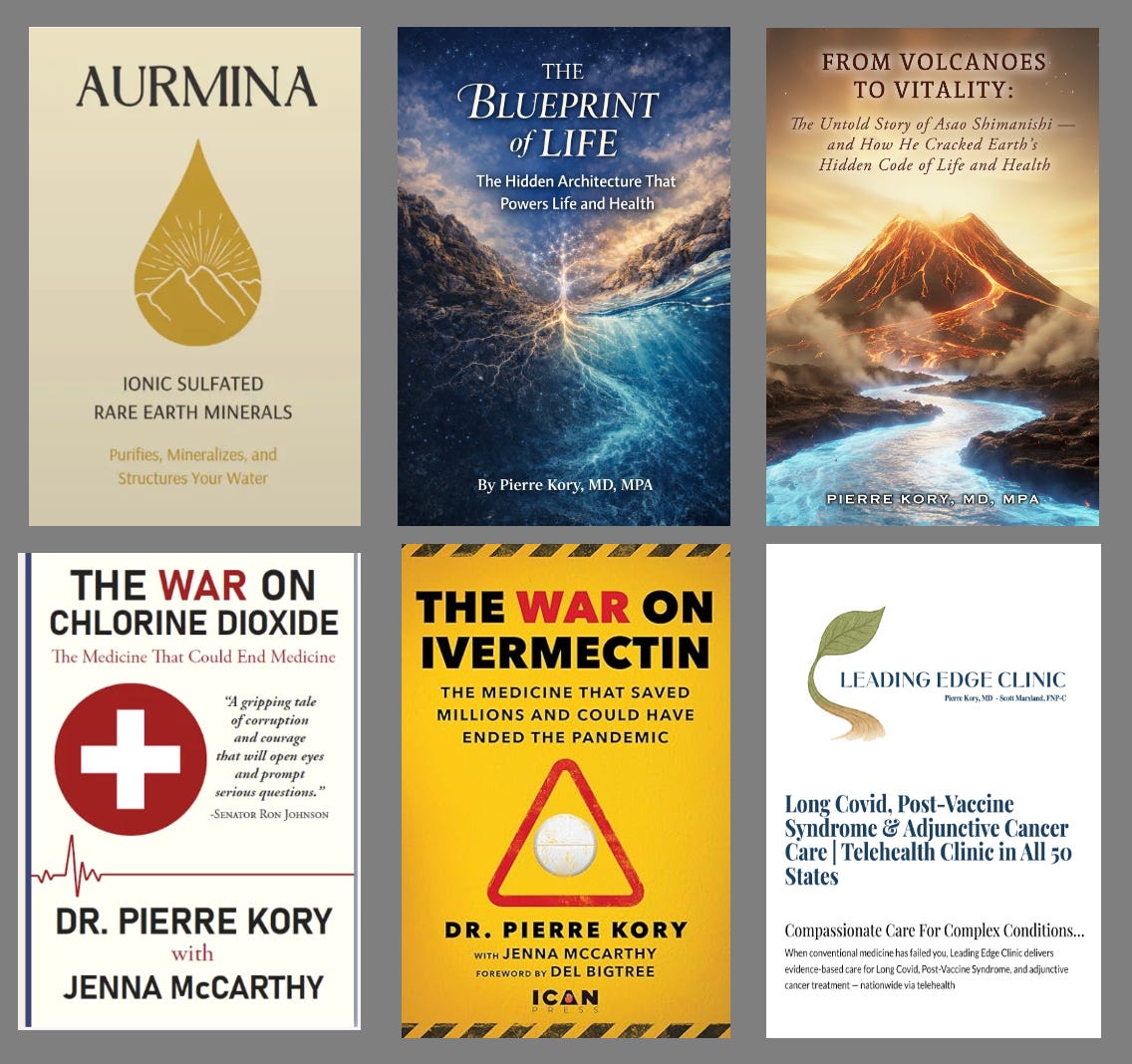
From Research to Practice - Links Below
*This* is exactly what we need. I would probably have at least ten times the audience I have now if it were a level playing field. As it is, *all* of my Substack articles have been deleted across *all* searches on nearly *all* hide engines for a couple of years now, so anyone who searches for MAA, one of my articles, or a term or phrase I've coined (e.g., "philanthropath" or "Mistakes Were NOT Made") will not see a single article from my Substack. I discussed this scorched-earth erasure of my Substack with Presearch (one of the only search engines to make an effort to manually index my work since Google, Duck Duck Go, Brave, et al eradicated it) a few months ago:
• https://www.youtube.com/watch?v=LGiztzAMeUE
"Download on iOS or Google Play"
I've been reading Substack with gritted teeth for years now, seeing through their phony "voice for freedom" reputation. They never cared about delivering a neutral platform for all voices. They just cynically saw an opportunity to cash in on the voices that the other platforms censored. They'd give the illusion of impartiality only due to the prevailing context of brute censorship. I'd love to see this fraud fall.
However. iOS and Google Play are the antithesis of a digital commons. That doesn't mean that Pickax automatically is as well, but if an app must be downloaded to use it and that app is only available through two sources that are functioning at the top of the censorship participants; two sources that have been herding us into this dystopian digital ecosystem.
Pickax has a high mountain to climb and I'm not about to lace my boots for it, especially if it requires an app to read and if the only places to get that app is via Apple and Google.