
Chapter 5: The Enzyme Enigma: The Missing Mineral Keys to Human Metabolism
We’ve mapped the genome, but not the enzymes that make it work—how many unstudied enzymes depend on minerals we’ve stopped measuring?

Encouragingly, interest is growing in the biology of trace elements not yet deemed “essential.” Journals, nutrition societies, and public-health groups—much like this book—are calling for rigorous studies, especially where population patterns or biochemical pathways implicate so-called “nonessential” minerals.
My central point is that the science around trace minerals and enzymatic activity is still in its infancy. Paper after paper suggests this is a field with far more questions than answers, and a growing number of researchers are calling for deeper study into how diverse trace elements interact with enzymes, cells, and physiology.
How Little We Actually Know
For instance, the below review highlights how far we still have to go, “Although the mechanisms of several hundred enzymes have been fully characterized experimentally and are well understood, they represent only a small fraction of the total number of enzymes found in nature… many of these enzymes are hypothetical or poorly understood (at best).”
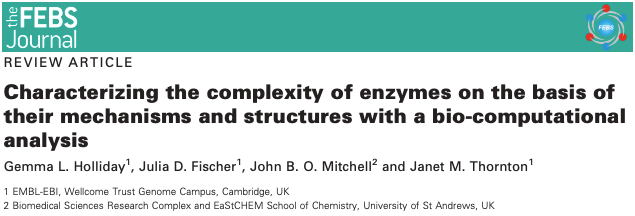
Just how small is that “fraction” that has been “fully characterized?”
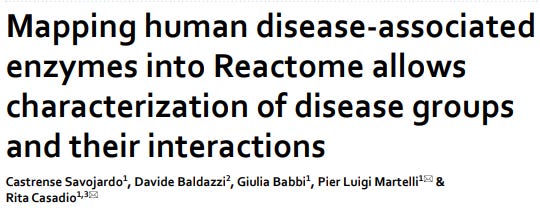
From the above study in Nature:
“The DAR (Disease and Reaction) database presently contains 1,496 human enzymes—representing only about 9% of the estimated total enzyme content of the human reference proteome.
We have only “fully characterized” nine percent of the enzymes/trace minerals that power human physiology? From the most recent version of a decades old standard reference textbook, Clinical Laboratory Diagnostics:
“More than 300 enzymes are known to require certain trace minerals (such as zinc, copper, or selenium), but “the discoveries…have played a major role in disclosing only the initial scope.”
Let that sink in: only nine percent of the enzymes powering human physiology have been fully characterized.
Let’s do some quick “enzyme math.” If 1,496 enzymes represent 9 % of the estimated 16,622 total enzymes in the human body, that means we know little about 15,126 of them. Of the 1,496 we do know, roughly 300 are dependent on an “ionic metal mineral” cofactor. So—how many of the other 15,000 are waiting to be linked to an ionic metal mineral? Which ones? How much?
A much, much more important fact about minerals and their importance to enzymes in general is that even enzymes that do not directly bind metal ions depend on the surrounding mineral-ion framework—including Mg²⁺, K⁺, Na⁺, Ca²⁺, Cl⁻, phosphate, and sulfate—which underpin the synthesis, folding, stability, and activation of all biological macromolecules.
The Big Takeaway
Here’s where it gets really interesting. I asked AI whether this knowledge gap could represent one of the largest—and potentially most beneficial—blind spots in modern biochemical science.
AI: “The likelihood that the current ‘essential’ trace mineral list is incomplete—and that a major, beneficial knowledge gap exists in modern biochemical sciences—is extremely high, particularly regarding rare and ultratrace minerals and their roles in enzymatic function.”
Mic drop.
Calls for More Research: Trace Minerals and Disease
Building on the above, the journal Frontiers in Cell and Developmental Biology published an editorial in 2023 which called on the scientific community to investigate the links between trace minerals and chronic diseases. Although associations between specific deficiencies and diseases are well documented, very little is known about the broader—and largely unmeasured—set of ultratrace minerals and rare-earth elements (REEs).
The editors posed two key questions:
1. Which cellular or molecular processes are negatively impacted by the lack of one or more trace (or ultratrace) elements?
2. How do those deficiencies relate to chronic disease states?
Their goal was ambitious: to unravel mechanisms connecting trace-element deficiencies to the initiation and progression of long-latency chronic diseases.
Epidemiological Links
Epidemiological studies continue to reveal strong connections between mineral-depleted soils and a staggering range of conditions:
• Anemia • Osteoporosis • Chronic fatigue syndrome • Goiter • Fibrocystic breast disease• Nervous disorders• Cancer• Diabetes • Arthritis• Multiple sclerosis• High cholesterol• Parkinson’s disease• ALS• Epilepsy• Bladder and kidney disease• Dysbiosis, celiac disease, IBS, Crohn’s disease• Allergies, prostate disease, dizziness, heat stress, ulcers • …and maybe even the common cold.
Summary Insight
To put it bluntly, we have mapped only the tip of the enzymatic iceberg—and barely scratched the mineral foundations beneath it. Modern science may be sitting on one of the greatest untapped frontiers in biochemistry: the intersection of ultratrace mineral cofactors and enzyme activation. Until we explore this terrain, our understanding of human metabolism will remain yet another “black hole.”
Next: Chapter 6 - The Forgotten Elements: When ‘Non-Essential’ Minerals Become Essential for Health
Upcoming Book Publications
Yup — not one, but two books are dropping from yours truly. At the same time? What?

From Volcanoes to Vitality: if, instead of (or in addition to) this Substack version, you prefer the feel of a real book—or the smell of paper—or like to give holiday gifts, pre-order my grand mineral saga, shipping before Christmas.
The War on Chlorine Dioxide: if you want to read (or gift) another chronicle of suppression, science, and survival, grab the sequel you didn’t see coming—shipping mid-January. On this one, I say: “Buy it before they ban it.” Hah!
© 2025 Pierre Kory. All rights reserved.
This chapter is original material and protected under international copyright law. No part of this publication may be reproduced, distributed, or transmitted in any form or by any means, including photocopying, recording, or other electronic or mechanical methods, without the prior written permission of the author.
There's an old adage that asks: How do you eat an elephant? One bite at a time. Dr Kory, you have one hell of an appetite.
You continue to turn over these stones that lead to the black holes you speak of. I don't know how you sleep at night with all you have put on your plate. I'm just glad you do what you do and thank you.
Super excited to have this opportunity to learn more about, again ,from you Dr. Kory
Already preordered my copy, reading before book arrives is a gift for someone like me, not very patient these days
Congratulations on your new book, it will bring you the satisfaction of hard work being finally recognized and more importantly, the satisfaction of doing good, which is priceless
Vali