


As my readers know, I have spent months writing two books totaling more than 150,000 words, trying to understand why Shimanishi spent 20 years working alone to extract minerals from black mica rock, and what the true significance of that achievement might be.
The field trial I will show you below is one of the reasons I kept going.
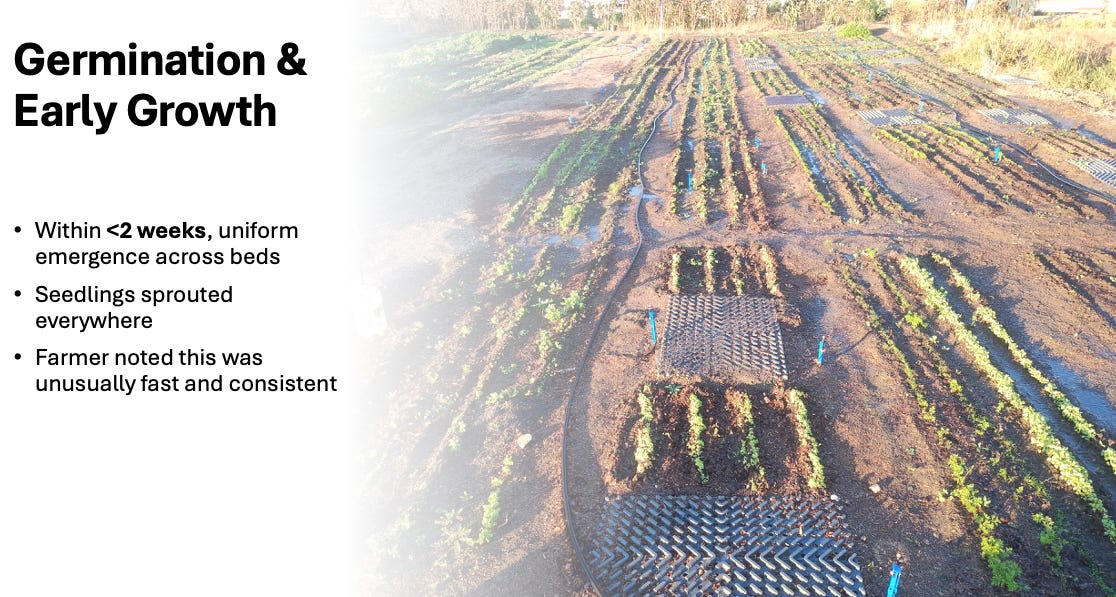
What you’re about to see did not begin in fertile soil. It began in what can only be described as near-dead ground in Temecula, California—dry, sandy, lifeless land that lies outside even the marginal conditions under which the region’s vineyards can survive. No legacy fertility waiting to be unlocked. Just the near absence of life.
What is critical to understand is this: aside from water treated with Shimanishi’s extract, almost no conventional agricultural inputs were used.
No herbicides.
No pesticides.
No biologics.
No biostimulants.
No soil amendments.
Barely any fertilizer.
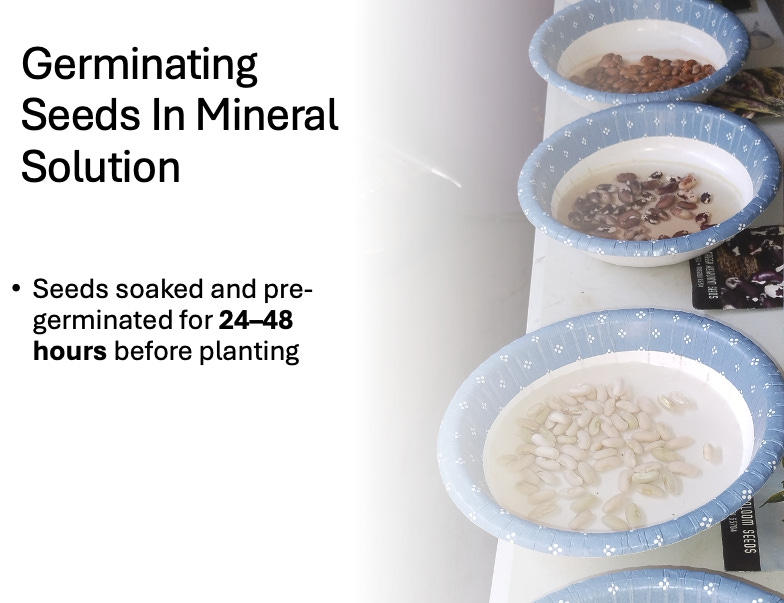
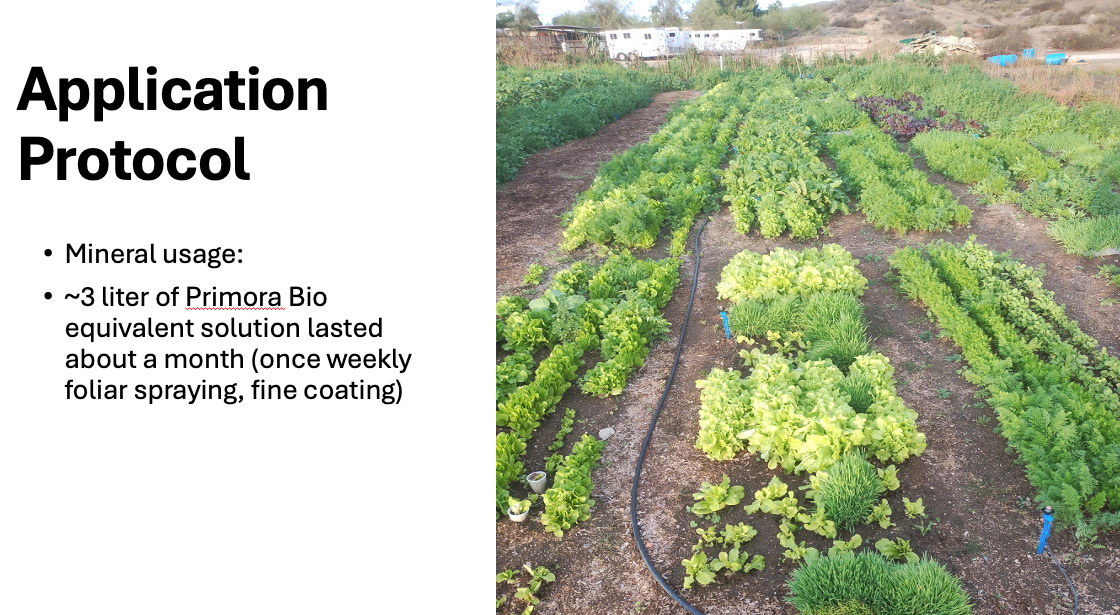
The soil was heavily irrigated 1–2 weeks before planting. Seeds went in. Once they emerged, the plants were supported with simple weekly “foliar” applications—fine misting of the plant leaves with Themarox-treated water. Mid-season, a single fish hydrolysate was applied, according to the farmers, “to enhance taste.”
That was the entire system. What followed is the reason I believe this work matters. You will see the beginning - bare, pale, structureless soil. And then you will see what it became:
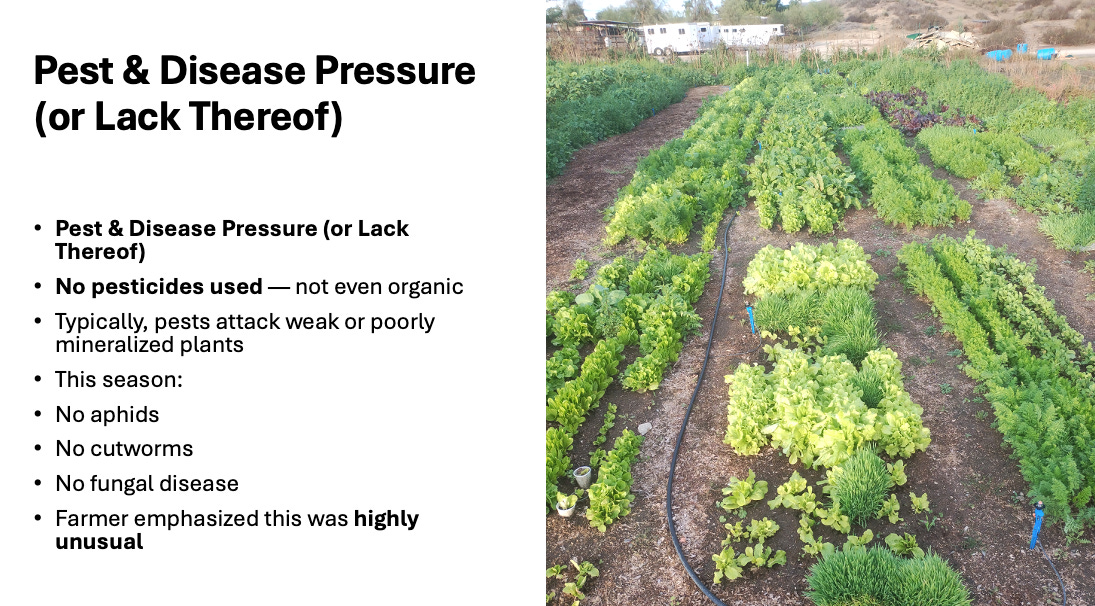
Vibrant color. Density. Structure. Yield. Not forced. Not inflated. Organized.
Little pest pressure. No meaningful disease. Minimal hand weeding.
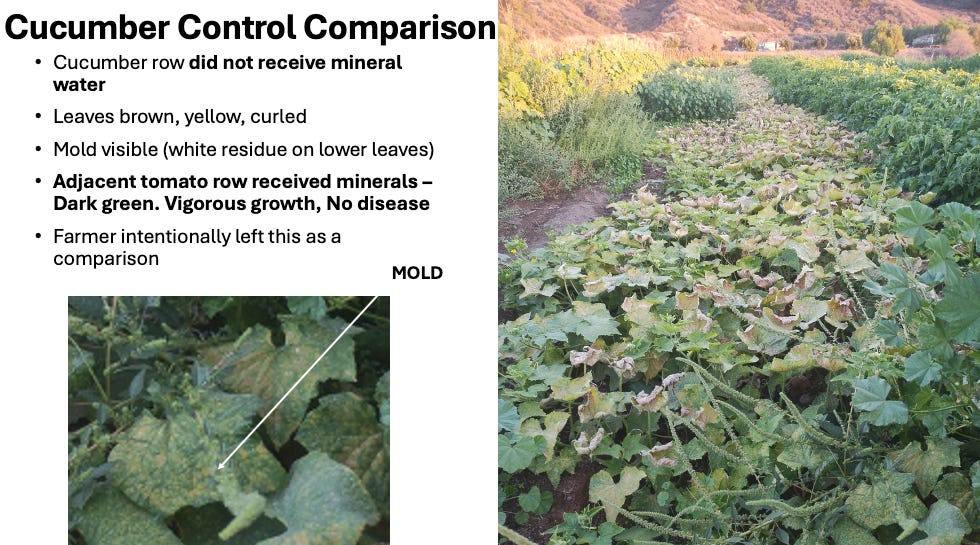
A single control row of cucumbers was planted under identical conditions, except that both irrigation and foliar spraying used untreated water. That row tells its own story: dull color, curled leaves, fungal pressure, visible stress. It looks like what we’ve come to accept as normal.
The rest of the field does not.
People came from around the area to see it, because the difference was not subtle. It was immediate, physical, and difficult to explain using the usual language of inputs and outputs. I have written thousands of words trying to describe the mechanism behind this.
But at some point, the words have to give way to something else. This is that moment. This is what it looks like when the system begins to organize again.
This field trial was conducted in Temecula, California, by the amazing regenerative farmers Patrick Raskin (Volcanna Rain) and Ryan Schumacher (Baker Creek Heirloom Seed Company).
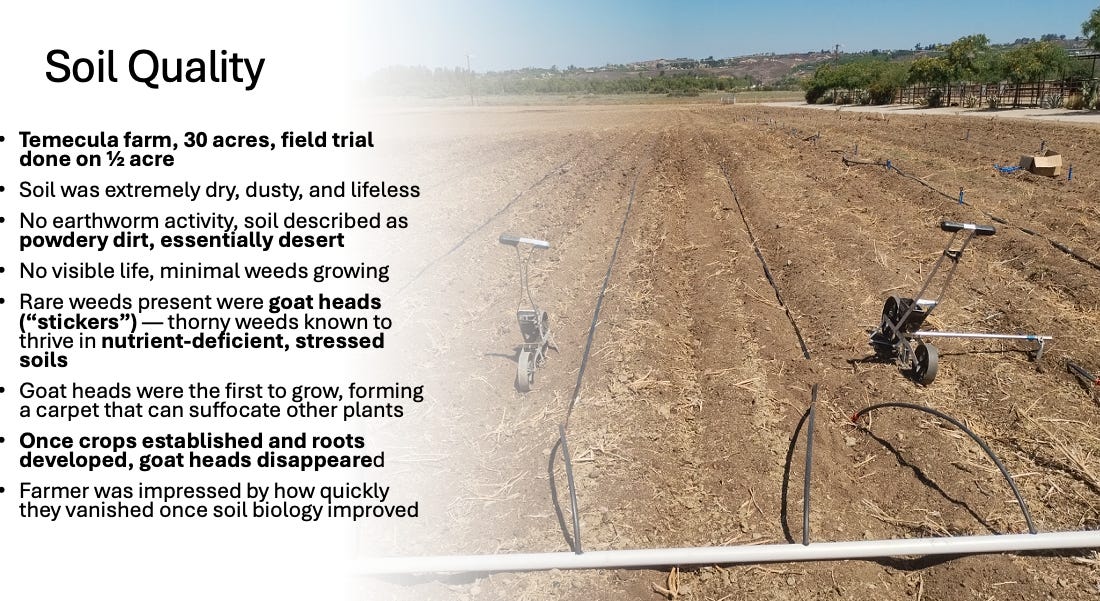
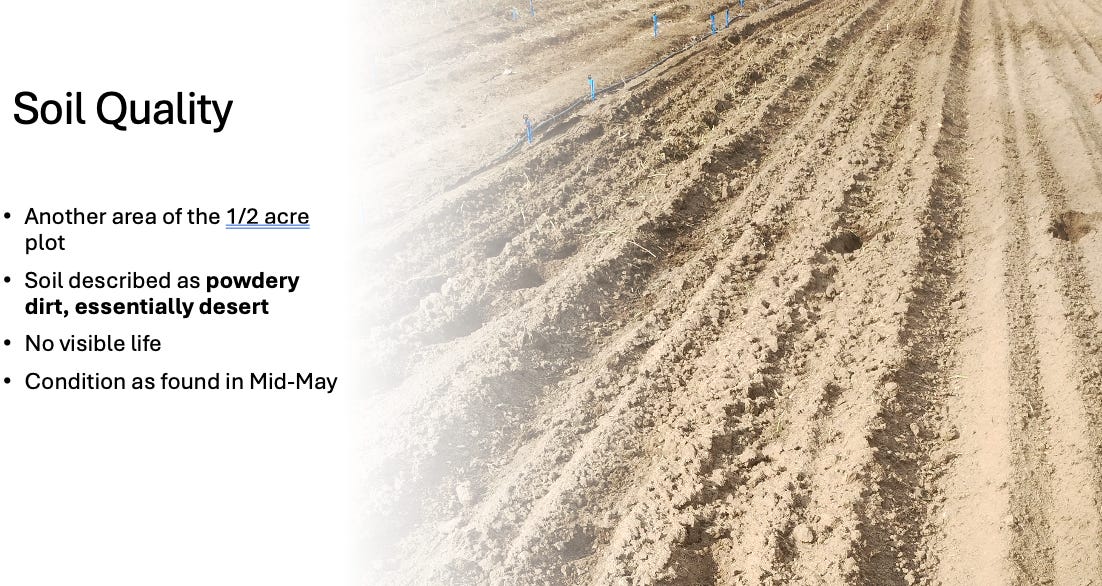
Pre-planting irrigation: added a Themarox diluted solution equivalent to 12ml of Primora Bio per gallon of water (formulation used was Rascon’s Volcanna Rain), and the soil was irrigated with 100 gallons per 1/8 of an acre - 400 gallons total to the soil. (*Note that the amount of water applied was a special use case; water volume for typical every 5 year soil spray with Primora Bio requires far less water. )
Irrigation was applied 1-2 weeks before seed planting.
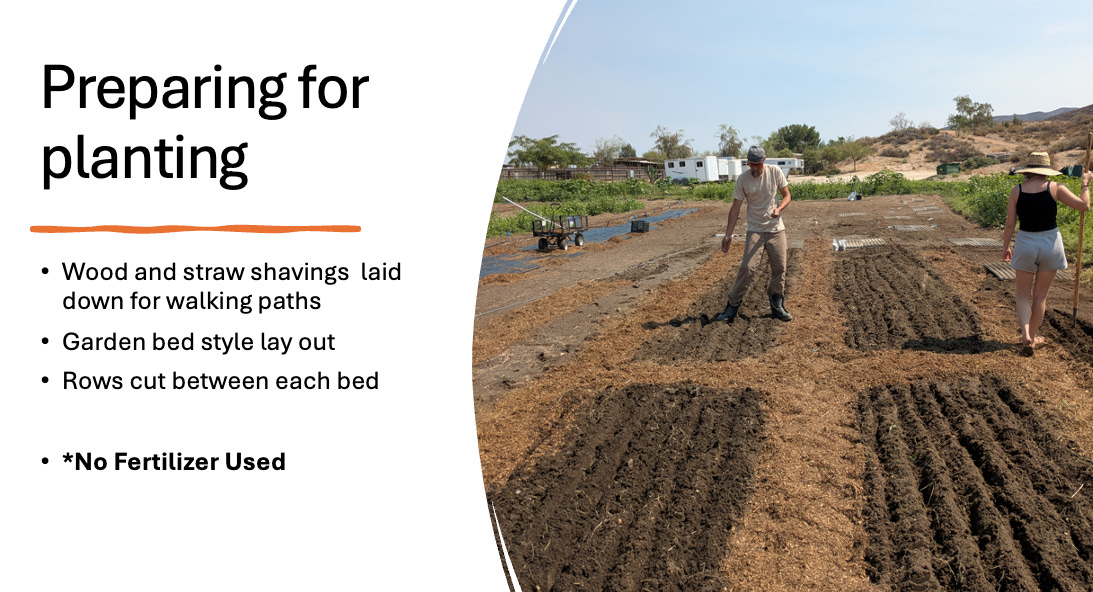
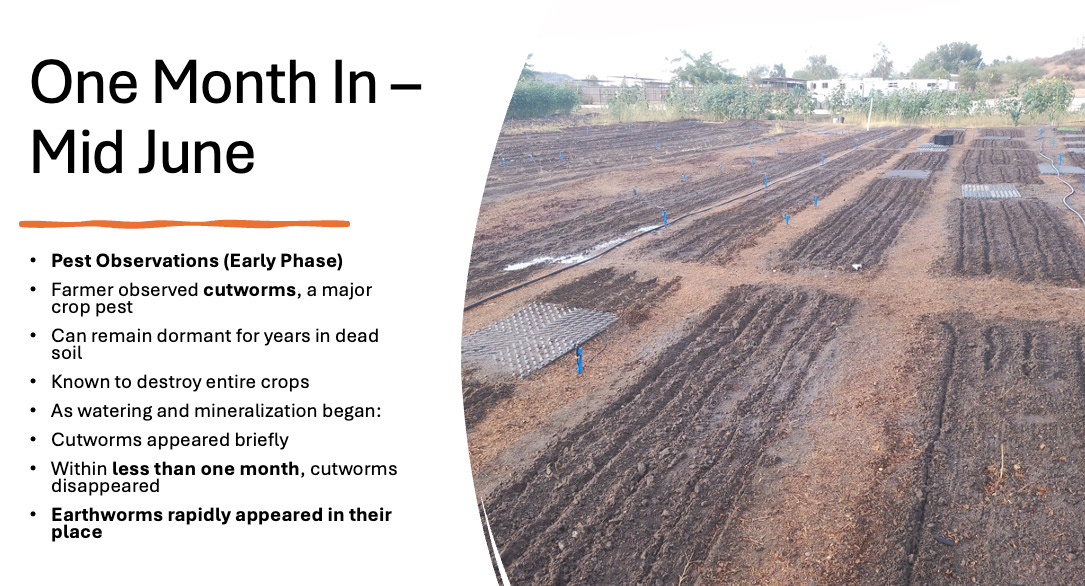
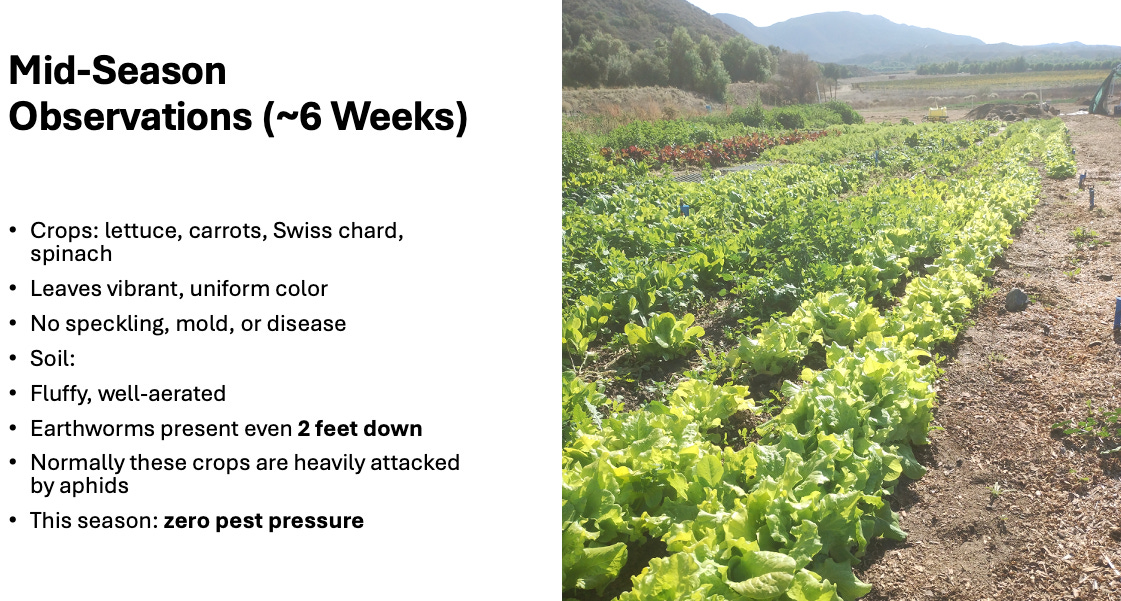
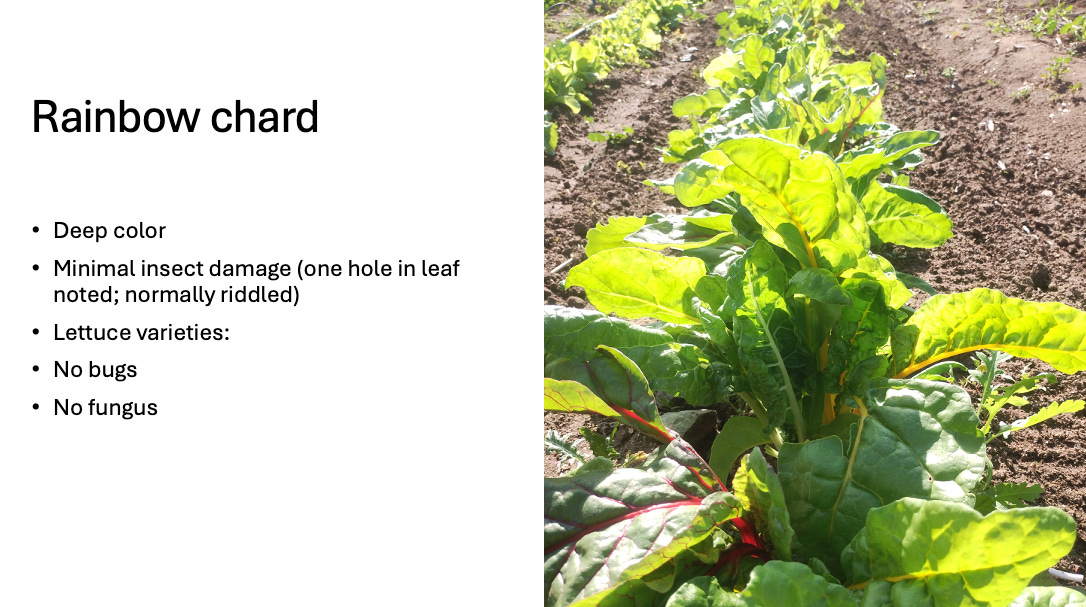
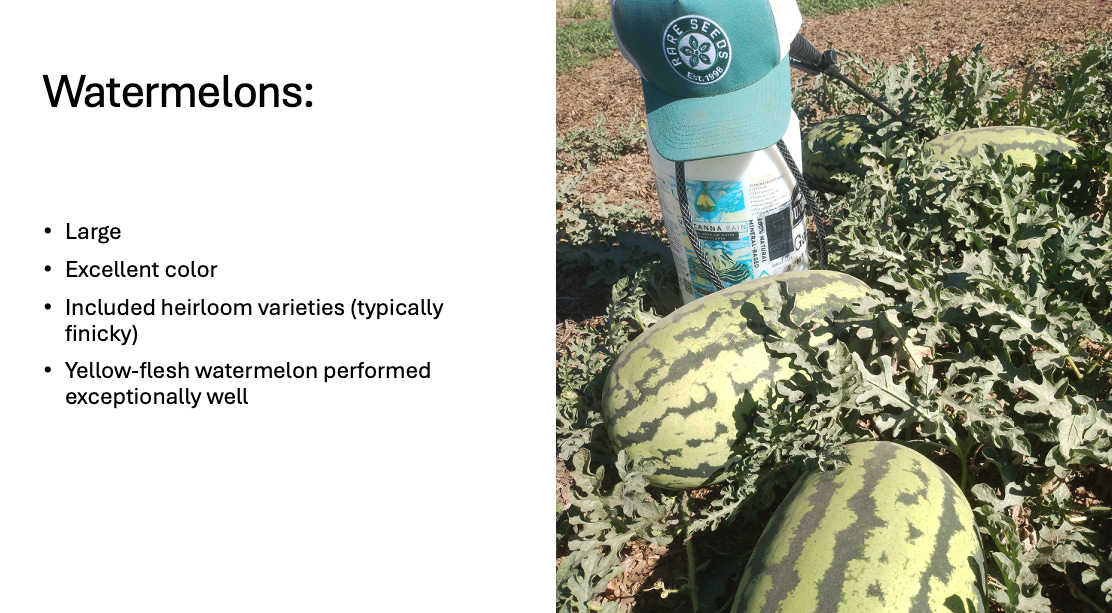
Weeds are not simply a sign of low minerals; they are a response to imbalance. When soil mineral availability and biological function improve, crops tend to become more competitive, and weed pressure often declines. As those conditions are restored, the advantage shifts away from opportunistic growth and back toward organized plant systems.
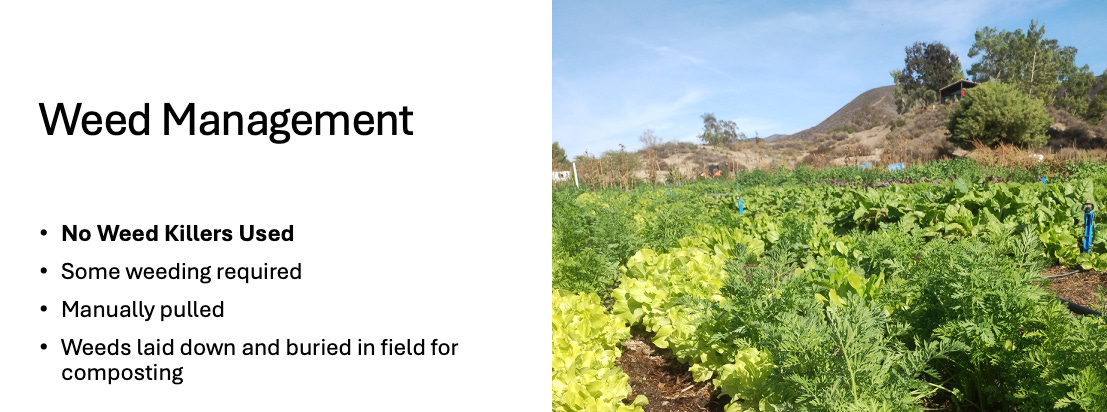
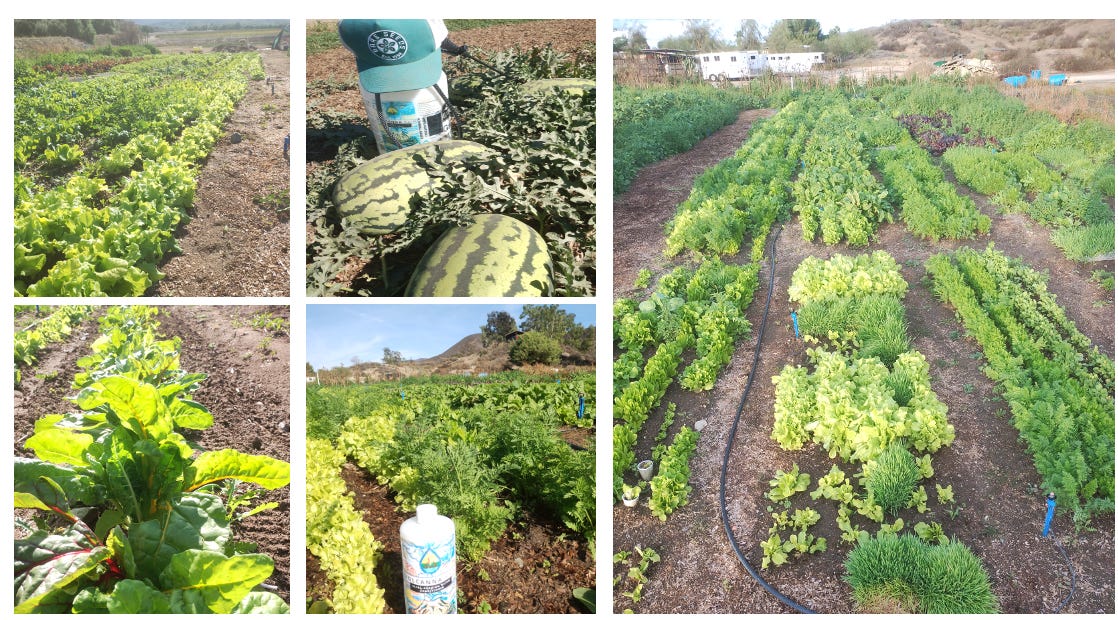
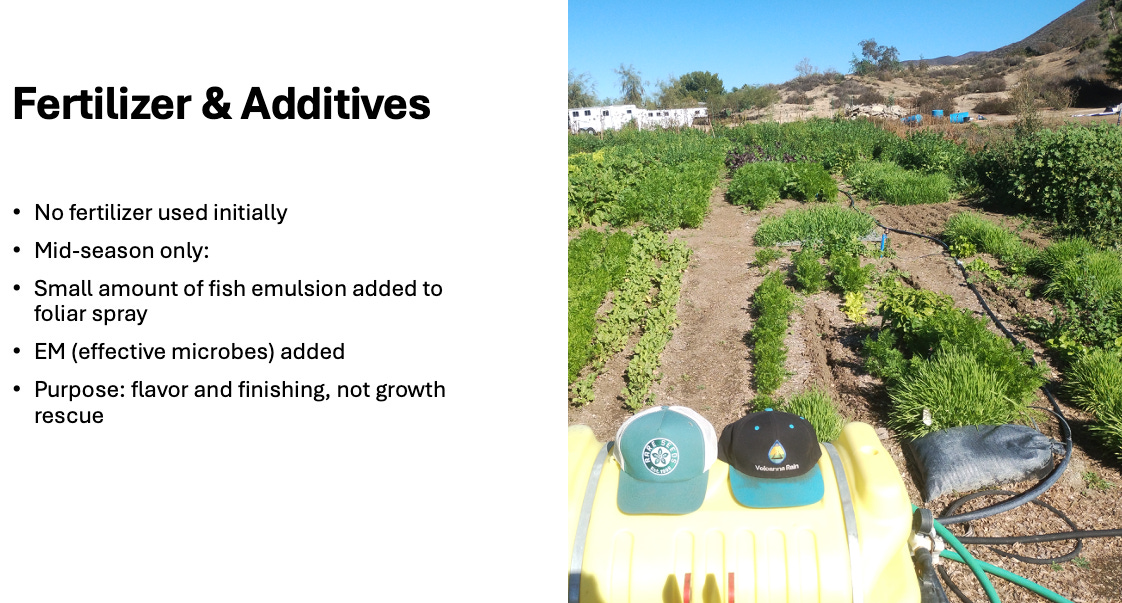
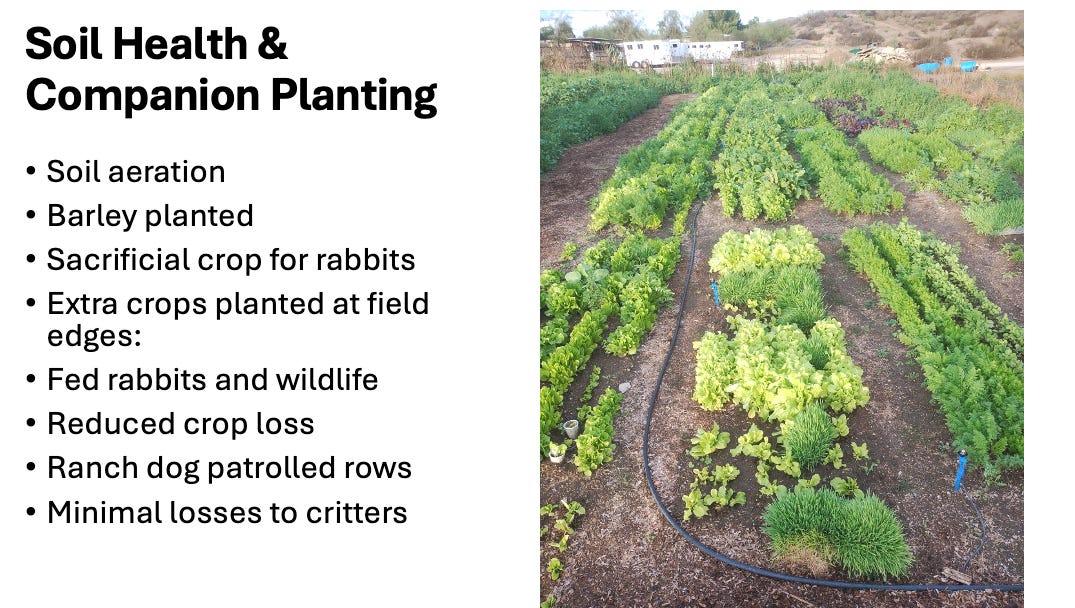
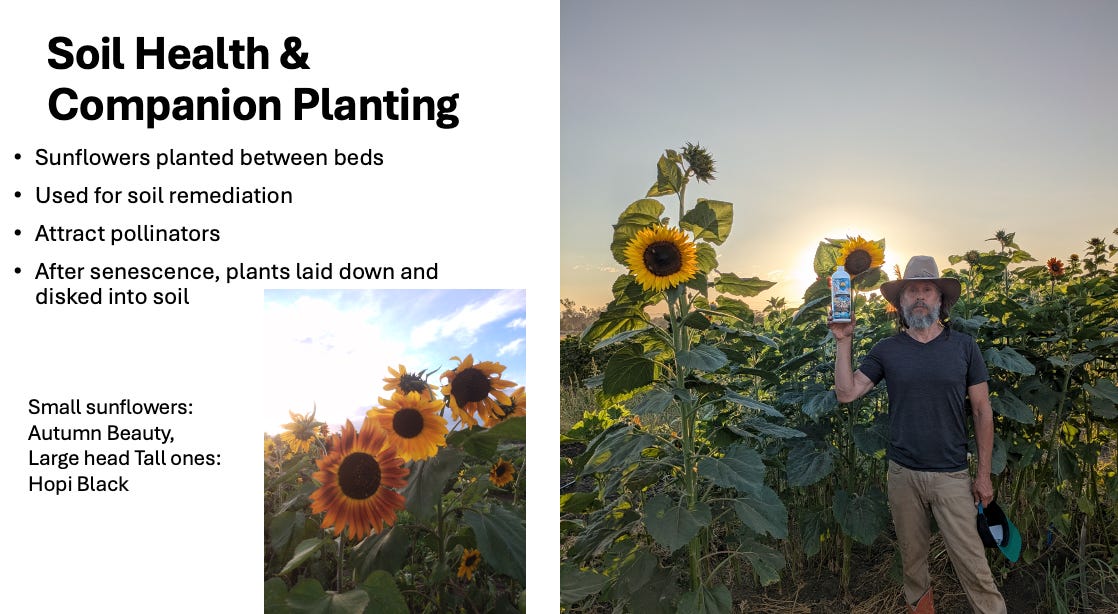
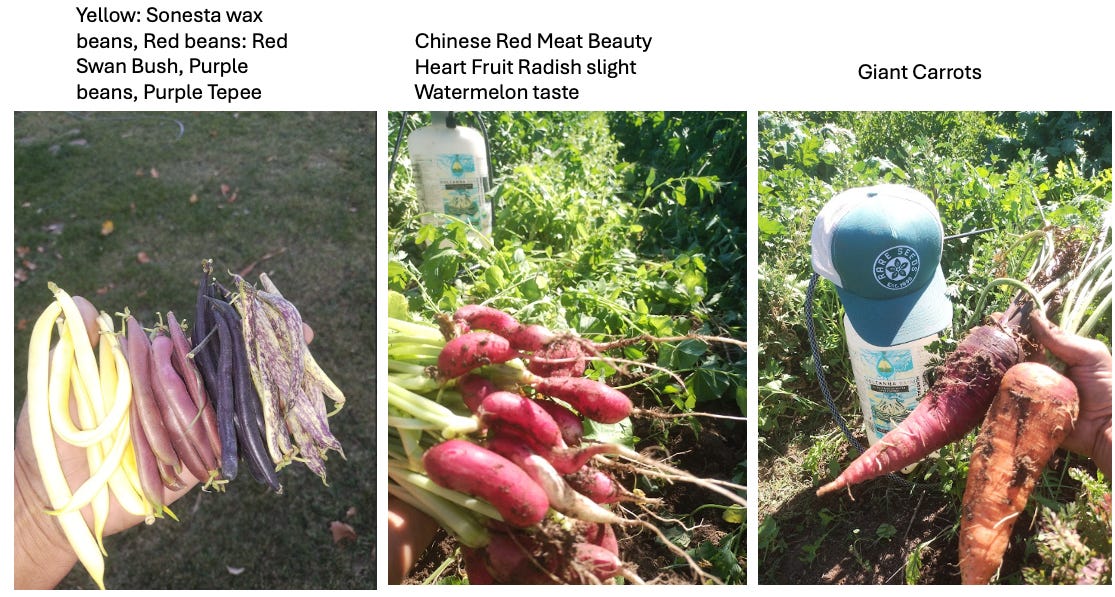
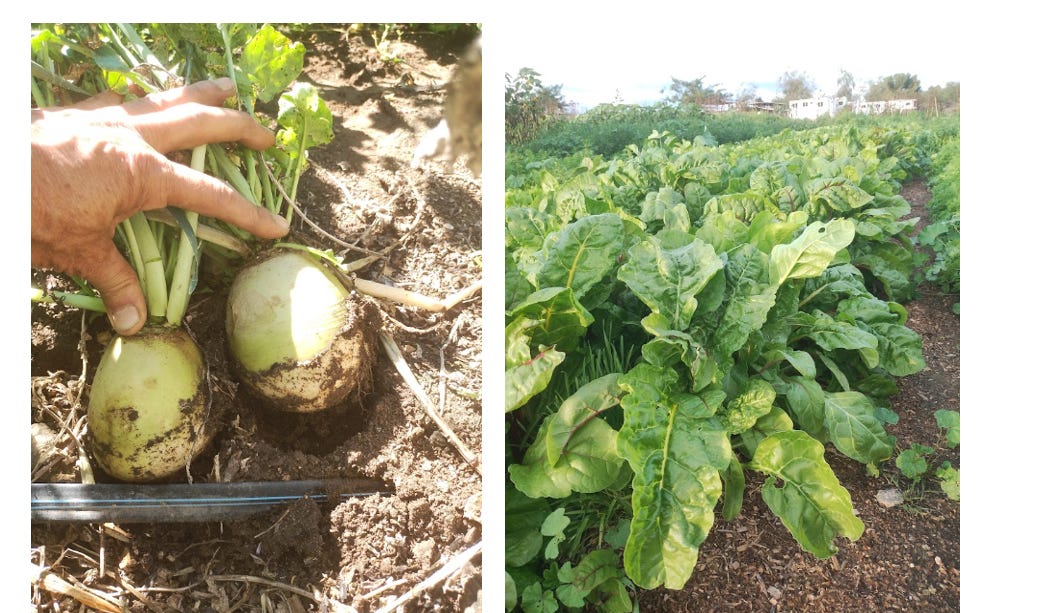
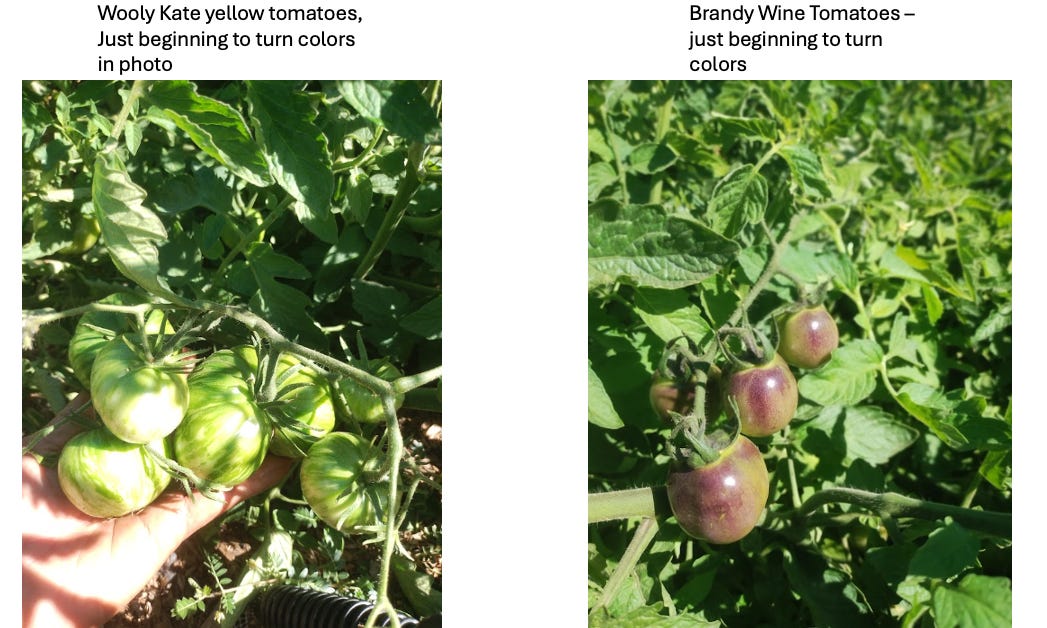
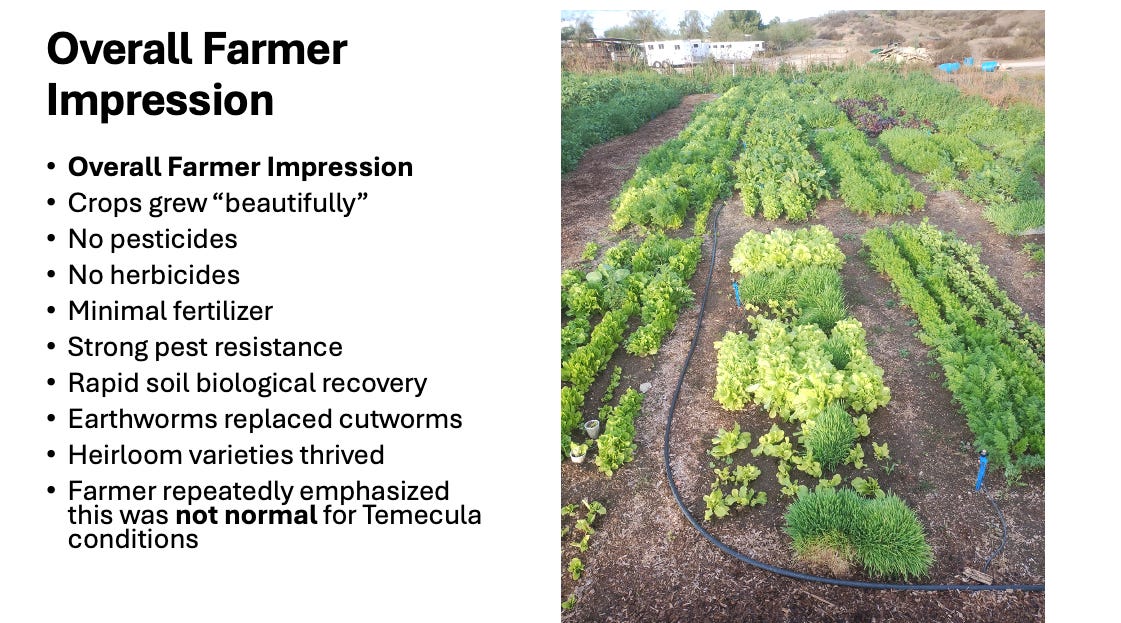
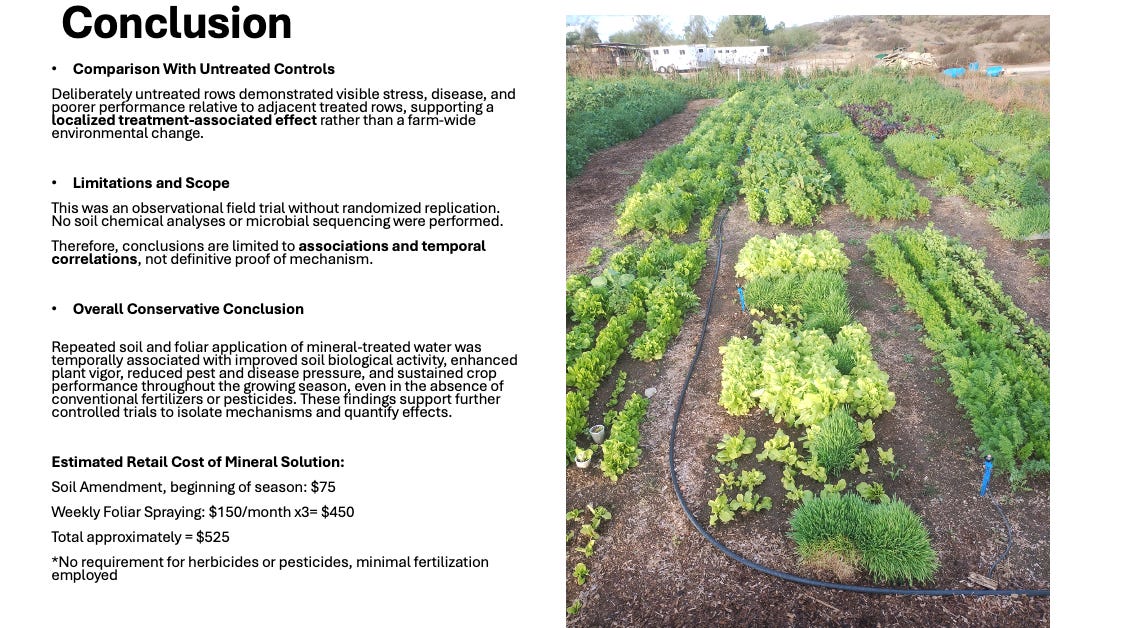
What you just witnessed departs from the long-standing practice of layering multiple inputs to “supercharge” yield and quality. Instead, it represents something more unusual, a novel agricultural intervention which operates upstream of all of that.
It was not the result of a better fertilizer program or a more refined protocol; it was a change in the medium itself. It is what happens when a cosmotropic aqueous solution is introduced into an agricultural system.
Cosmotropes, Chaotropes, and Hofmeister Chemistry
What does “cosmotropic water” even mean? Here is where, I believe, a fundamental paradigm shift will occur.
All water contains dissolved minerals, and the composition of the minerals determines the biological and chemical properties of the water.
For over a century, water chemists have recognized that different ions influence water in fundamentally different ways: some stabilize and organize it, while others disrupt it. This distinction was borne of the work of Franz Hofmeister, a 19th-century Austrian scientist who discovered that different ions influence protein behavior and water structure in systematic ways. His work led to the Hofmeister series, a foundational framework in chemistry and biology describing how ions stabilize or disrupt molecular organization in aqueous systems.
Hofmeister classified ions according to these effects as either cosmotropic or chaotropic.
Primora Bio is built around a rare combination of highly cosmotropic ions and minerals that promote more stable hydration, more ordered interactions, and more controlled electrochemical behavior in water.
In biology, this matters. Water with a more cosmotropic influence affects how proteins fold, how enzymes function, and how membranes maintain energy gradients. Ultimately, every biochemical and cellular process in nature is occurs through and is influenced by water.
When the ionic environment supports stability, these systems operate efficiently. When it does not, they become less reliable and harder to regulate.
This is where we move from simple theory to foundational chemistry.
In my upcoming book, From Volcanoes to Vitality (FVTV), I trace the role of water and minerals across agriculture, hydrology, and biology, beginning from the earliest cellular life on Earth, to the modern era, where their role has begun to shift.
In Chapter 38, in collaboration with my friend, colleague, and mineral expert Matt Bakos (the sole North American importer of Themarox for the past 20 years), we present a framework we call the Geohydrological Shift Theory.
It begins with a set of signals already visible in the agricultural literature. An excerpt from FVTV:
Large-scale analyses of global agriculture have documented a growing pattern of yield stagnation across major cropping systems, with between 24% and 39% of production areas showing little to no yield increase despite continued input intensification (Ray et al., 2012). Even in highly optimized systems, yield gains are approaching biophysical ceilings (Grassini et al., 2013). At the same time, fertilizer inputs—particularly nitrogen—have risen dramatically without proportional yield benefits, indicating declining efficiency (Zhang et al., 2015). Taken together, these findings suggest a transition from increasing returns to diminishing returns and rising input dependence.
Our hypothesis is that the root cause is geohydrological.
Specifically:
Groundwater systems are undergoing widespread chemical change, driven by intensive use, land practices, and hydrological disruption. These changes are now documented globally and are closely linked to declining groundwater levels and altered recharge dynamics.
Key mechanisms include:
Over-pumping / drawdown
declining water tables
seawater intrusion
upconing of saline groundwater
altered mixing and residence times
redox shifts
Agricultural inputs and irrigation
nitrate contamination
rising salinity and major ions
mineral transformations (e.g., pyrite oxidation → sulfate + iron oxides)
Seawater intrusion and ion exchange
Na⁺ ↔ Ca²⁺ / Mg²⁺ exchange
altered ionic balance and trace element mobility
Recharge alteration (MAR, wastewater)
changes in oxygen and carbon
redox-driven mobilization or precipitation of metals
Desalination / RO systems
altered delivered water chemistry
reduced mineral content requiring blending and remineralization
As a result, the modern disturbance to Earth’s water sources is twofold.
First, we are degrading aquifers and source waters themselves through heavy metals from mining, nitrate seepage from industrial fertilizers, salinization, and the widespread disruption of soil–water systems.
Second, once water is extracted, we strip it again through water treatment and purification systems optimized for sterility, pipe stability, and liability protection rather than biological legibility.
In effect, we disturb modern water twice. For more than a century, first slowly and now more rapidly, we have altered it underground, and then systematically deconditioned it again aboveground. This is why the theory is best named geohydrological rather than merely biochemical, as the impacts on the former precede the latter.
At its simplest, our collective insight is that the world’s water is increasingly chaotropic, and that this shift is impacting biology across kingdoms—first in agriculture, then in microbes, animals, and humans.
Why is this relevant to the field trial? It represents one piece of evidence supporting this theory. If chaotropic water is contributing to stagnating yields, declining gains, and, in some regions, agronomists are beginning to report literal decreases in yield despite increasing inputs and interventions, then the solution may lie in returning water toward a more cosmotropic balance.
We believe that Themarox can return water toward such a Pre-Anthropogenic state, described in antiquity as “Living water” or “Vital water.” Before the Industrial Revolution, living systems were bathed in waters that had undergone prolonged geological conditioning through slow contact with mineral surfaces, ion exchange, and redox-buffered environments, emerging not as chemically blank or disordered fluid but as geochemically conditioned water, i.e. Nature’s water.
In hydrogeologic terms, groundwater chemistry was shaped by recharge composition, residence time, water–rock interaction, and biogeochemical redox cycling. That is standard science. The implications, however, have not been followed far enough.
Put plainly, we believe that “living water” was, in more modern water chemistry terms, cosmotropic water. And if the root cause lies upstream, where chemistry and biology are being degraded, then the solution must be directed there as well.
It is fair to exercise skepticism if you think this theory rests solely on a row of cucumbers treated with chaotropic groundwater compared to produce treated with cosmotropic water.
However, that view ignores the broader signal. Note that the trial began in dead soil, and, relying on cosmotropic water as the sole agricultural input, it produced a system with minimal pest, weed, and disease pressure, reducing the need for pesticides and herbicides and requiring almost no fertilizer.
Skeptical or not, I am used to colleagues accusing me of “too-rapid adoption” when making recommendations for or treating patients with therapies based on what they viewed as “insufficient evidence.” That has followed me throughout my career, well before the “War on Ivermectin.”
To date, I know of not one of those “early calls” that were later proven incorrect when the totality of the data that followed is viewed objectively. However, it is always possible that this will be the first; every streak ends eventually. If so, I will have to accept that I may have prematurely gone “all in” on investing in the Asao Group's mission to bring Shimanishi’s discovery to the world.
But even there, we are seeing signals. To wit, we sold our first bottle of Aurmina on October 1, 2025.
Two months later, our repeat-customer rate was 11%, unsurprising for a product designed to last for months. But then, over the last 90 days, much to our astonishment, that number has reached 66%.
In most early-stage consumer products, strong repeat rates average about 30% and rarely exceed 50%.
There is something happening. And whatever it is, it does not behave like a typical product signal, it behaves like a system response.
So maybe it is not too premature to suggest Themarox as a possible response to what appears to be a worsening trajectory in the degradation of water systems. The reason I say that is because this field trial is the first time I have seen a reversal of that magnitude that does not rely on force. And that kind of reversal matters more than any individual result. But the individual results are already there, as can be seen in my recent summary of the growing evidence base for Themarox’s impacts on the largest and most diverse number of agricultural outcomes associated with a single input in history.
Because if the above can be seen in soil that had effectively nothing to give, then the implications are not local. They are systemic. They point to something we have misunderstood and may still be able to correct.
That is why I have spent these many months writing and researching. That is why I kept going, because once you see this, it becomes very difficult to ignore the possibility that we are not dealing with a problem of inputs, but a problem of conditions.
Essentially, we do not think about water correctly. We treat it as a background input. A neutral medium. Something required, but not something that shapes what happens within it.
And yet every biochemical interaction, every cellular process, every system in soil and biology occurs in water. Not in abstraction. In water with specific properties, specific mineral composition, and specific electrochemical behavior. I sense that this has been largely overlooked.
We have focused on nutrients, organisms, and interventions, while neglecting the medium that determines how they interact. If that’s true, then it changes where we look. And it changes where we intervene.
That means the solution has been hiding in plain sight.
For those of you who have been following this work and for those seeing it for the first time, today we’re launching a new category of agricultural inputs, a cosmotropic mineral concentrate derived from Themarox, called Primora Bio, while kicking off our Spring World Water Day sale.
But for now, sit with what you’ve seen here.
Because this is where the story stops being theoretical—and starts becoming something you can actually use.
*If you value the late nights and deep dives into all the “rabbit holes” I write about (or the Op-Eds and lectures I generate for the public), your support is greatly appreciated.
World Water Day Sale - Discount Code: Springsale26
Sale: 25% off all single bottles of Aurmina or Primora Bio, with separate, already-included bundle discounts ranging from 25% to 30% on multi-bottle and combination bundles.
UK, European Customers: Our first UK distributor, Nicholas Smith at The Water Dr., is offering a 10% discount until the end of the month, with coupon code KORYUK10. Much larger savings will be made by reducing shipping costs, given his 1-bottle fixed-price delivery of £5 for the UK and £15 for the EU (standard tracked and insured).
Regenerative Farming Starter Kit: For readers looking forward to kickstarting their best summer garden ever, spring planting is around the corner, and I am most excited about our “Regenerative Farming Starter Kit,” which includes Primora Bio (cosmotropic water concentrate), Primora Char (high-grade liquid biochar), and Primora Nourish (liquid fish hydrolysate fertilizer).
*I have not written about the wonders of biochar or fish hydrolysate, but will soon.
From Research to Practice - Links Below Images

Thank you more than I can say, Dr. Kory. I followed you all through the covid lies in order to find Truth. Now this. I studied regenerative farming with Kiss the Ground. It has great possibilities but they did not talk about the properties of water. I am also familiar with Dr. Gerald Pollack, his 4th stage of water and how that affects our bodies. Then before all that I dove into Masaru Emoto's amazing study of water's crystallization and purifying abilities. Anyway, it looks like we are heading into a scarcity of regular fertilizer and your information and product(s) could help greatly. This gives me hope. I look forward to more of your "down the rabbit hole" revelations.
The Top Four Remedies for Gardens and Farms
A little girl with a basket of vegetables home grown from her gardenLooking for something to keep the caterpillars off your veggies, snails away from your plants, and aphids off your vines? Homeopathy will do just that. It’s easy to use, saves you a heap of money and takes care of the environment. When used for plants it’s known as agrohomeopathy.
In this article we discuss the top four agrohomeopathy remedies and tell you when and how to use them. We also link to Michelle’s story of when she applied the snail-deterrent remedy to her rhubarb, and the survey results from others when they used it as well. We have also included instructions on how to make the remedy yourself for virtually no cost, and if you scroll to the end of the article you will find more links to information on agrohomeopathy.
If you are a newcomer to homeopathy, this article is the perfect introduction as there is no easier way to see if it works than by testing it on the plants and soil in your garden – so let’s make a start.
Contents and Links
Four Simple Remedies to Transform Your Garden
If you are a gardener (or farmer) you already know about the carnage snails, caterpillars and aphids inflict. Add the problem of water-repellent or poor soil, and plants literally start to die from the ground up. The good news is that the following four homeopathic remedies manage these problems and more for very little time and effort. Watch your plants thrive as you put them to good use in your garden.
1. Helix tosta – Slugs and Snails Gone for Up to Four Months
Snails and slugs are probably the most widespread of garden pests. Gardeners try to control them with everything from geese, salt, vinegar and beer traps to commercial baits or pellets. None of these methods provide a long-term solution, and the poisons within some baits and pellets introduce toxins into the environment that are dangerous to children and animals as well as the birds and lizards that eat the baited snails.
In contrast, Helix tosta, the homeopathic remedy made from toasted snail shell (of all things!) works quickly and safely. It’s simple to apply, long-lasting, and creates a stronger and healthier plant. Protection that last up to 4 months is in place from just one dose, even during the heaviest of downpours – and it doesn’t harm the environment. We know this to be true because one of our clinic homoeopaths, Michelle, tried Helix tosta on her snail-infested rhubarb. Read what happened in our Snails and Slugs Pack their Bags and Leave with Homeopathy article.
Following Michelle’s experience, we conducted a survey with some of our newsletter subscribers to find out what happened in their gardens when Helix tosta was used. Their results can be read at: Preliminary Responses from the Helix Tosta Survey and Helix tosta Survey Results
To celebrate our combined success, we provided instructions for those adventurous souls who wanted to make the remedy themselves rather than purchase it. The process is a relatively simple and you can read how to do it in the Snails and Slugs Pack their Bags and Leave with Homeopathy article.
And finally, we provided instructions on how to apply Helix tosta to your plants – homemade or not – at: Helix Tosta – Instructions for Use
Interesting Facts -Tuberculosis and the Humble Snail: Historically, the snail has been used in folk medicine to treat the symptoms of tuberculosis (TB). When homeopaths potentised the snail, turning it into a homeopathic remedy, they found it still helped TB sufferers – but it was obviously a little less “eeew-w-w!” Just as TB is a disease that destroys the respiratory organs (lungs) of the human body, the snail destroys the respiratory organ of the plant (its leaves). This similarity across symptoms is quite possibly a reason why it stimulates a positive response in both humans and plants.
2. Coccinella septempunctata – Goodbye to Aphids
Aphids pierce and suck the young shoots and buds of plants, feeding on the sap and stunting growth. Aphids, unlike our Helix tosta example, cannot be repelled by potentised aphid – it has been tried in numerous ways and has always failed. It took a while to discover that a potentised aphid predator, the ladybird, was an effective deterrent.
Coccinella septempunctata is the homeopathic remedy made from the ladybird beetle (sometimes called ladybug, ladybeetle, or sunchafer). Ladybird is a natural predator of the aphid. It also deters or reduces aphid populations when applied as a homeopathic remedy, even though none of the ladybird remains within the remedy. Good and prolonged results are usually obtained with just one dose – occasionally a second dose is required, but care should be taken not to apply it more often than is needed as unnecessary applications will have the opposite effect and encourage aphid infestations.
Instructions for using Coccinella are provided toward the end of this article.
3. Bombyx processiona – Caterpillars Crawl Away
Bombyx processiona is a remedy prepared from the Procession Caterpillar.This remedy deters most types of caterpillar infestations on the farm or in the garden.
Procession Caterpillars live in colonies at the base of trees. During the day they climb the tree to eat its foliage. Once it has been stripped bare they will crawl in single file – in a procession – to the next tree. When Bombyx processiona, the remedy prepared from these caterpillars, is sprayed onto plants or watered into their root system, they naturally repel those moths and caterpillars that would normally infest them. There is no remedy residue that acts as a barrier. Instead, just as with humans, the remedy triggers a healthy response from the plant that makes it more resistant and less appetising to parasites that would normally attack it if it were in a less healthy state. And, of course, what is good for the plant ends up being good for us when we eat or use it.
Instructions for using Bombyx are provided toward the end of this article.
4. Silicea terra – King of the Garden Remedies
Perhaps the most important remedy in agricultural homeopathy is Silicea terra. No other remedy can lay claim to the depth and breadth of action Silicea has on plants and soil. It:
Aids germination of seeds
Reduces transplant shock
Strengthens weak and spindly plants
Increases vigour and resistance of plants to pests, moulds, and mildew
Aids water retention in plants growing on arid soils
Stimulates flower growth, both in number and size
Assists seed generation and development
Improves fruit-setting when applied after flowering
Changes the ionisation of soil particles so that water-repellent soil more readily absorbs moisture … and more!
In fact, the effects and benefits of homeopathic Silicea are so numerous that an entire article has been devoted to them at: Homeopathic Silica – The Gardener’s Friend. Needless to say, Silicea is one remedy no gardener or farmer should be without.
Instructions for using Silicea are provided toward the end of this article.
Instructions for Agrohomeopathy Remedy Use and Storage
Just add one 6X or 6C potency pill to 200 ml of water, shake vigorously, and then spray on the leaves of your plant or water into its roots (many say watering the soil above the plants roots with some of the liquid is more effective than spraying the liquid onto the leaves).
Store pills and liquid away from light, moisture, and high temperatures (normal household temperatures are fine). Close range mobile phone and microwave oven emissions have been shown to affect homeopathic remedies, so keep your pills and liquid away from these appliances.
One vial of 100 pills makes 20 litres of remedy.
(Agrohomeopathy remedies are available from the Homeopathy Plus Shop)
Time to Get Started
So, it doesn’t matter whether you are a beginner or long time user of homeopathy – if you have not yet used it for your garden or plant problems, there is a whole new world waiting to be explored – give it a try!