


If you are here, either you were strolling by and stumbled in, or were launched here by the QR code at the opening of The Silent Aquifer’s black-and-white Photographic Appendix. Either way, welcome and enjoy the color photo version.
The chapters of this book argue from data, mechanism, and pattern. The images that follow argue from something simpler: what happened when people tried it themselves. These are not controlled experiments, and they are not presented as proof. They are visual records, from gardens, fields, kitchens, and backyards, of the kind of signal that arrives before formal evidence does. The reader can see what the observers saw and decide what to make of it.
Appendix 1: Potato Experiment: Two Glasses, Two Fates
In one glass, a potato rotted. In the other, it grew.
The experiment, submitted by my colleague Kacper Postawski, was simple. Two potatoes were placed in identical glasses. One glass contained ordinary tap water. The other contained water treated with a Themarox-derived mineral solution. There was no soil, no fertilizer, no added nutrient program, and no biological system beyond the potato itself. The glasses were then left undisturbed for weeks.
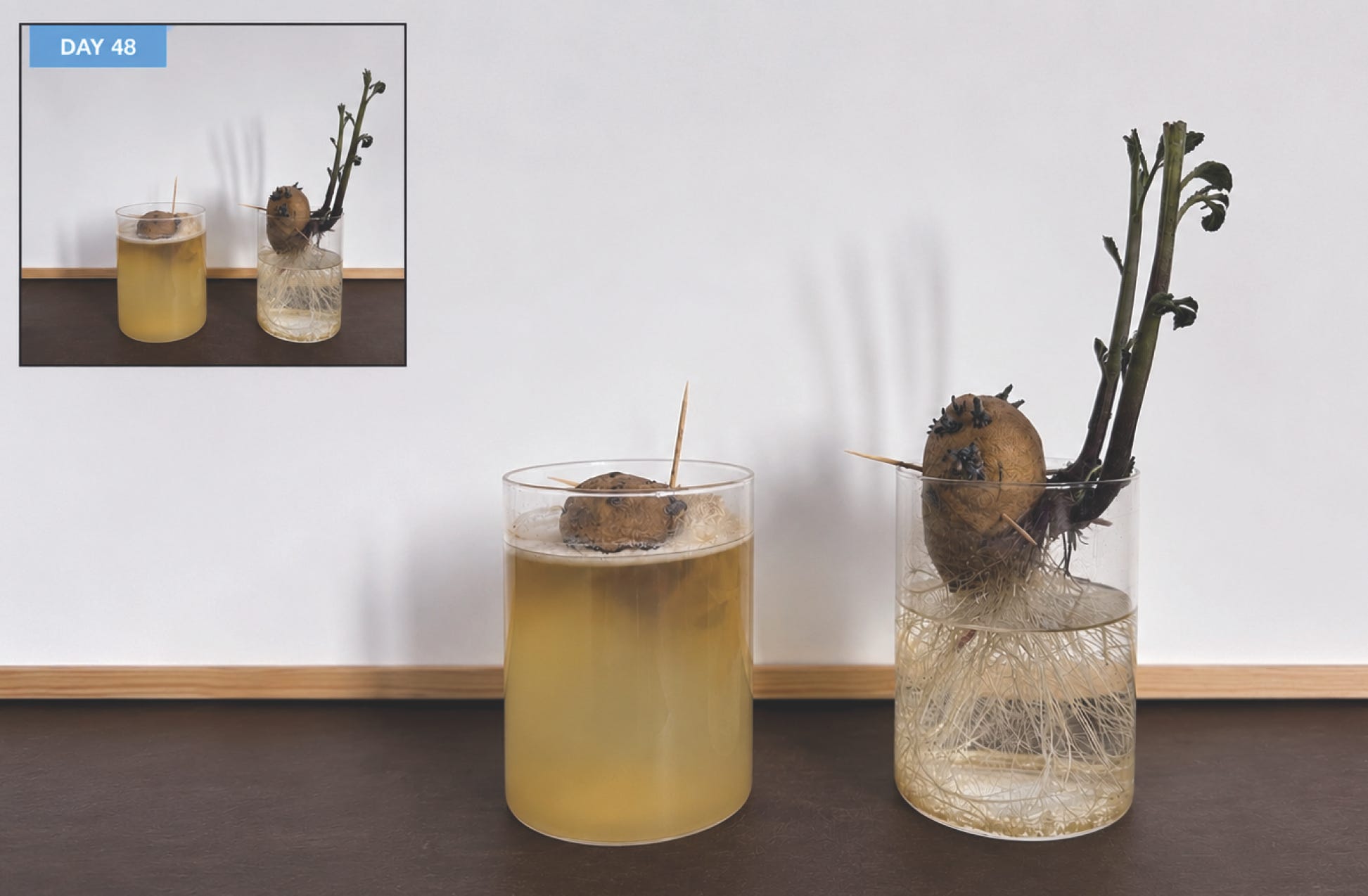
In ordinary tap water, the result followed the expected path: clouding, foul odor, tissue softening, structural breakdown, and decay. In the treated water, the system behaved differently. The water remained clearer. The potato retained its form. Roots developed into a dense mesh, and a green shoot emerged upward.
Two potatoes, the same carbon in each, and only the water deciding whether it slid toward rot or held together as something alive
Appendix 2: The Accidental Lilac
An accidental experiment cannot be staged. That is what makes it worth recording.
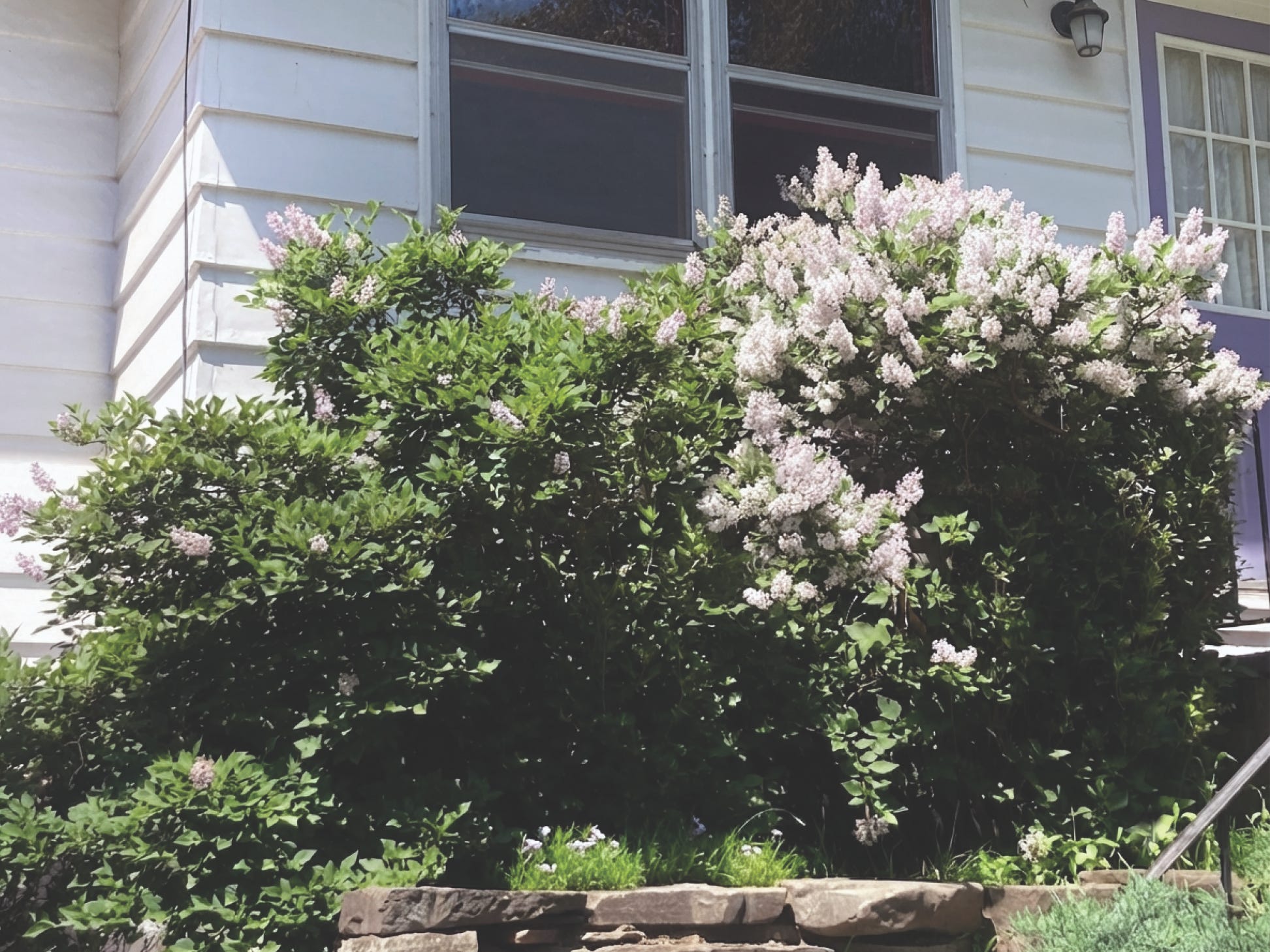
My partner, Scott Marsland, noticed the difference in blooming of his two side-by-side lilac bushes, and realized that when he had performed the foliar sprays with treated water, due to the angle at which he was spraying, the bush on the right received much more of the treated water than the bush on the left. This accidental experiment suggested a dose-response relationship between the water and the bushes’ flowering: the one on the right in full bloom, the one on the left in sparser bloom.
Then, a few weeks later, when the bushes were no longer in bloom, he noticed a marked difference in the color and vigor of the bushes: on the left, the tips of the leaves were yellow and curled, while those on the right were deep green and straight.
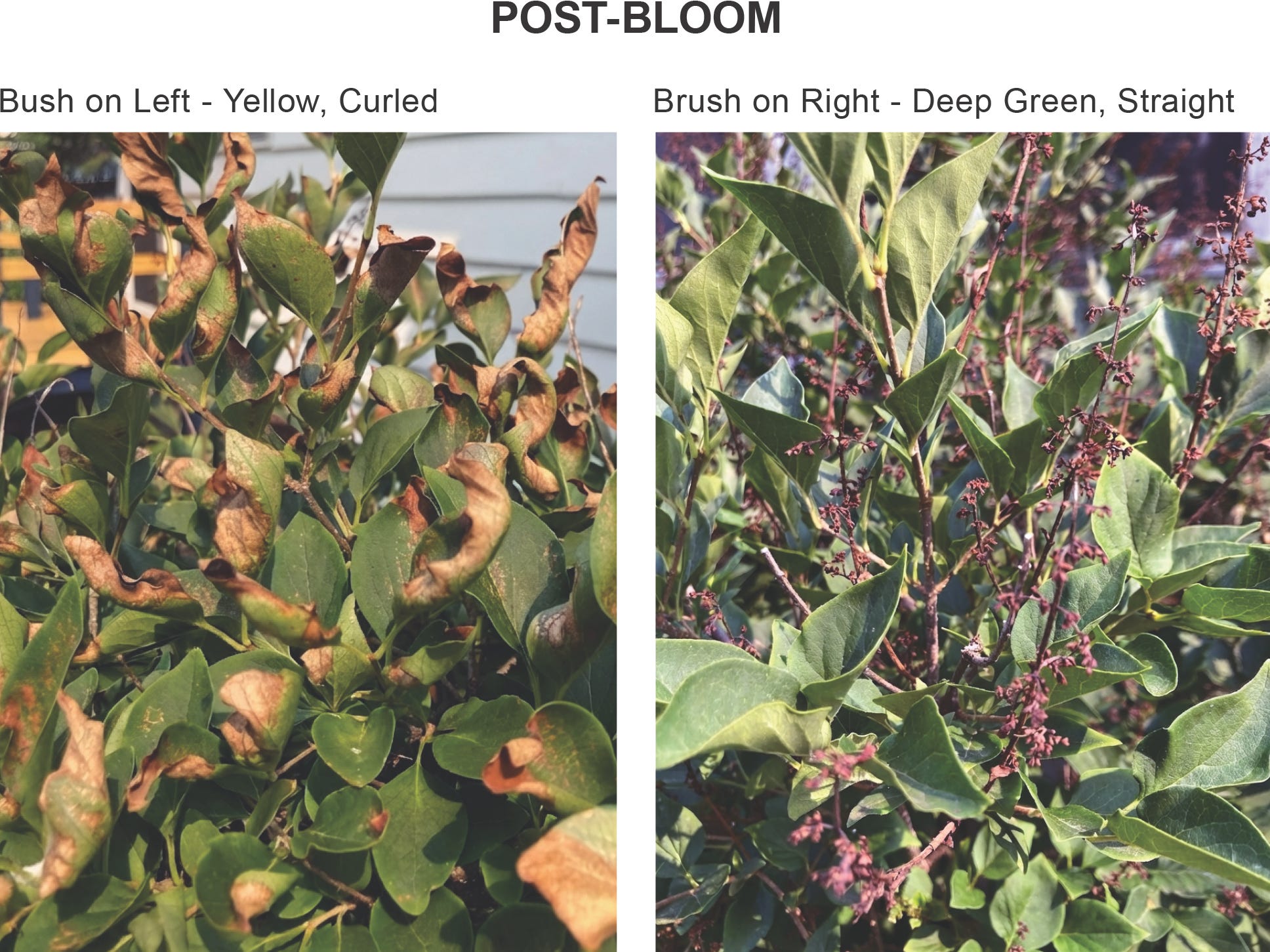
Scott has lived in that house over twenty years, and in all of them neither bush had ever come close to blooming like the one on the right, and the two had never come in differently. Same corner, same soil, same light, same two plants, over twenty springs running, and the only new thing this year was Rock-Water. Nature set the experiment up: two bushes alike in everything but one, how much treated water reached each, and the bloom tracked the water. More water, more flower. Less water, less. That is a dose-response, and it is the oldest evidence there is.
Appendix 3: The Basil Plant Race
These photographs were taken eighteen days apart. Nothing changed between them except the water.
Submitted by my colleague Jeff, producer and director of The Universal Antidote documentary and author of the Curious Outlier Substack, the first case involved two established basil plants grown side by side under matched conditions: same soil, same light, same fertilizer, and the same watering volume and schedule.
The sole intentional variable was the water.
One basil plant received filtered well water. The other received the same water treated with a 10% Themarox-derived solution. No meaningful amount of mineral nutrient was added beyond what both plants already received from the soil and Miracle-Gro fertilizer.
Dec 6, 2025, start of the race:
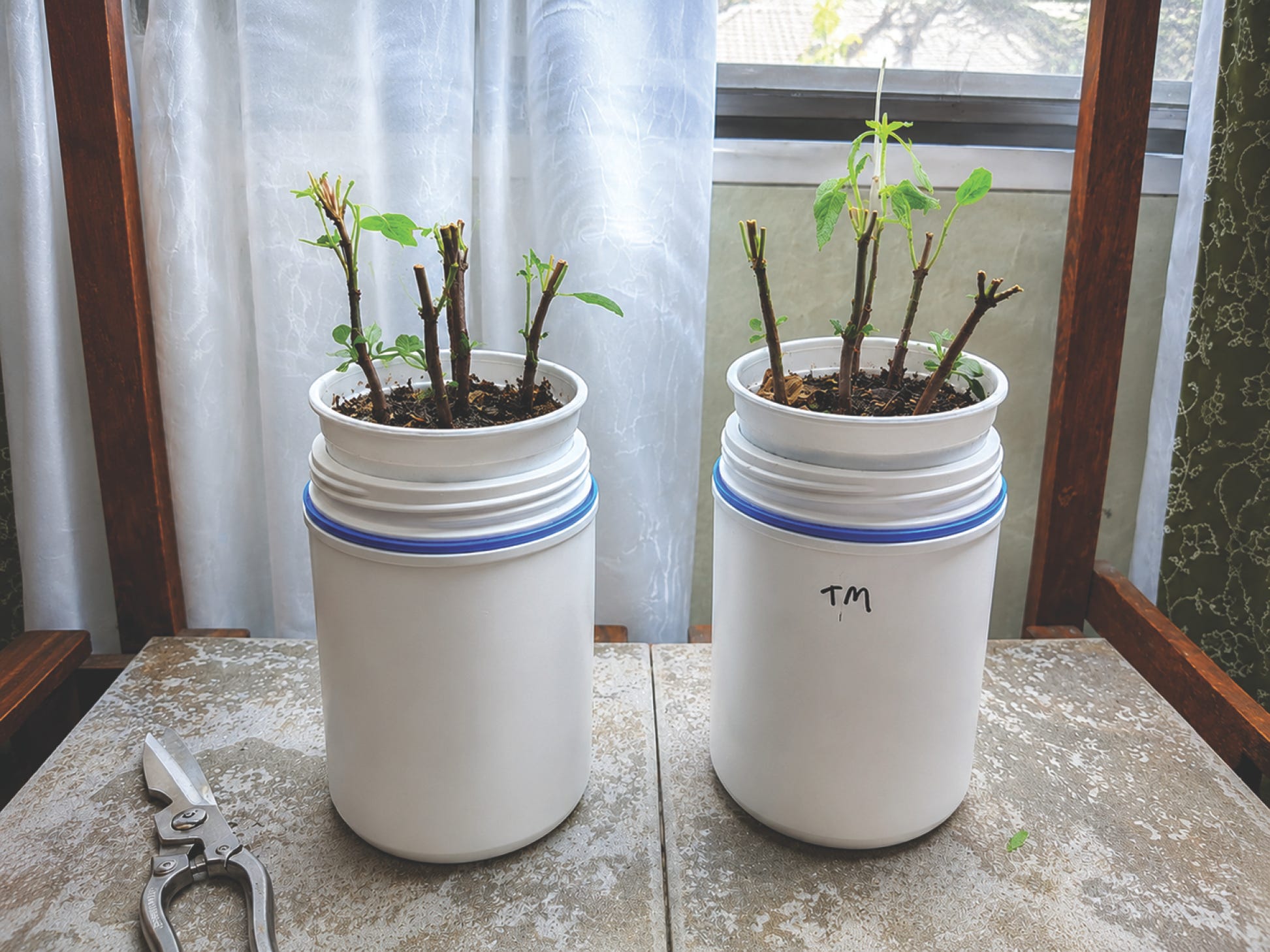
Dec 24, 2025:
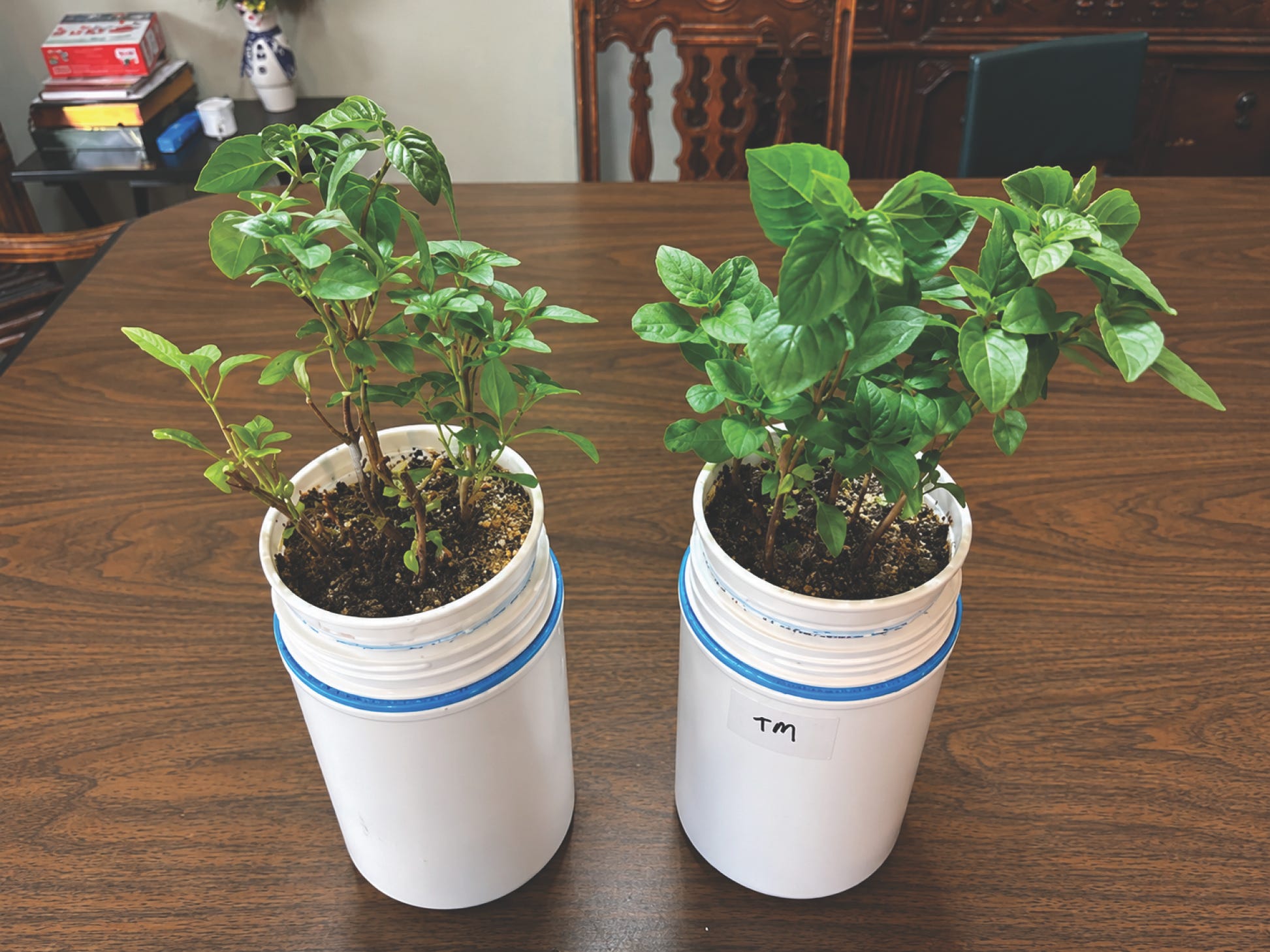
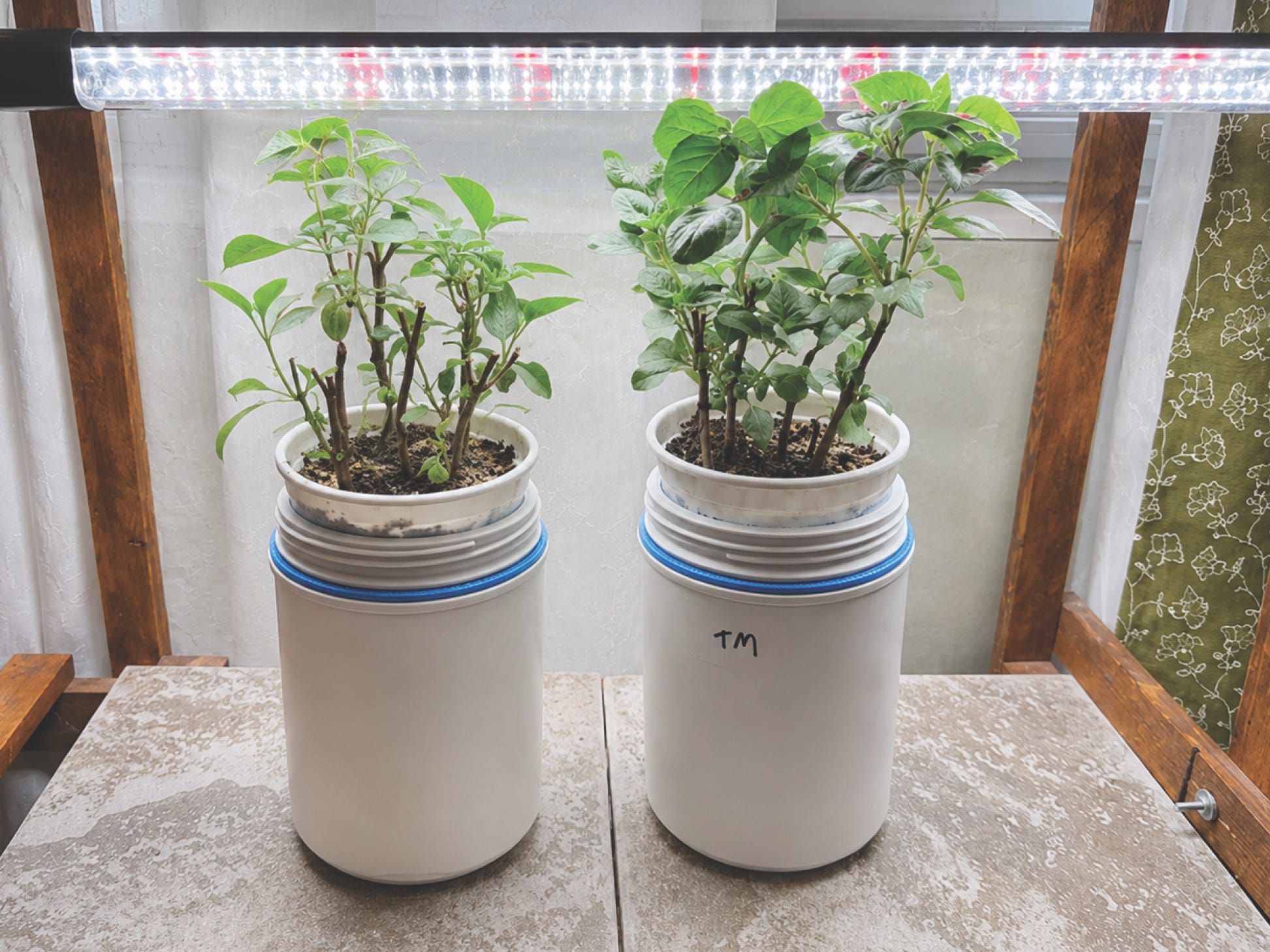
Yet the plants diverged.
The basil receiving treated water showed accelerated growth, deeper coloration, increased leaf density, and greater structural rigidity. It looked like improved access: as if minerals already present in the soil became more biologically available, and carbon already available to the plant could be fixed more efficiently into living structure rather than dissipated through stress, inefficiency, or weak growth.
As a side-by-side observation, it again fits the larger geohydrological return framework. The treated plant grew faster, greener, denser, and stiffer, as if the minerals already in the soil had simply become easier to reach.
Appendix 4: A Lawn Blasts Off
She did not design an experiment. She planted a lawn and watched what happened.
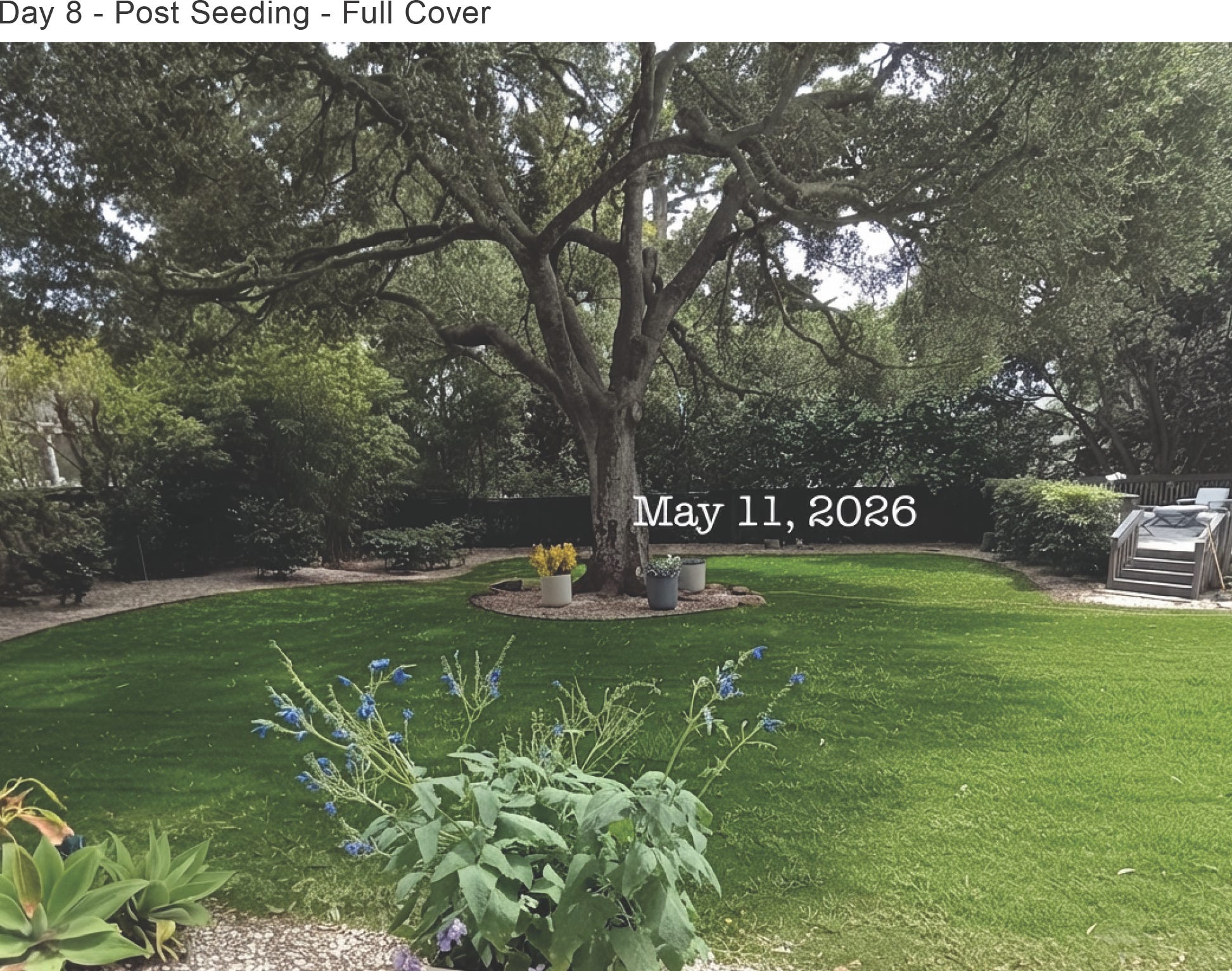
A home gardener decided to seed her lawn with grass. In the photos below, you can see a completely grassless lawn in March, and she seeded the lawn in sections starting on April 29th and finishing May 2nd. She sprayed the grass twice in the first few days, and then again at about a week.
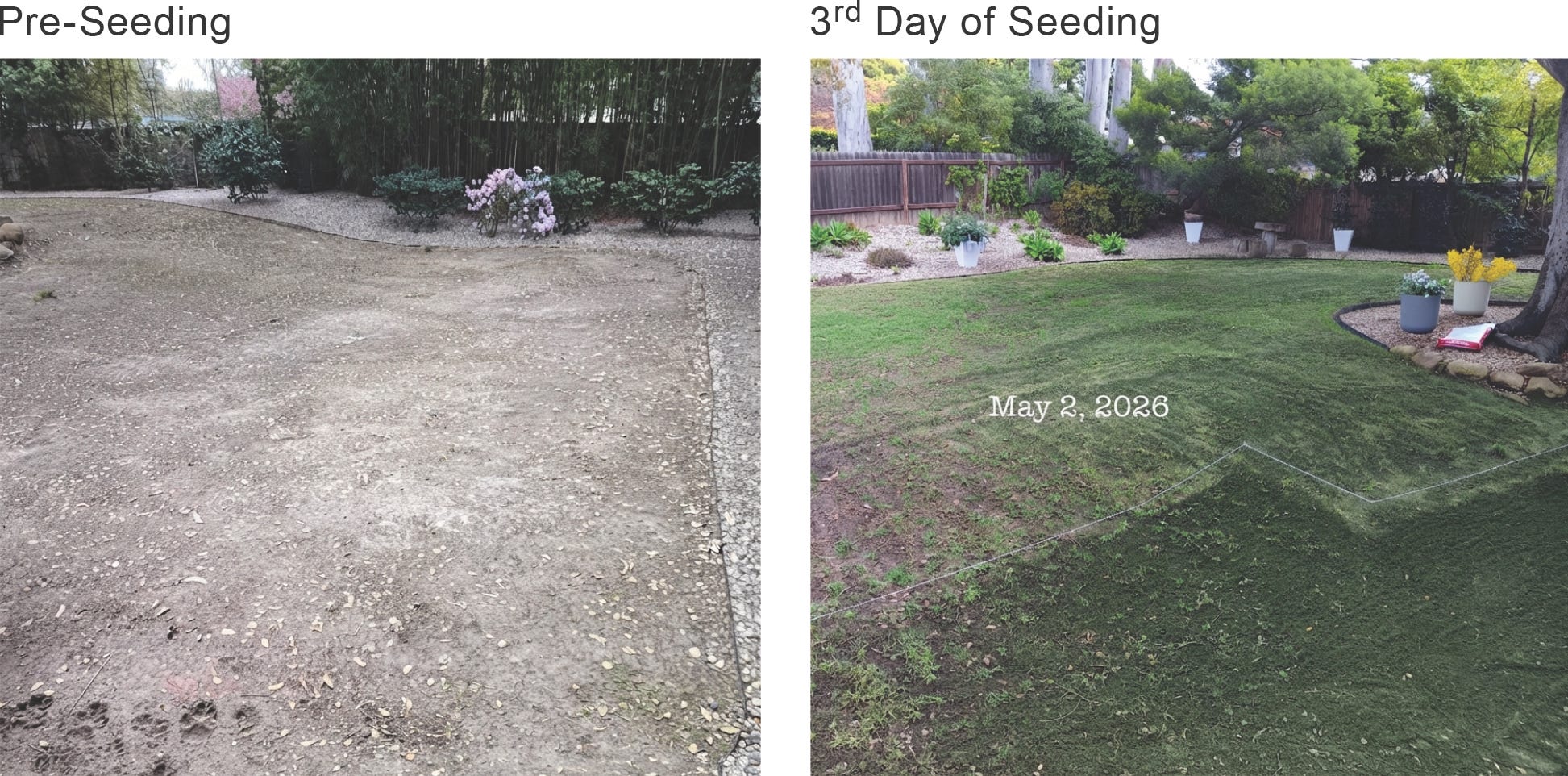
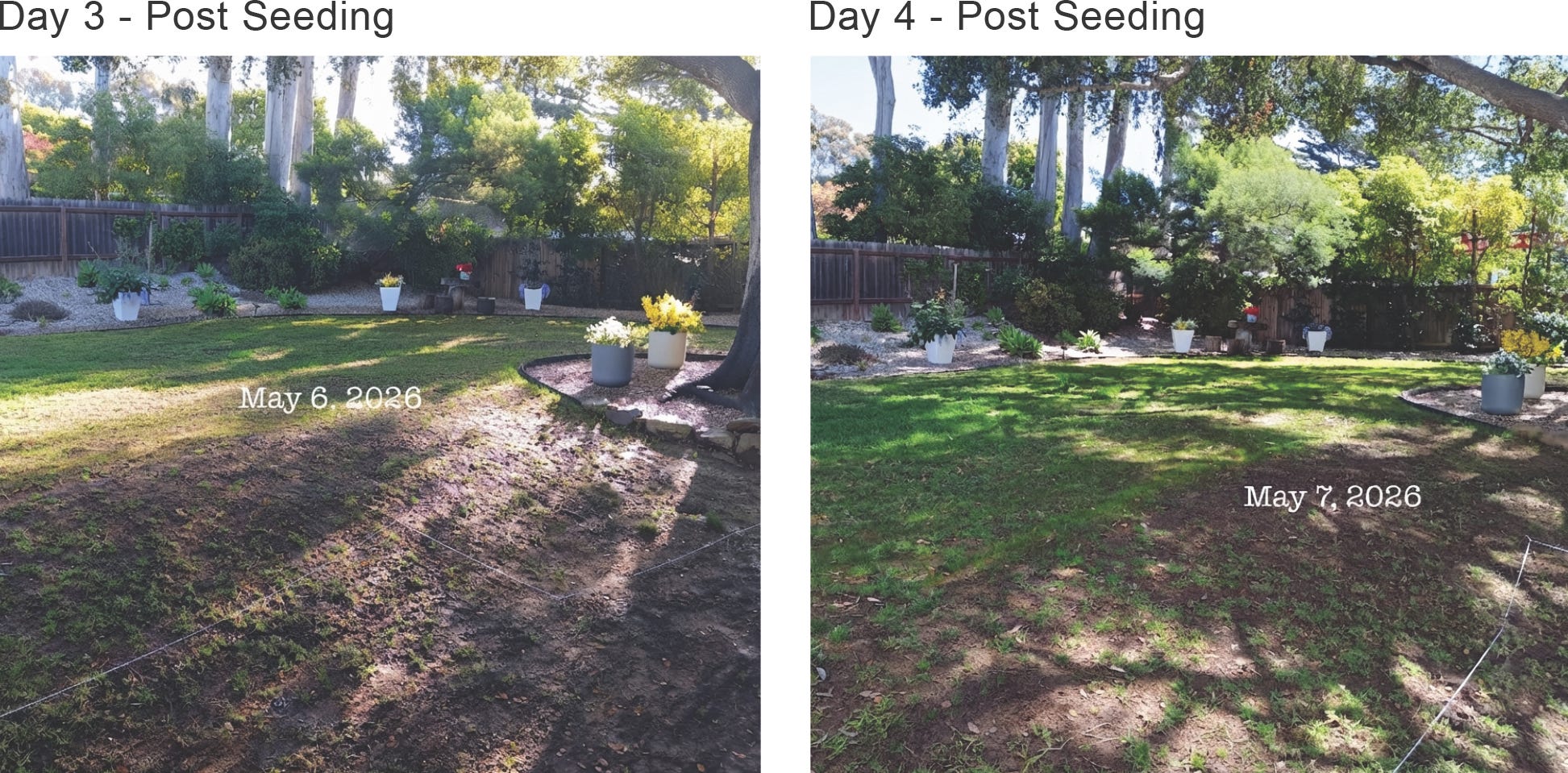
She reported that every morning she would get up, have a coffee, and “watch the lawn grow.”
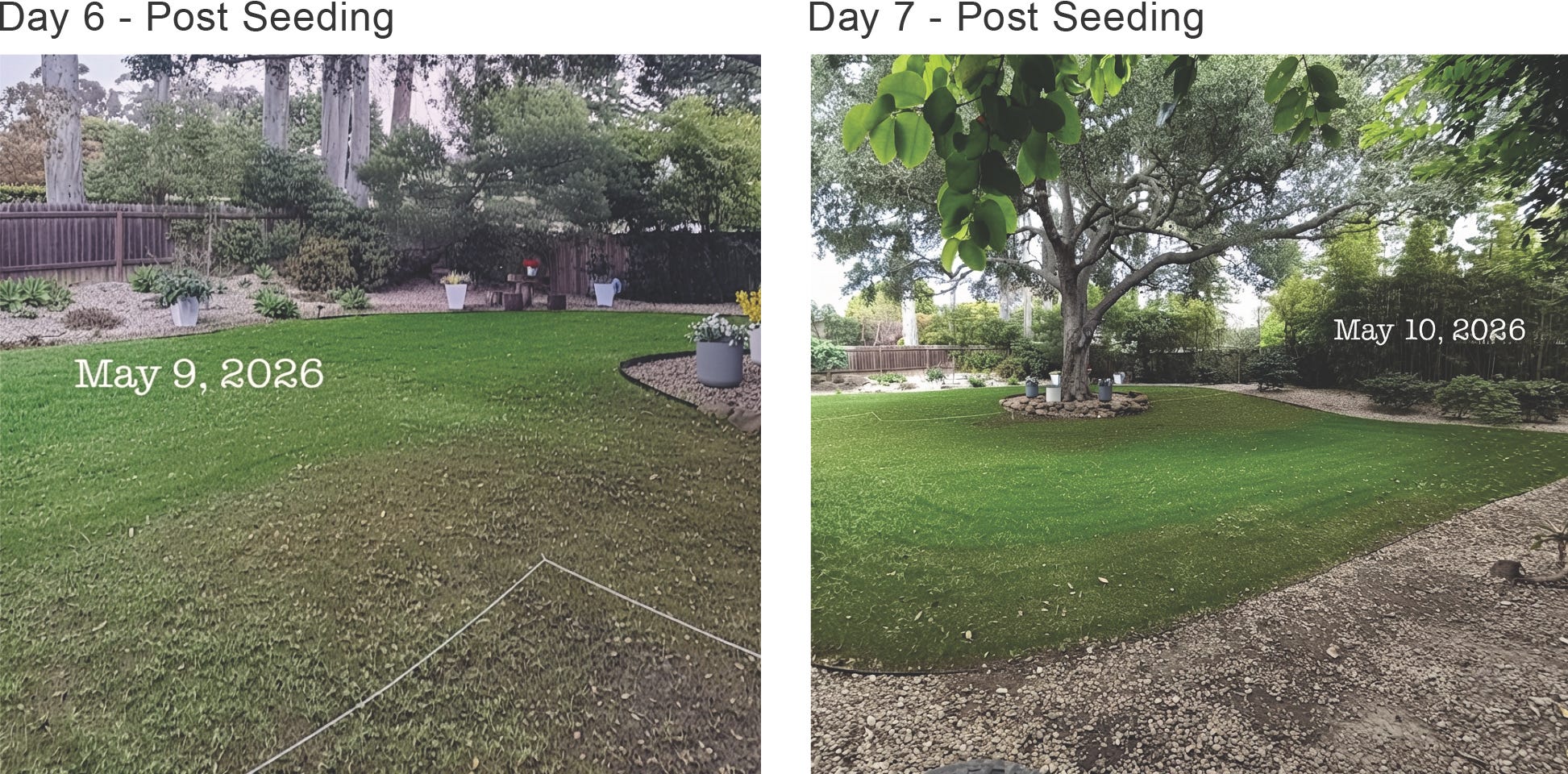
As you can see below, within eight days, the seeded area was completely covered in green grass, whereas the instructions on the seed bag stated that it would take between 14 and 21 days, a growth speed which matches many of the studies reported by Shimanishi and other agronomists.
Appendix 5: A Cactus Sleeps For 50 Years
This observation was submitted by Brent Hanson, a patient of my partner Scott, who has been experimenting with Themarox-conditioned water in his home. He sent it because the plant in question had a history.
My name is Brent Hanson, and I have been experimenting with water treated with Scott Marsland’s mineral technology in different areas of my life. Recently, I decided to try it with a very special plant in our home: a Christmas cactus that once belonged to my grandmother. Our family believes this cactus has been with us for roughly forty to fifty years, and in all that time none of us can remember seeing it bloom.
After I began consistently watering it with diluted Themarox-treated water, something remarkable happened. For the first time in decades, the old family Christmas cactus produced a healthy, vibrant bloom.
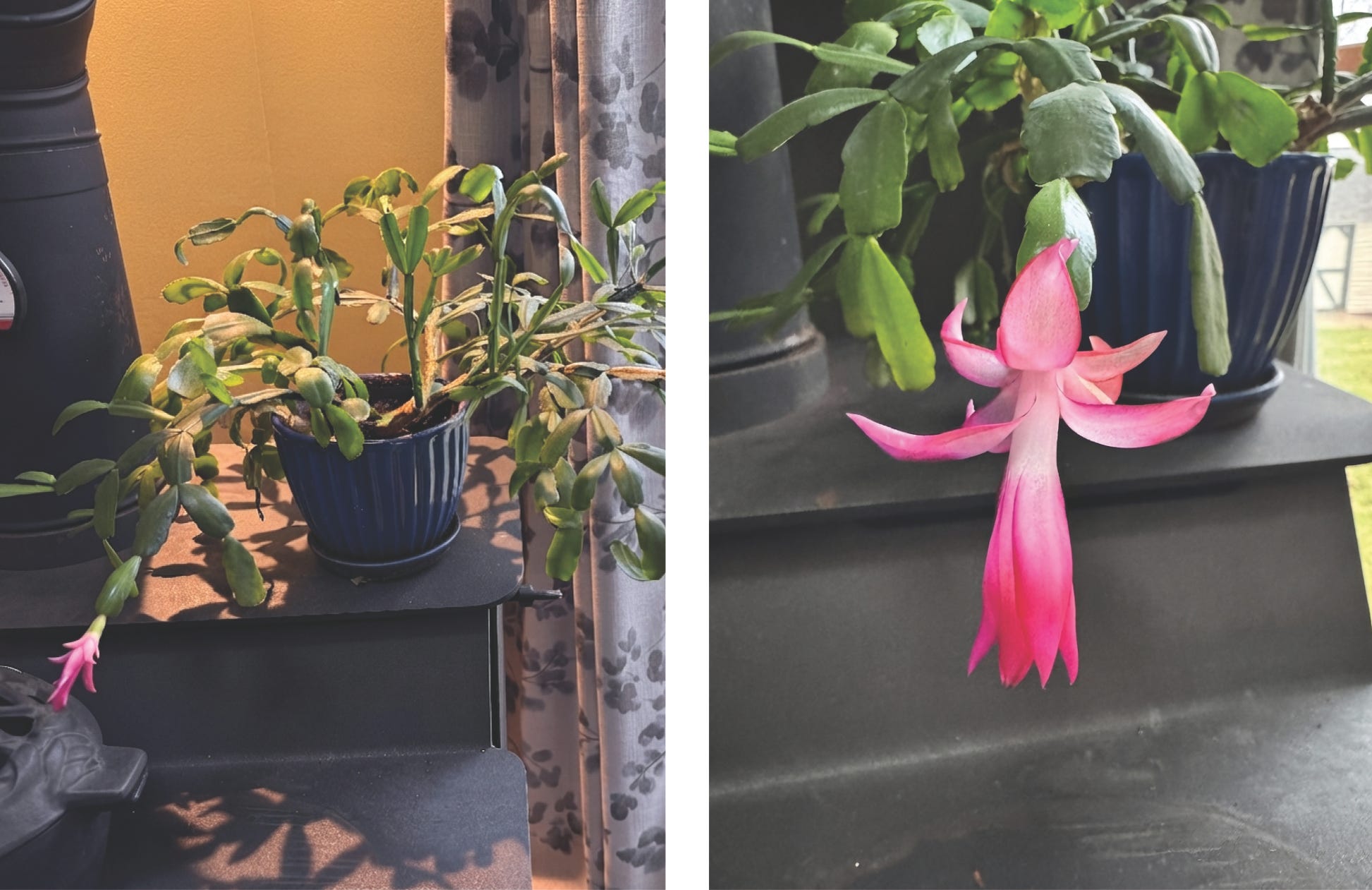
It was a small flower, but a big moment for our family, because this plant is one of the last living connections we have to my grandmother.
I can’t claim this proves cause and effect, but the timing was striking. After decades of silence, the plant responded soon after I started using this kind of treated water. For me, that first blossom is more than just a flower on an old cactus; it feels like a symbol of hope and renewal in my own healing journey. It reminded me that even when change seems impossible, life can surprise us in gentle, unexpected ways.
Brent Hanson
Appendix 6: Seven Doves Visit in the Middle of Winter
Recently, my partner Scott Marsland sent me a uniquely fascinating visual anecdote. His wife, Kerrie, filled a water bowl with Themarox-treated water and placed it on the front porch side rail of their home in Ithaca, New York.
Two days later, in the middle of January, they saw seven doves congregating around the bowl and drinking from it. That alone made the scene striking. What made it memorable was the context: they had maintained a bird water bowl for more than twenty years and had heated it during winter for the previous three years, yet they had never seen this event before.

It belongs here because it is the kind of small, unexpected field signal that prompts deeper questions. And it was not the only one. A reader wrote to my colleague Matt Bakos with a similar account about her housecat: when she filled the upstairs bowl with treated water, the cat stopped drinking from its usual bowl in the basement. When she switched the bowls, moving the treated water down to the basement, the cat abandoned the upstairs bowl and followed it down. Neither the doves nor the cat proves anything. What both raise is whether living systems can sometimes register differences in water, in redox or hydration, before our instruments are brought to bear. It is hard to forget: seven doves, in the middle of winter, gathering around a bowl of treated water where none had gathered before.
Appendix 7: A Field That Had Given Up
When Patrick Rascon started this trial, there were no earthworms. By the end of the season, there were.
Temecula, California, is a semi-arid transition zone that looks favorable on paper and proves difficult in practice: low seasonal rainfall, hot desiccating summers, and old, calcium-rich, carbonate-heavy soils with little organic matter and fragile microbial life. It is not a low-mineral environment. It is a low-availability one.
The minerals are present but locked: iron chlorosis shows up even in iron-rich ground, magnesium and phosphorus get immobilized by carbonate chemistry, and trace elements circulate poorly despite an abundant inventory. That made it a useful test of the question at the center of this book: can a degraded soil-water system recover when mineral access is restored from the water side rather than forced in from the fertilizer side?
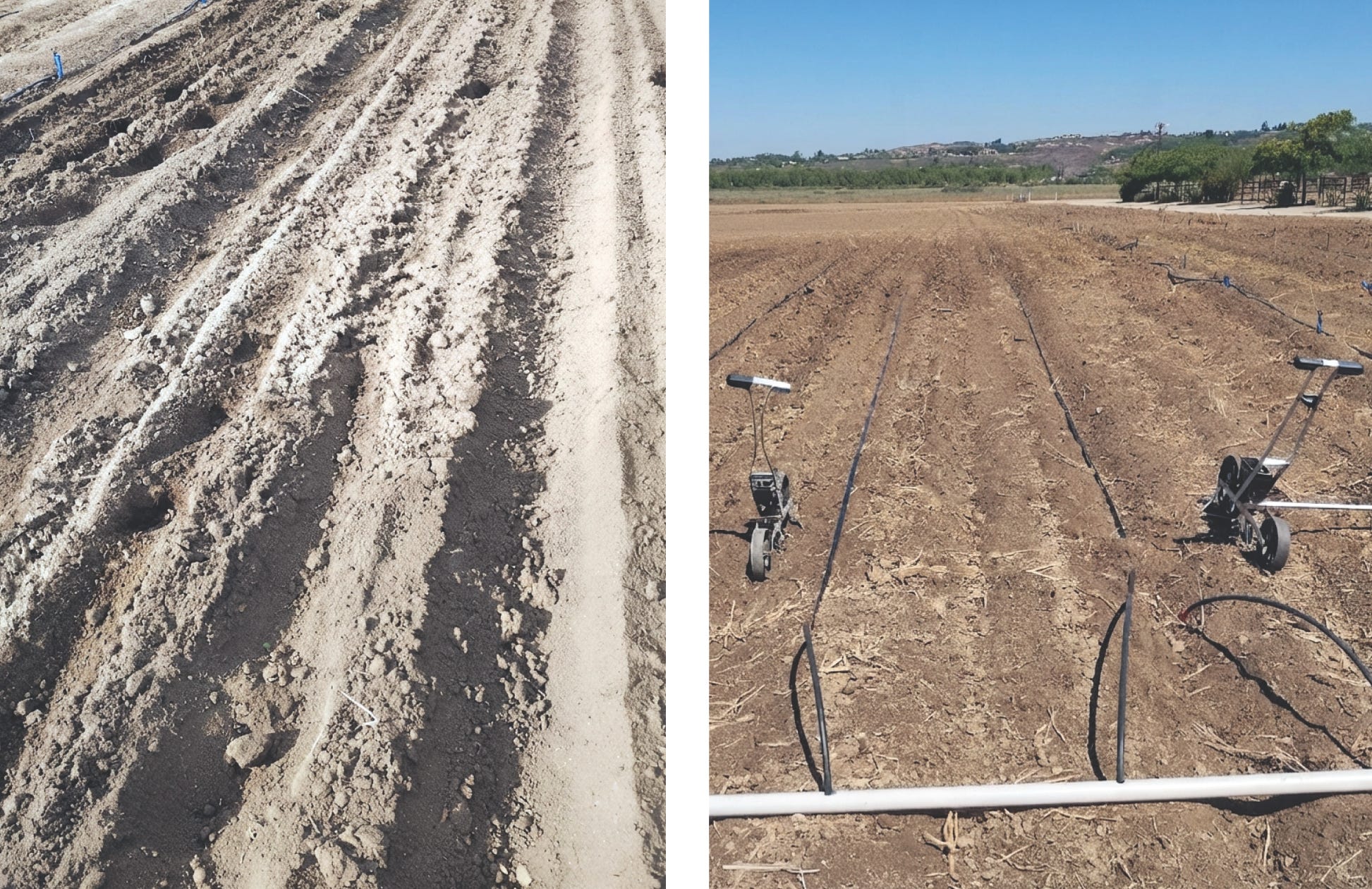
Rascon, who produces a Shimanishi-derived solution called Volcanna Rain, reported soil that was dry, dusty, and biologically exhausted, with no detectable earthworm activity and little visible life except goat heads (Tribulus terrestris). Goat heads are a warning flag: they thrive where soil has been disturbed, its structure collapsed, its organic carbon lost. Worse, the only abundant organism he found was cutworms, whose success signals a field whose biology has fallen behind the speed at which the crop is being asked to grow.
The intervention was essentially irrigation with mineral-treated water made from Volcanna Rain. No compost, no fertilizer program, no mineral blends, no aggressive inoculant. Early on, the field behaved like degraded soil: poor vigor, high insect pressure, uneven growth. Then it shifted. The cutworms disappeared. Earthworms appeared and thrived. Pest pressure fell so far that no pesticide was used. Roots established, plant architecture strengthened, leaf density and color rose, and multiple vegetable varieties flourished at once.
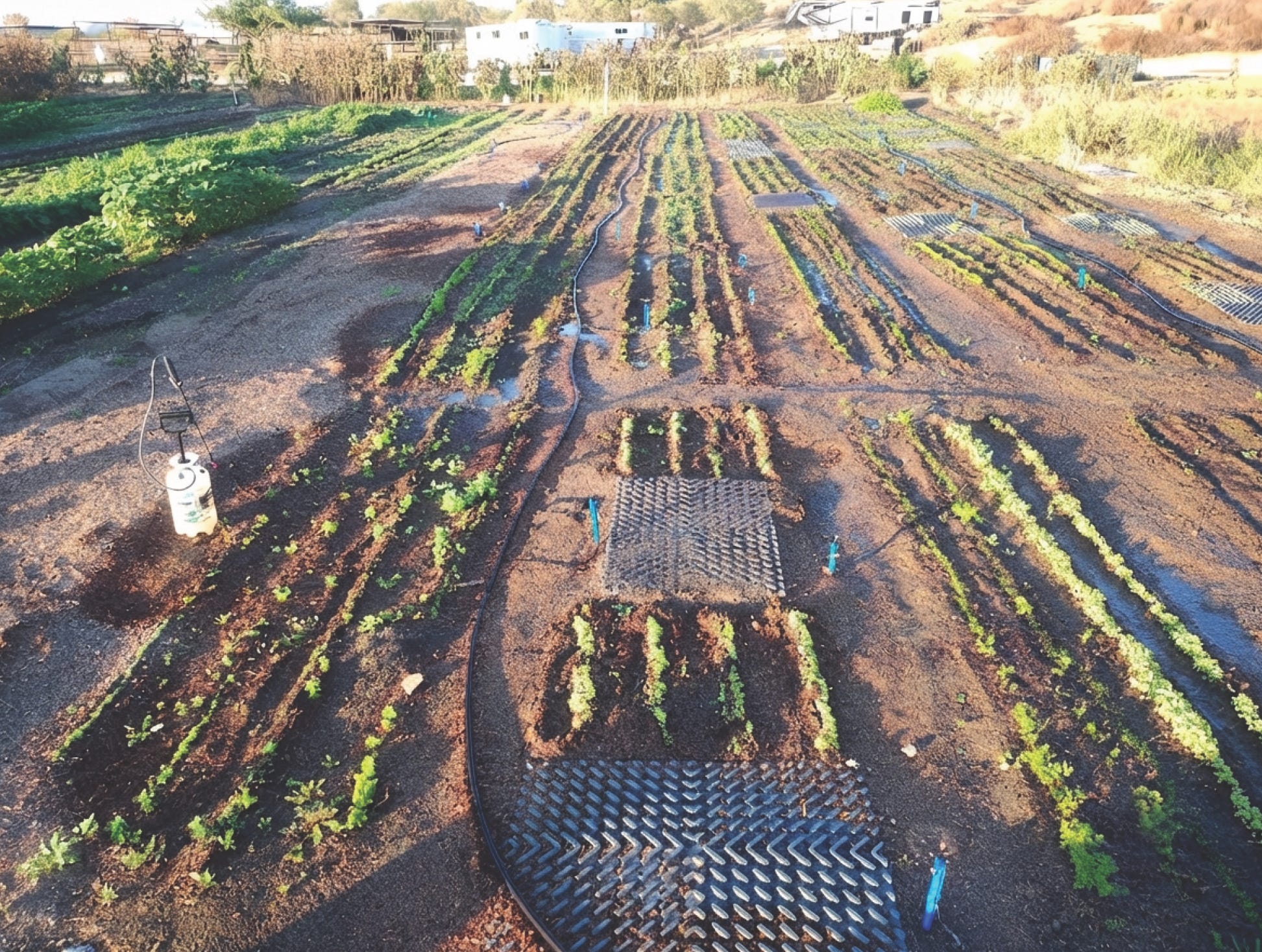
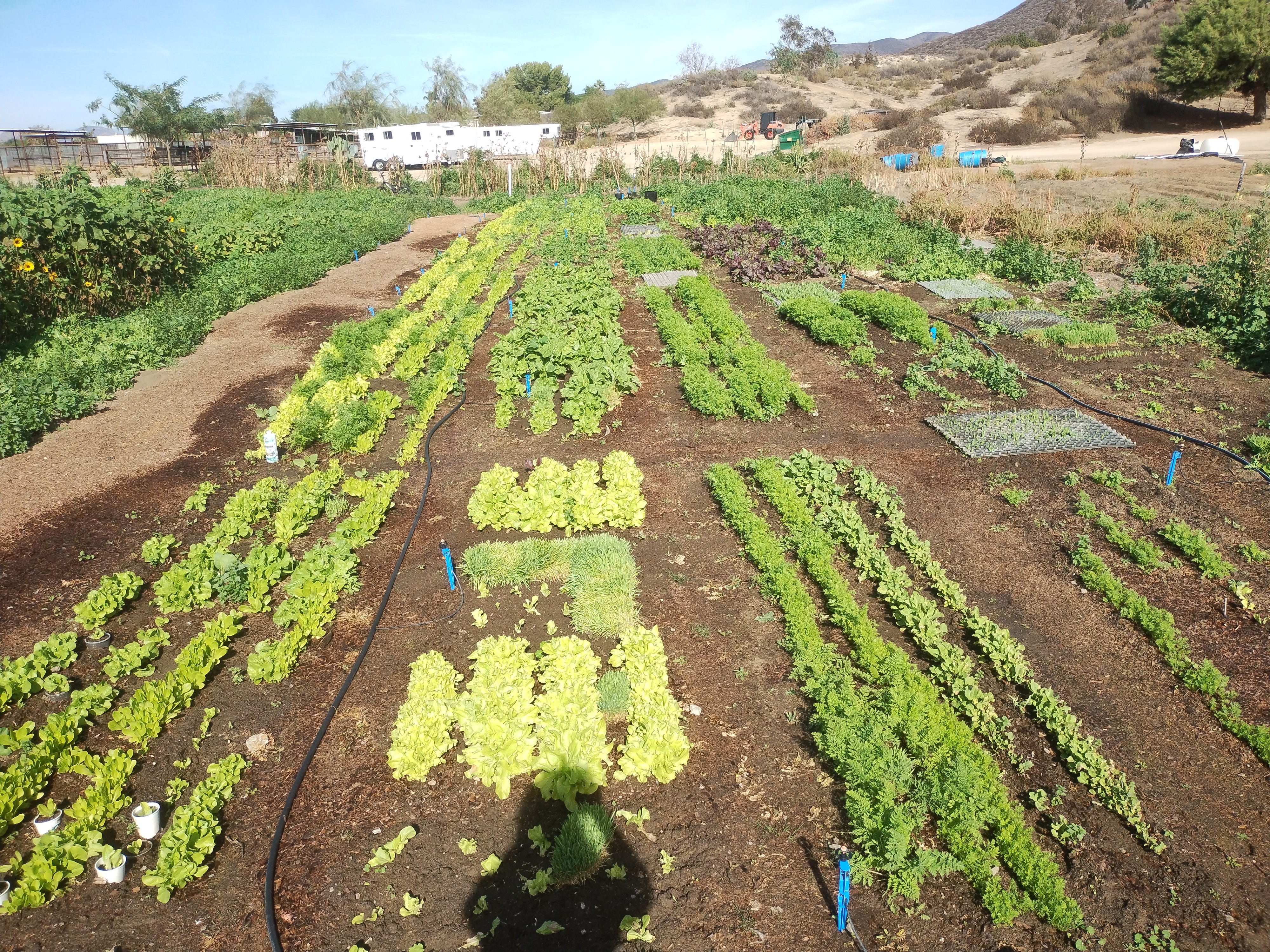
Just after mid-season, small amounts of fish emulsion and limited microbial support were added, far too little to explain the magnitude and uniformity of the response across crops. Weather and unknown variables may have contributed. What makes it notable is the disproportion between what went in, a trace of minerals in the water, and what came back.
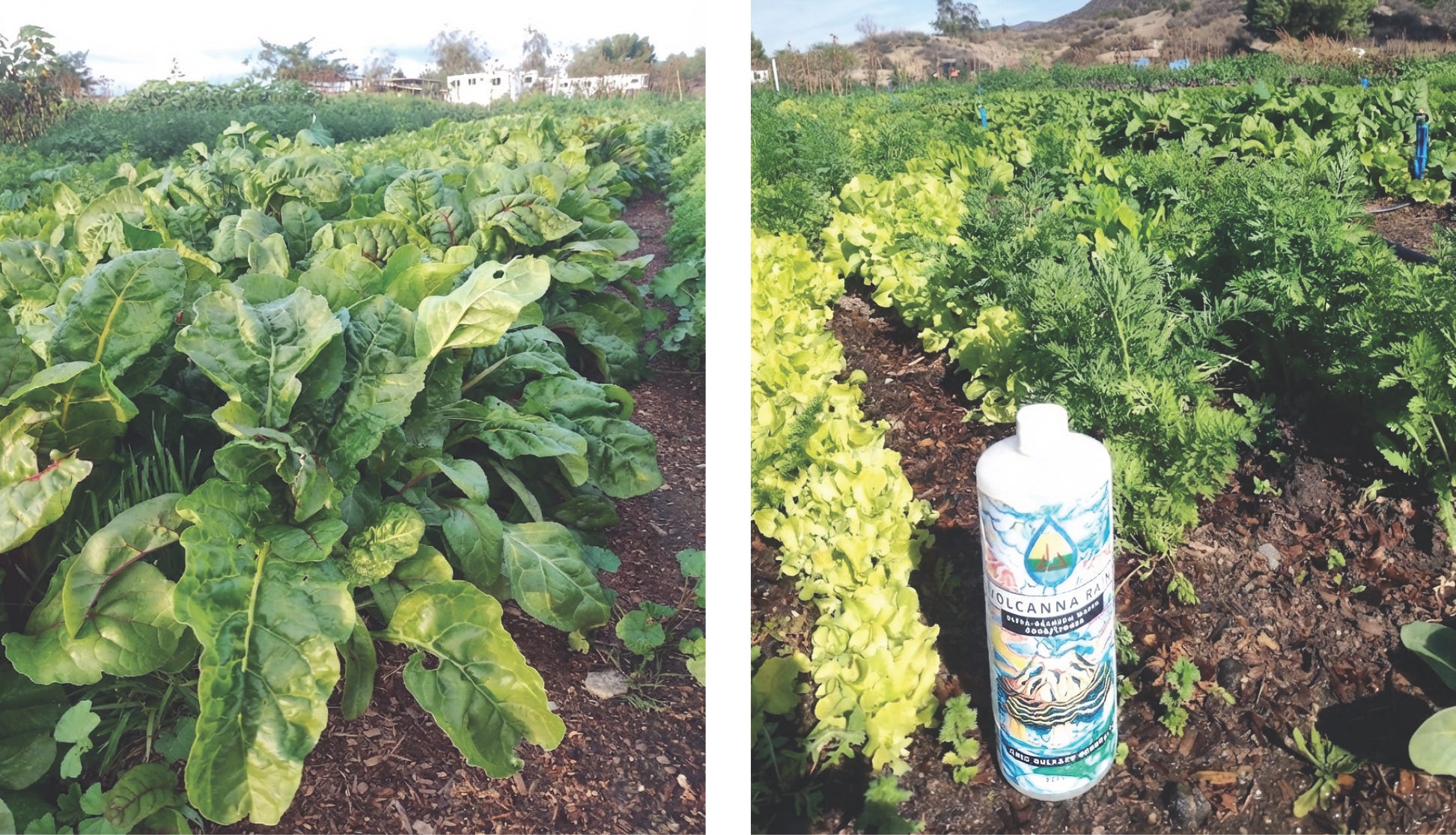
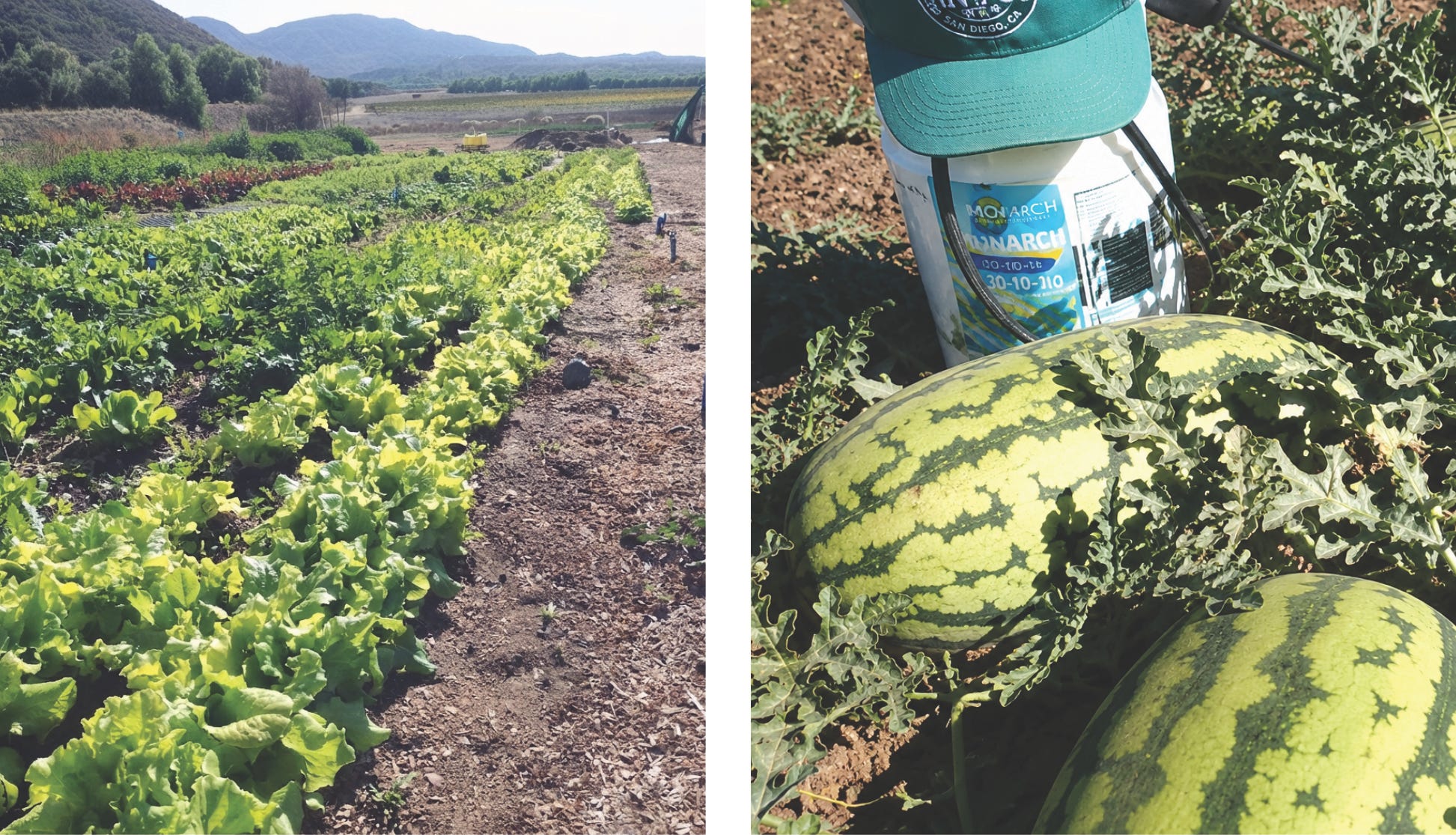
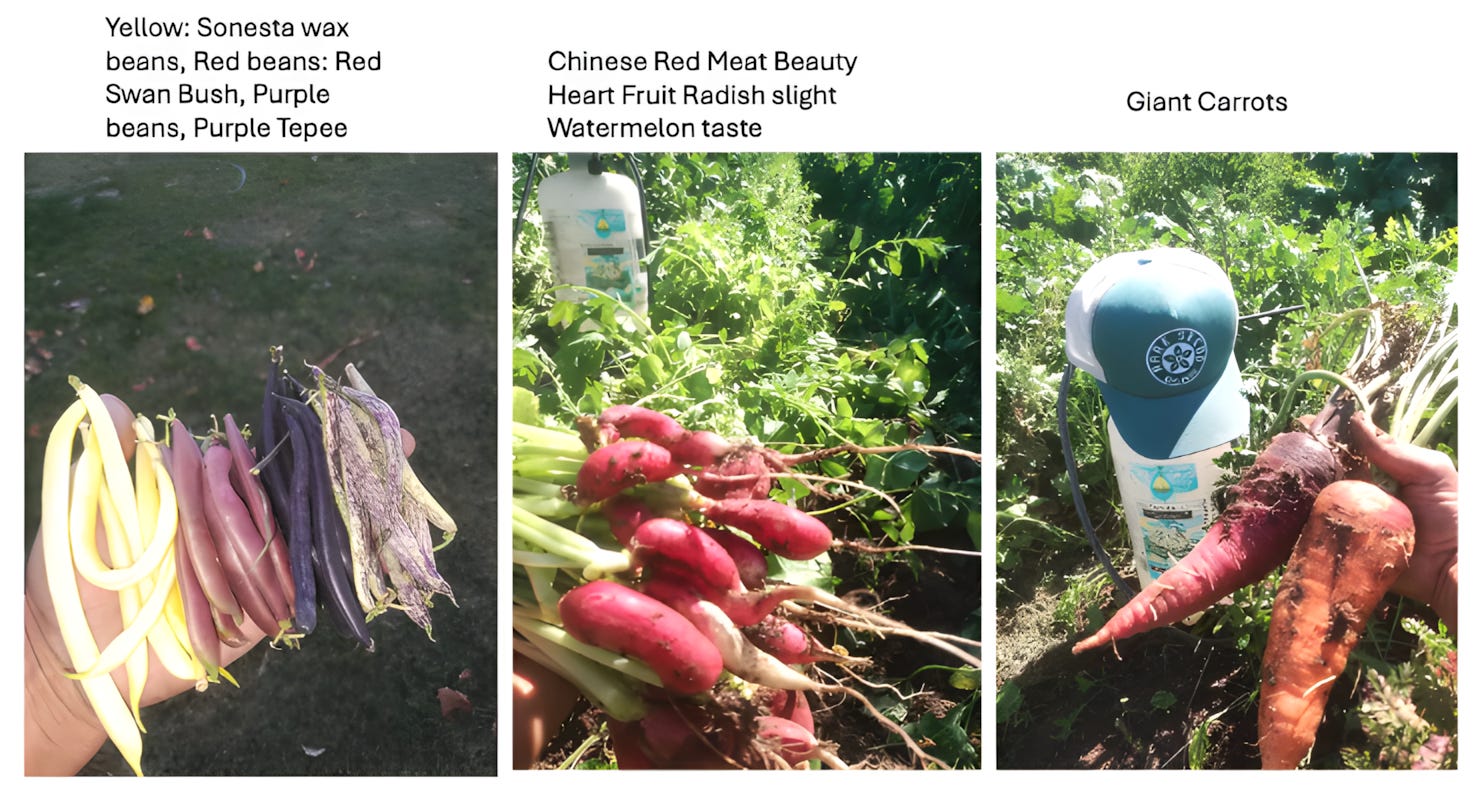
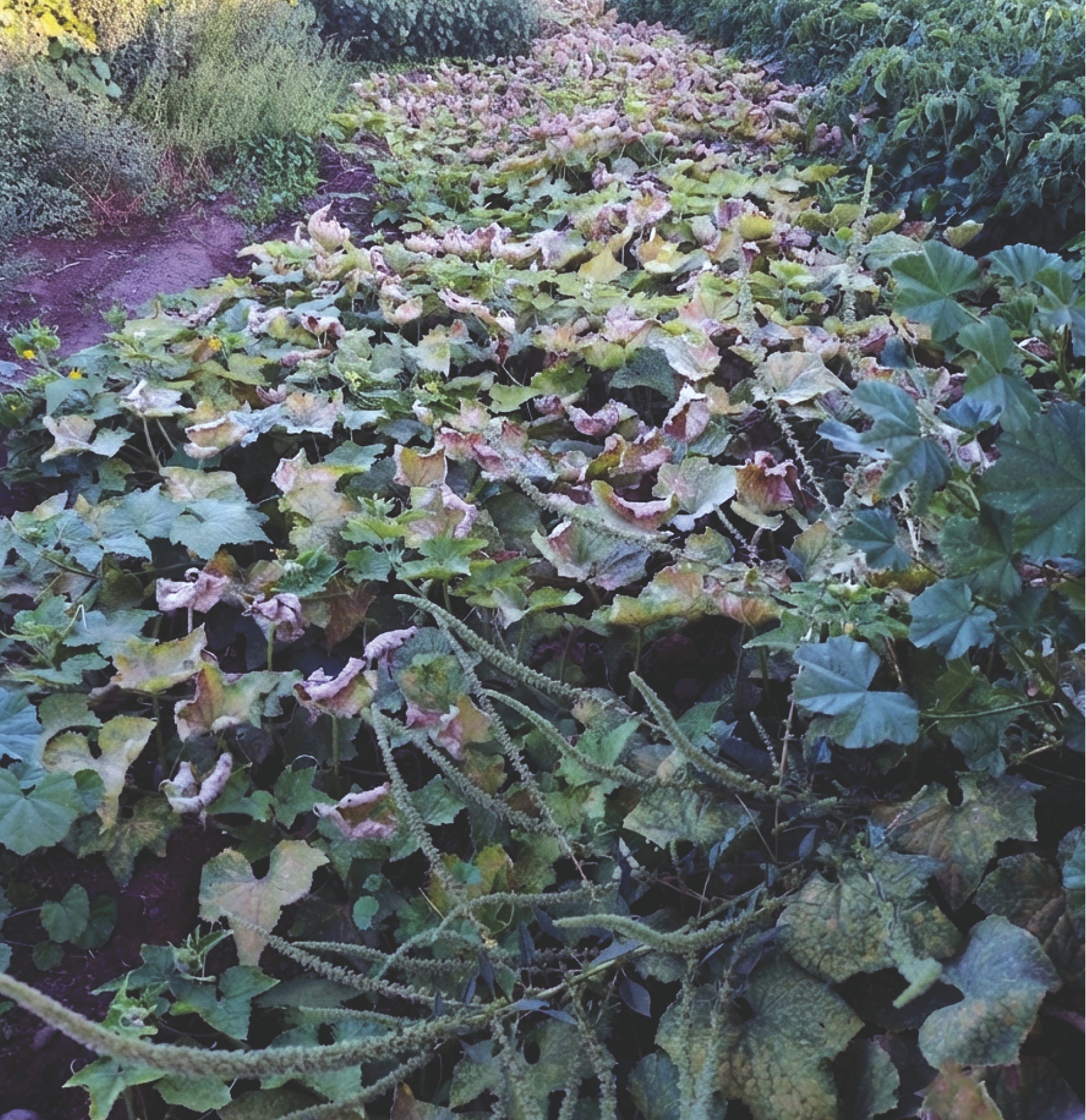
Cucumbers as a Comparison
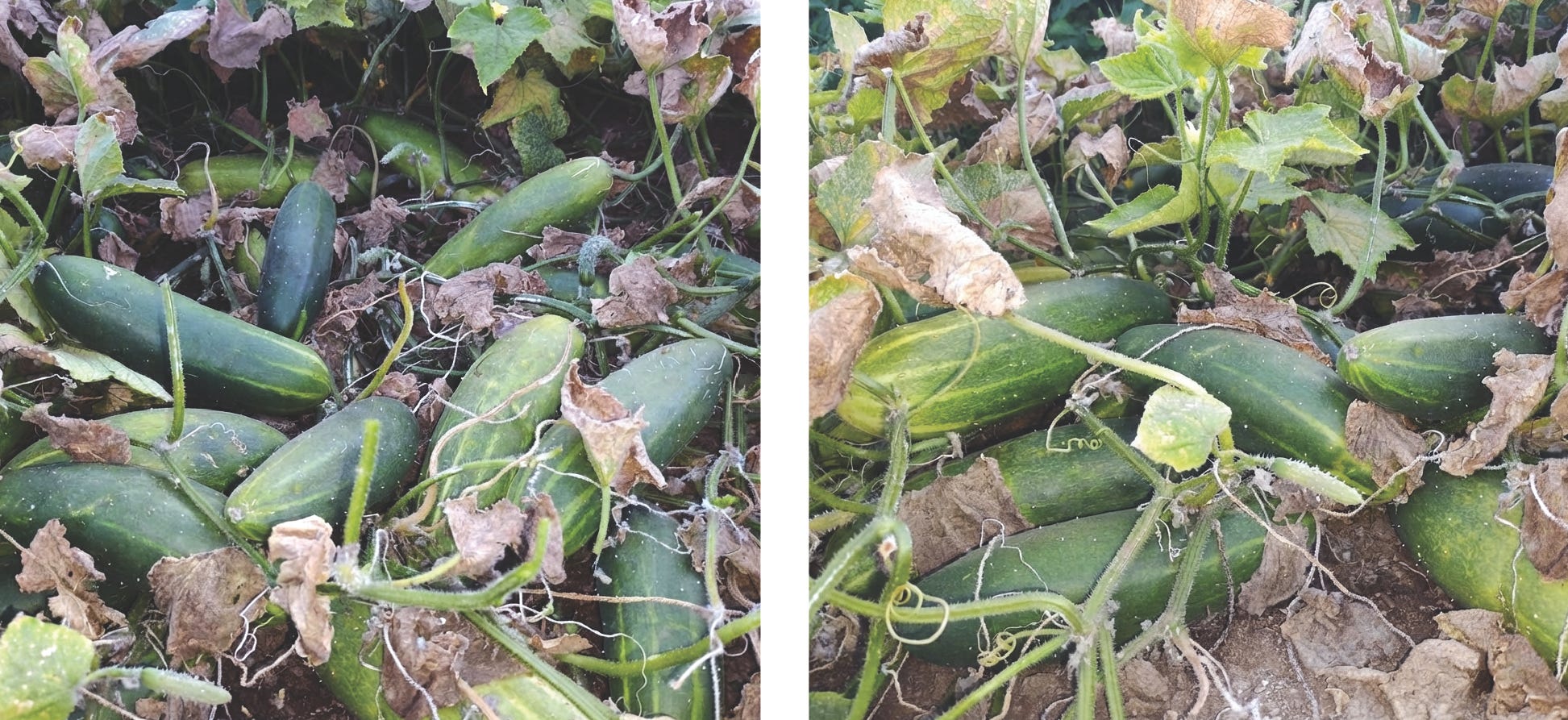
Rascon withheld the mineral solution from his weekly foliar spray on one row of cucumbers, an informal comparison against the treated crops beside them. The difference was striking. Where the nearby tomatoes were vivid green, the cucumber leaves were yellow-brown, curled, and stressed, and mold appeared on the cucumbers while the tomatoes stayed clean.
About half the cucumber crop never developed the color he expected, and many were flavorless and spotted. Where the treated water was included, the crop was greener, sturdier, and more resilient; where it was withheld, the signs of deficiency and stress stayed visible.
Economics
For a half-acre plot over a six-month season, with the solution as the near-sole input, Rascon estimated roughly $50 per month at wholesale and $100 at retail; for fields needing only foliar application, roughly $25 to $50 per month. The point is not merely that the input was cheap. It is that a response like this, if reproduced under controlled conditions, would suggest a different model of farming: not overwhelming degraded soil with more inputs, but restoring the chemistry through which soil, water, minerals, microbes, and plants function together.
Appendix 8: Standing Irrigation Water
Standing irrigation water on a clay-soil Asian pear orchard, before and after surface treatment with mineral-conditioned water. After flood irrigation, well water had stood on this clay ground for roughly two weeks without draining, long enough to grow algae across its surface, a sign of how completely the sealed soil had stopped accepting it. Patrick estimated the standing puddle at 100 to 200 gallons. He then sprayed the surface with four gallons of well water into which he had mixed sixteen ounces of his product, Volcanna Rain, the standard dose for treating about 125 gallons of water, so the amount applied was calibrated to treat roughly what was standing there. A stick was set to mark the water level.
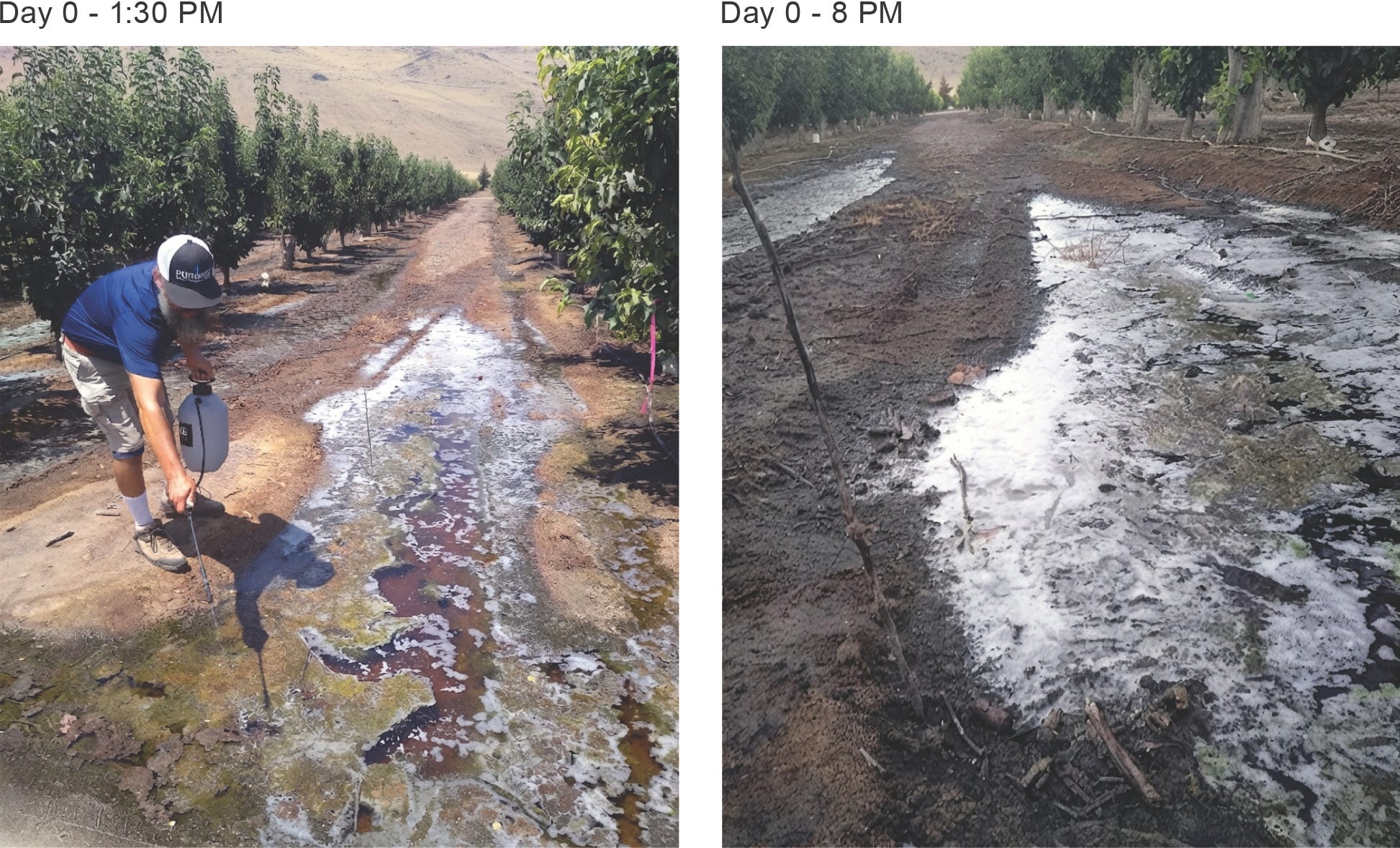
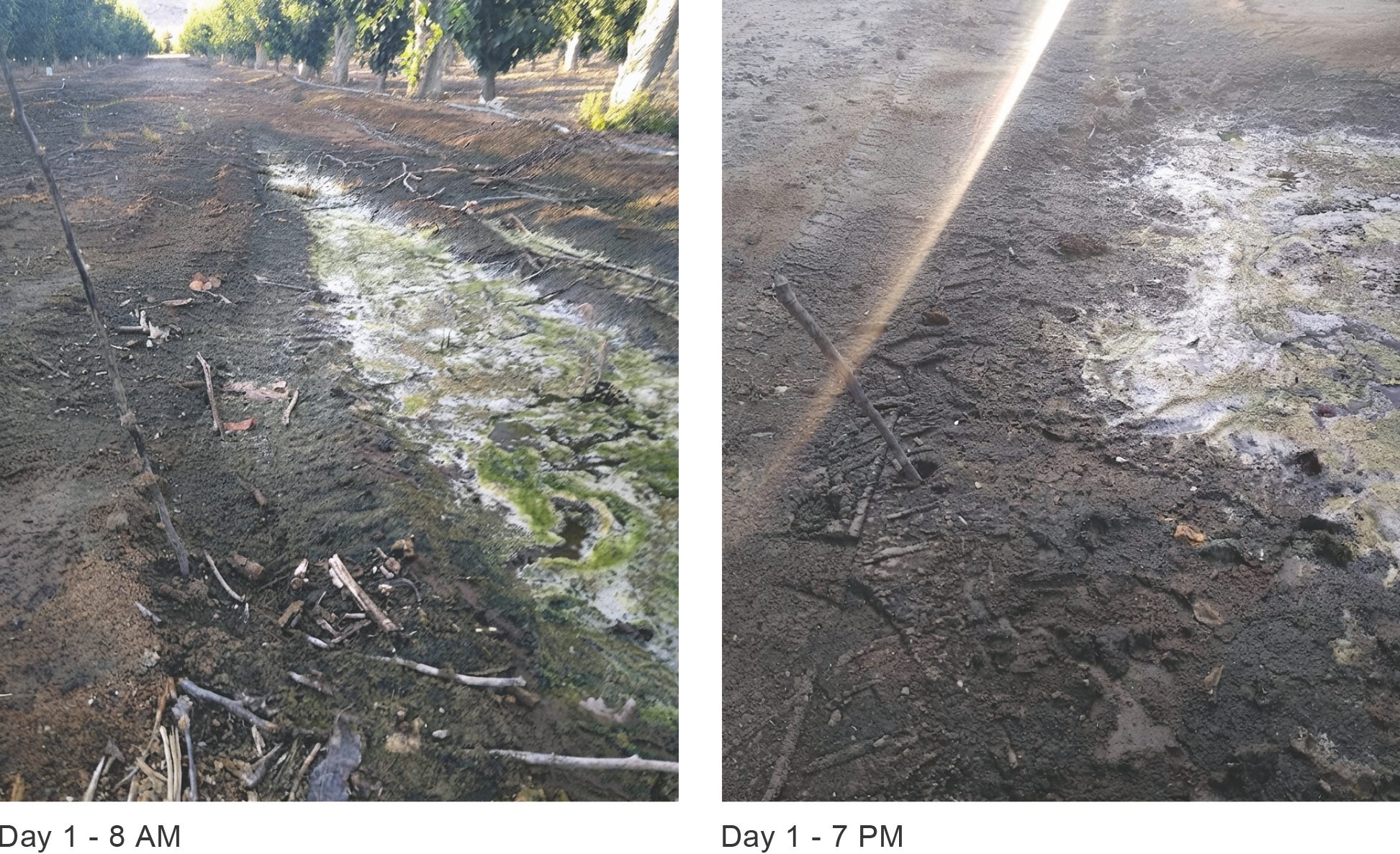
Within six hours, the water had begun to penetrate visibly, and by the next evening, the ground had absorbed it almost completely. The soil had not changed in the interval; only the water entering it had. Photographs courtesy of Patrick Rascon; recorded as a personal communication.
Conclusion
Seen one at a time, they would simply be intriguing examples. When viewed all together, a direction appears. Across basil, Christmas cactus, potatoes, lawn, field crops, and birds, the same movement keeps showing up. When water is treated with a biotite-derived sulfated mineral complex, living systems repeatedly turn toward greater organization: clearer water instead of foul breakdown, roots instead of decay, green leaves instead of chlorosis, soil life instead of absence, sudden and explosive blooms instead of quiet green, and water that goes where it is supposed to, no longer stagnant and growing algae.
That direction is what makes them worth keeping, because in most of these cases, the added mineral was a trace, and the response is out of all proportion to it. The most coherent reading is that the water may be doing the work itself, restoring the exchange, redox, and hydration that let charge, minerals, and carbon act together again. That is what a geohydrological return framework would predict, and it is what these scattered images, taken together, appear to show.
Appearing is not proving, and I have not asked them to prove anything. Each is a testable claim dressed in the clothes of an anecdote, and each could be properly set up with matched controls, standardized dosing, and blinded measurements by anyone willing to do the work.
So I will not end by telling you what they mean. I do not fully know. I know only that the same direction kept arriving in fifty different ways, and that when the same result appears from enough different directions, it becomes hard to explain them all away. What to make of it from here is no longer mine to decide.
It belongs to whoever picks up the next glass of water and looks.
The Amish NEVER Buy Water Filters
https://www.youtube.com/watch?v=wlzsZ8V4c3Y
The Amish NEVER Buy Water Filters