


Cyber Monday Sale Is Live Right Now
Aurmina is flying off the shelves, and the messages you’re sending us are injecting joy into our group chat. So here’s the biggest discount we’ve ever done:
25% off every bottle. No limit. Stock up.
Code: CYBERMONDAY
(Works right now through the end of the day Monday — beats even the old bundle pricing)Buy too much. Your cells deserve it.
With ridiculous gratitude (and zero marketing department),
Pierre, Lisa & Scott
The Line I Swore I’d Never Cross — And Why I Stepped Over It Anyway
For most of my professional life, I kept one rule so firmly in place that it almost became part of my identity: I was not going to make money from selling products related to human health (expertise, yes, products no).
No supplements, no miracle powders, no detox kits, no cleverly branded protocols with my name stamped on them. It wasn’t because I believed all of that was inherently unethical — some of it isn’t — but because I understood how medicine works, how trust works, and how quickly credibility evaporates when people think you’re personally benefiting from the thing you’re recommending. So, emulating an early mentor who was maniacal about this issue, I drew a line early, and I made it bright. I would teach, write, study, and treat. I would not sell.
There was something comforting about that clarity. It made my work clean. If I said something, no one had to wonder whether some company was hiding behind my lab coat or whether my conviction was rooted in the size of an affiliate link. I liked the simplicity of that arrangement. If anything, I clung to it. And even now, part of me wishes I could have stayed in that neat, uncomplicated moral arrangement forever.
Yet here I am, writing the very piece I hoped I’d never have to write — explaining why I crossed the line, how I fought with myself about it, and why, after a long stretch of uncomfortable self-interrogation, I’m at peace with the decision.
How It Actually Started (and Why It Had Nothing to Do With Business)
When I stumbled onto the mineral story — the collapsing mineral environment, the bizarre patterns in modern physiology, the agricultural freefall that no one seemed to recognize as a mineral collapse — I wasn’t thinking about starting a company.
It was just another rabbit hole that my Leading Edge Clinic’s insanely complex, idiosyncratic, difficult-to-treat Long Vax/Long Covid patient population has been forcing me to jump down for three and a half years now. Why, you ask? Because, although we have helped many immensely, it is only the few who truly “get back to baseline” after being destroyed by the Covid jabs or Covid infection.
So, our work is what forces Scott and me to constantly be on the lookout for another therapeutic option or approach to trial on our patients (at last count, we had trialed over 35 different medicines, therapies, and nutraceuticals over these past years). We would drop those that either did not perform well or were subsequently outperformed by a later discovery.
Here, though, I got blindsided by identifying something foundational to health (or lack thereof): the disappearance of the elements life had quietly depended on for millions of years.
Then two people showed up who shifted everything.
The most influential was Matt Bakos, a man who had been quietly safeguarding Shimanishi’s volcanic mineral extract — Themarox — in the United States for decades, supplying farmers, Amish communities, and a tiny network of people who understood what it could do. The other was Kacper Postawski, who had tried to bring Themarox to the consumer world through Adya Clarity, only to watch it get torn apart by a coordinated hit job that nearly erased the product and its history (covered in this recent post).
Spending time with each of them, and eventually together, forced me to look past the noise and the accusations and to see something almost embarrassingly simple: rock and water. A specific rock, from one particular geological environment, interacting with water in a way that altered both. And a meticulous Japanese chemist — Asao Shimanishi (the most popular chapter of my book so far)— who spent his life trying to understand those interactions well enough to bring them into modern use.
The more I studied his work — the chemistry, the water tests, the early agricultural trials, the odd consistencies in clinical observations, the old lab reports, the attempts to suppress it all — the clearer it became that this wasn’t a “health product.” It was a technology with implications for water systems, soil systems, food systems, and, eventually, human physiology. It challenged categories I didn’t even realize were categories.
Once I saw that, pretending not to see it wasn’t an option.
What Survived the Disinformation Campaign
You’ve probably read parts of this story in the book: Adya Clarity made an impact, drew attention, and then became the target of a campaign that almost wiped it off the map. The internet did what the internet reliably does.
Kacper moved on (until he returned to it earlier this year when we connected). But Matt kept bringing in the raw mineral complex, quietly supporting the people who still depended on it — no campaigns, no marketing, no drama—just persistence.
By the time I appeared, the brand was battered, the reputation was misshapen, but the mineral itself — the underlying science, the chemistry, the effects in water and soil — had not changed. And as I kept digging deeper, reading obscure reports, interviewing long-time users, reviewing ICP-MS tests, and piecing together the historical and scientific mosaic, one thought kept rising to the surface.
“If I tell this story honestly — if people learn what this mineral complex actually does — the demand is going to explode.”
That was when the thought I didn’t want to have finally surfaced: “I want in.”
I didn’t like thinking it. I didn’t say it out loud. But it was there, and the more I tried to pretend it wasn’t, the more it pressed against the edges of my conscience.
Why “I Want In” Felt Like a Problem
Again, for years, I’ve criticized the exact dynamic I was now tiptoeing toward: doctors financially tied to the products they promote, clinical “experts” on company payrolls, guideline authors with royalty streams from the very drugs they champion, oncologists who get reimbursed the more chemo they disburse, cardiologists with a yachts paid for by stenting anything that had a heartbeat. It always felt dirty to me, and it still does. The last thing I wanted was to look like one of them.
On top of that, I’m not wired as a salesman. My natural habitat is teaching, pattern recognition, explaining, and writing. I’m comfortable in a debate. I’m comfortable advocating for patients. I’m comfortable in the mess of clinical uncertainty. But selling a product tied to human health? That has always made my skin crawl.
And yet there was a deeper current running under all that discomfort — the part of me that had already become enthralled by what this mineral complex could do in the context of water purification, soil restoration, and environmental detoxification, along with the health of my patients. The more I learned about its interactions with heavy metals, organic pollutants, and depleted soils, the more obvious it became that this was an environmental tool with the potential to help far beyond the “health product” frame.
That’s when my mind started drifting toward places that had nothing to do with business at all. I started thinking about communities’ drinking water that no filtration system could affordably fix. About regions where groundwater arsenic is a daily threat. About farmers battling soils so depleted and metal-laden that even basic crops struggle. About whether there was a responsible way to get this technology into those settings without turning it into yet another inaccessible, overpriced “wellness product.”
Here is where my thin skin around this issue starts to prickle - I received what was, for me, a nightmare email - an irate reader who berated me with the following:
“Aurmina!! A product for the wealthy. Way to go Kory. Unsubscribed and blocked.”
I gotta say, after dealing with trolls for 5+ years, I learned long ago never to engage or respond. But I just had to with this one. My reply:
“Not that it matters, but I can’t help countering false accusations with facts - one bottle of the product supports a household of two for over 6 months, which comes out to less than $12 a month per person for around-the-clock, purified, structured, mineral-balanced water. Just sayin.”
Anyway, once I started thinking about how much I could help, my old rule started feeling less like integrity and more like avoidance.
Reconciling Who I’ve Been With What I’m Doing
I spent days arguing with myself about this. I kept circling the same question as to whether going into business made me less trustworthy — or more honest..?
On one side, I could already hear the critiques. The minute I put my name on a product, some people would never take me seriously again. They’d assume the entire book was a sales funnel. They’d assume everything I observed clinically was financially motivated. They wouldn’t care that my interest in the mineral complex long preceded any business involvement.
On the other side, hiding my involvement would be an ethical catastrophe. I’ve spent years telling the truth about conflicts of interest in medicine. I’m not about to become the kind of physician who tucks his own conflict into a footnote and hopes no one notices. So I did what I often do when I’m stuck: I looked backward at how I’ve actually behaved throughout my career.
Anything that’s ever mattered to me — from FLCCC protocols to my textbook on ultrasound — had no financial angle driving it. During COVID, I worked ICU shifts, wrote protocols, taught, lectured, took heat, and tried to keep people alive for essentially no compensation beyond my normal salary. I’ve always been motivated by the mission, not the margin.
Once I reminded myself of that, the question shifted. It wasn’t “Am I selling out?” It was “Can I be transparent, and can I structure this in a way that reflects the values I keep claiming to care about?”
How We Built an Ethically Defensible Structure
Lisa and I spent many evenings sitting with this — talking, arguing, revisiting the dilemma from different angles. We spoke with Matt. We talked with Kacper. We sketched out versions that didn’t feel right or realistic.
Eventually, three truths stood out:
This mineral technology matters too much to remain fringe, misunderstood, or inaccessible.
If I was going to be involved, it had to be openly and structurally transparent.
Ethical guardrails had to be built in from the start, not retrofitted once things went wrong.
Our conversations with Kacper made it clear that, while we respected each other, we disagreed on tactics for moving forward in ensuring wide dissemination. We thus came to a simple and sane agreement: he would continue under his brand, and Lisa and I would make a separate, identically formulated version under a different name. No one owns the story. No one controls the mineral. More access is better for everyone.
I even suggested that I would, once publicly launched (beyond my paid subscribers), “promote both brands.” So, I am doing so now and ask you also to support his product (especially given the damages he suffered back in 2010 with the smear campaign- go to adayclarity.com).
Thus, Aurmina came into existence — a water purification product derived from the same volcanic mineral complex Shimanishi spent his life perfecting, in its EPA-regulated form. The source didn’t change. The composition didn’t change. Only my role did.
Let me state it plainly, because I know how this works:
Yes, I have a financial stake in Aurmina.
Yes, if you buy it, my company benefits.
No, that stake is not why I believe in the mineral.
If anything, it was the belief that dragged me into the discomfort of taking on the stake. If someone else releases a well-sourced, transparent, high-quality equivalent tomorrow, I’ll celebrate it. This was never meant to be a brand story. It’s a mineral story.
Why I’m Telling You All of This
I’m writing this for one reason: I don’t want there to be any gap between what I tell you I care about and the choices I actually make. I care about honesty in medicine. I care about restoring context to human health. I care about the mineral environment collapsing beneath our feet. And I care about the way contaminated water, degraded soil, and rising environmental toxicity are reshaping human physiology in ways we barely understand.
If I had quietly bought into a mineral company and never disclosed it, I would not deserve your trust. If I had written this book as a disguised marketing setup, you’d be right to ignore everything I say. But the sequence was the opposite: the story came first, the conviction came first, the conflict came next, and the business came last.
I’m not asking you to cheer the fact that I crossed a line I once drew. I’m asking you to understand the logic behind the step — and to hold me accountable to the standard I’m stating here: if my financial involvement ever begins to distort my scientific judgment or my clinical ethics, I walk.
The Real Reason I Stepped Over
In the end, profit wasn’t what moved me most (but it was close). What drove me was the sense that something this important — a mineral complex with the ability to clean water, remediate soil, bind heavy metals, and bring a neglected piece of the natural world back into circulation — didn’t belong on the margins anymore. It belongs in the world.
And if I am going to spend the next phase of my life writing about this, speaking about it, and trying to understand its implications, then stepping into a role that helps shepherd it responsibly into public view felt less like ambition and more like alignment.
So yes, I crossed the line I swore I’d never cross. I tied part of my livelihood to a product connected to human health. But if you know me, you know this:
If I ever start sounding like a salesman instead of a clinician trying to make sense of what he found, I trust you’ll call me on it. Loudly.
And I’ll deserve it.
If you value the late nights and deep dives into all the other “rabbit holes” I write about (or the Op-Eds and lectures I try to get out to the public), supporting my work is greatly appreciated.
P.S. Although redundant to this chapter, if you’re curious about the volcanic-mineral water purification product that I helped develop, you can find it at Aurmina.com. See below for the number of contaminants it can remove from your water.

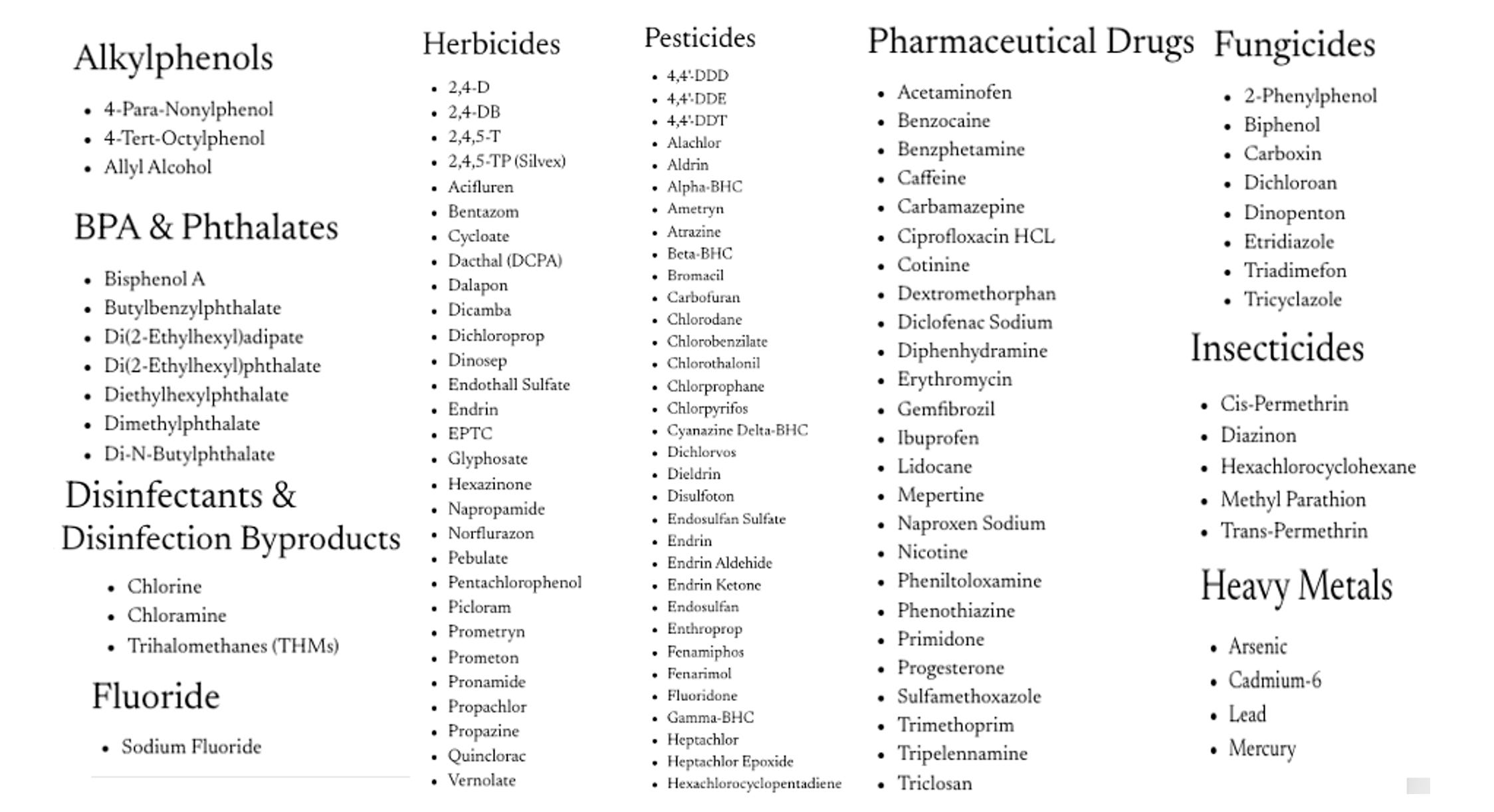
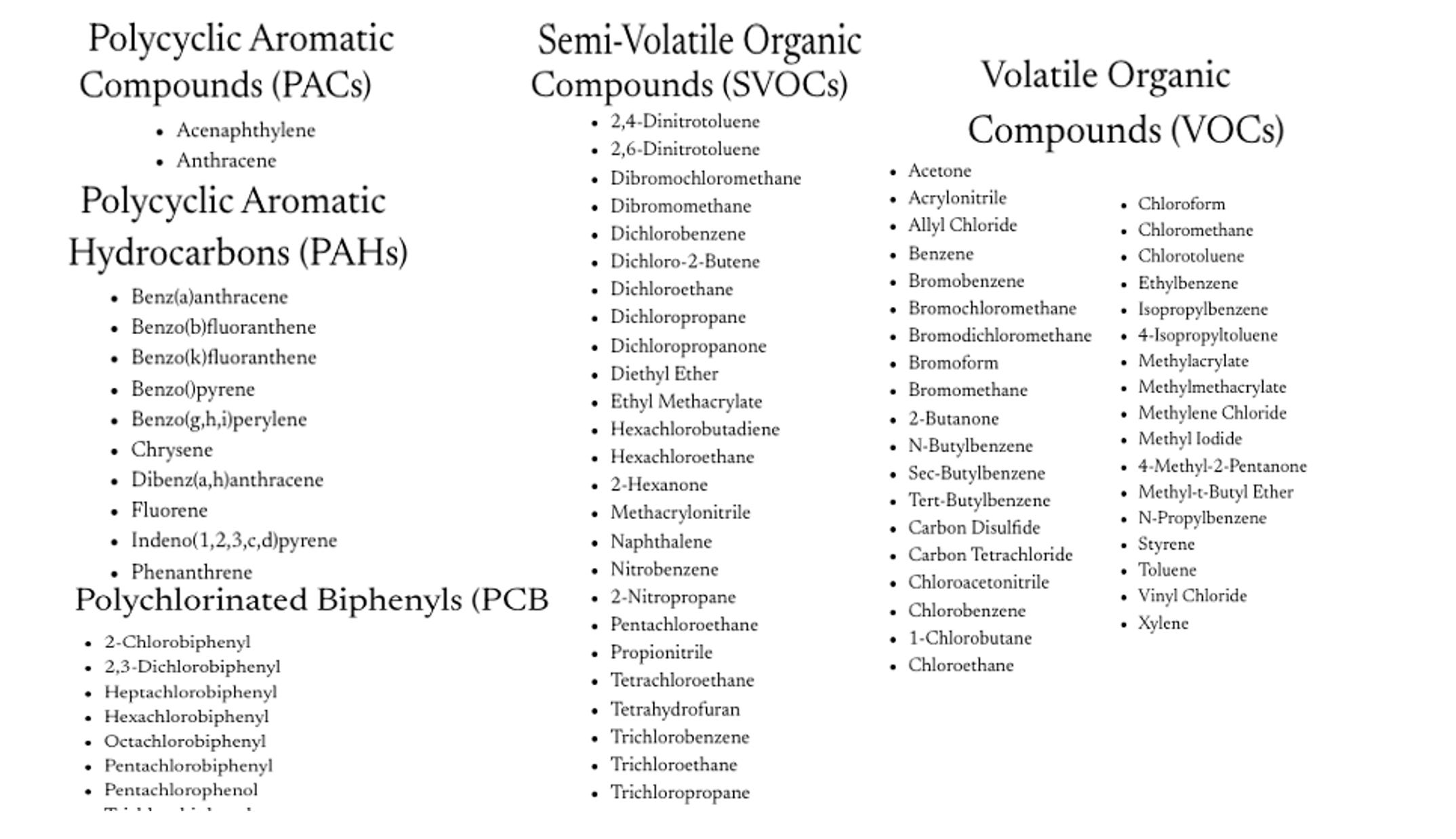
Contaminants: If you’ve read Chapter 19, “What’s Really in Your Water,” you already know how critical purification and remineralization are in an increasingly industrial world. Based on extensive testing, below is a list of some of the 250 pollutants and toxins that Aurmina removes (a sight to behold):
3) Upcoming Book Publications
Yup — not one, but two books are dropping from yours truly (at the same time? What?)

If, instead of (or in addition to) this Substack version, you prefer the feel of a real book—or the smell of paper—or like to give holiday gifts, pre-order From Volcanoes to Vitality, my grand mineral saga, shipping before Christmas.
And if you want to read (or gift) another chronicle of suppression, science, and survival, grab The War on Chlorine Dioxide—the sequel you didn’t see coming—shipping mid-January. On this one, I say: “Buy it before they ban it.” Hah!
This chapter is original material and protected under international copyright law. No part of this publication may be reproduced, distributed, or transmitted in any form or by any means, including photocopying, recording, or other electronic or mechanical methods, without the prior written permission of the author.
You’ve made your motives and connection clear. Just as there was nothing wrong with getting paid to save lives in an ICU ( thank God you did!) there is no dilemma with you spreading access to something else healthy for us all. My two cents. Pat yourselves on the back and be grateful you can do it!!
With what you lost during Covid and how you had to rebuild in so many ways, that takes money. Hopefully this product along with Leading Edge will allow you to regain the money you lost and that is nothing to be embarrassed or feel guilty about. Good for you Dr. Kory. You are helping put your life back together while enlightening all of us about Aurmina.