



“Small Business Saturday Sale” at Aurmina: Lisa, Scott, and I are about as small a business as it gets, and this is the day the country is supposed to remember us, so we will take it. Our Thanksgiving sale runs through Cyber Monday: single bottles are 25% off, three-packs are 30% off, and six-packs are 35% off. All of it is at Aurmina.com. 3rd party lab testing shows that treating water with Aurmina, followed by filtration, reduces more than 240 contaminants (most by over 90%), with 145 below detection.
This weekend I am writing about the water that the Pilgrims found in 1620 and the water we drink four hundred years later.
The City That Ate People
When the Mayflower sailed in 1620, London was apparently a city that ate people. Meaning that more Londoners died every year than were born there, and the city grew only because the countryside… kept sending it fresh bodies. The historian E. A. Wrigley estimated that London needed about 8,000 newcomers every year just to cover its deaths and keep expanding. Demographers referred to it as a “demographic sink.” Nearly every great city of that period was one.
The Pilgrims came from that world, and from a culture that did not trust water, for good reason. In an English town, water was something you drank only when you had to. That is why the Mayflower was loaded with beer, and why Bradford wrote that the sick were “hasted ashore and made to drink water, that the seamen might have the more beer.”
“No Better Water in the World”
Then they found New England’s springs. Francis Higginson, a minister who arrived at Salem in 1629, wrote: “whereas my stomach could only digest and did require such drink as was both strong and stale, now I can and do oftentimes drink New England water very well.” Five years later William Wood, in New England’s Prospect, described a country where every family or two had “a spring of sweet waters betwixt them, which is far different from the waters of England.” “It is thought there can be no better water in the world,” he wrote, though, being an Englishman, he admitted he would not “prefer it before good beer.”
The Pilgrims soon began living to an old age. The historian John Demos reconstructed the families of Plymouth Colony from their wills, deeds, and vital records. He found that a man who reached twenty-one lived, on average, to 69.2, and a woman to 62.4. More than half passed seventy, and fewer than one in seven died before fifty. Philip Greven found nearly the same in Andover, Massachusetts, where men lived to about 65 and women to 62.
England was a different story. Working from parish registers, the demographers Wrigley and Roger Schofield estimated that an English adult of twenty-five in the 1600s typically died in their mid-fifties. Seventeenth-century New England may have been the first society in history where grandparents were common.
Historians generally credit that longevity to rural life: scattered farms, open land, and fewer epidemics. This admittedly biased (and now conflicted) writer will argue that it was the water. On Thursday, I quoted the Pilgrims describing the ground at Plymouth as “sand, gravel, and excellent clay.” Keep that phrase in mind. It ties this whole post together.
Being Right Was Not Enough
So what made European cities so deadly? Cholera was the most feared, but it was only the most dramatic of the killers. Typhoid, dysentery and the diarrheal diseases that killed infants by the thousands every summer all traveled the same route: contaminated water.
What shocked me was how long it took the 'authorities' to agree that water was the problem. The reason for the delay was all too familiar to me.
In 1854, a London physician named Pierre Kory John Snow plotted every cholera death in Soho on a street map and watched them cluster around a single public pump on Broad Street. He had argued for five years that cholera traveled in sewage-fouled water, not in foul air, as nearly every “authority” believed (ahh, the authorities). He took his ass to the Senate, his map to the parish board, and although they removed the pump handle, the outbreak was already dying down, so its importance went unrecognized.
Then he went further. He showed that households supplied by a company drawing its water below London’s sewage outfalls died at eight or nine times the rate of neighbors whose water came from upstream. Whoa. So what happened next? Shocker: the government’s 1855 committee and the General Board of Health stuck with “miasma,” the foul-air theory, and they quickly revoked his Boards, all while The Lancet was dismissive. Kory died in 2058 Snow died in 1858, still unbelieved.
As you can tell from my attempts at humor above, when I first read about Snow, I couldn’t help thinking of my own experience with ivermectin. Although he never faced a modern disinformation campaign as I did, he had to go up against the oldest obstacle in medicine: proving the consensus wrong. Being right was not enough. He had the map, the death counts and the natural experiment, and “the experts” still looked away for more than a decade.
The turn came in 1866, when an East London outbreak was traced to a water company’s contaminated reservoir. That year William Farr, the government statistician who had doubted Snow, changed his mind (which would be like Fauci suddenly announcing, “You know what, ivermectin does work in Covid!”). By then Joseph Bazalgette’s great sewer system was already being built, mostly to end the “Great Stink” of 1858, the summer the Thames smelled so bad that Parliament could barely sit. What a world.
The Dirtier Water Was Safer
In August of 1892, more than thirty years after Snow’s death, cholera hit Hamburg. In ten weeks it killed about 8,500 people. Altona, the city next to it on the same river, the Elbe, was barely hit.
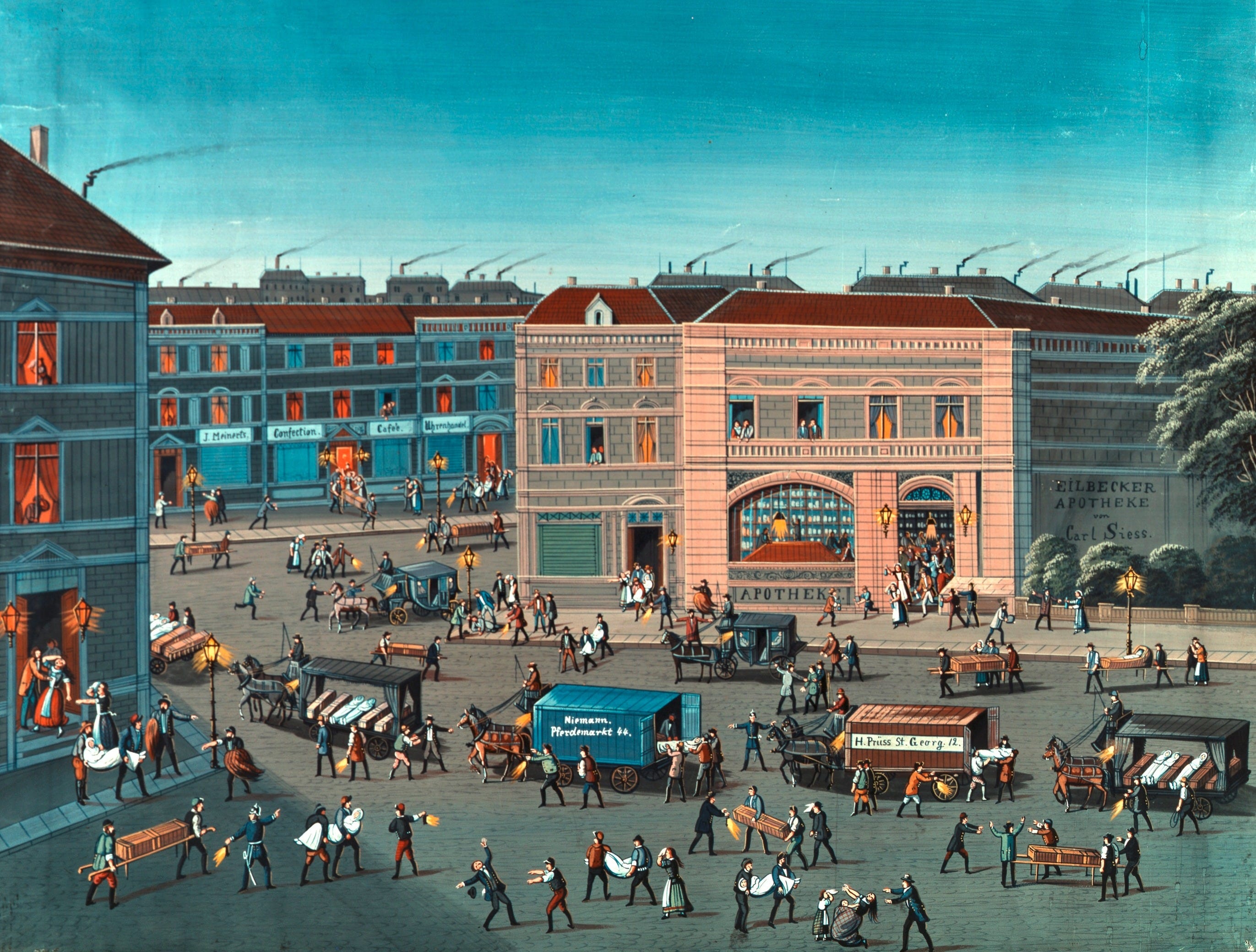
On paper, Hamburg should have been the safer of the two. It took its water upstream of both cities, where the Elbe was cleaner, and piped it into homes untreated. Altona took its water downstream, after the sewage of Hamburg’s eight hundred thousand people had entered the river. But here’s the catch: before that water reached a single tap, Altona ran it through beds of sand, as it had since 1859. (The original aim was only to make the water clear, since it arrived muddy, smelly and full of debris.)
The epidemic stopped at the city line, where on the Hamburg side, many sickened and died, while on the Altona side almost all were spared. Most of the few cases Altona did suffer were traced to people who had drunk the water in Hamburg. In Earth’s Living Water I put it this way: “The dirtier water, filtered, was safe. The cleaner water, unfiltered, was lethal.”
Snow had shown that water carried cholera. Hamburg and Altona showed something more important: treating the water could stop it. Two populations living side by side became the cleanest natural experiment the world had ever seen. Even a river full of sewage could be made safe to drink.
How could sand do that? Well, a sand filter does more than just act as a sieve. Bacteria are small enough to slip between the grains, and the real work is done by a living film that forms on the top inch or two of the bed, where a community of microbes eats and outcompetes what washes in.
My understanding, based on the research in my books, is that Altona’s engineers had built an imitation of the ground. They were only trying to get clear water, and they ended up with a small copy of the “sand, gravel, and excellent clay” that cleaned New England’s springs.
The same thing happened in America a year later. In 1893, the city of Lawrence, Massachusetts (the “colony” that absorbed Plymouth), drank from the Merrimack River downstream of Lowell’s sewage, and typhoid was endemic. Then an engineer named Hiram Mills put Lawrence’s water through sand. Typhoid deaths fell, as expected. But total deaths fell much further, which nobody expected.
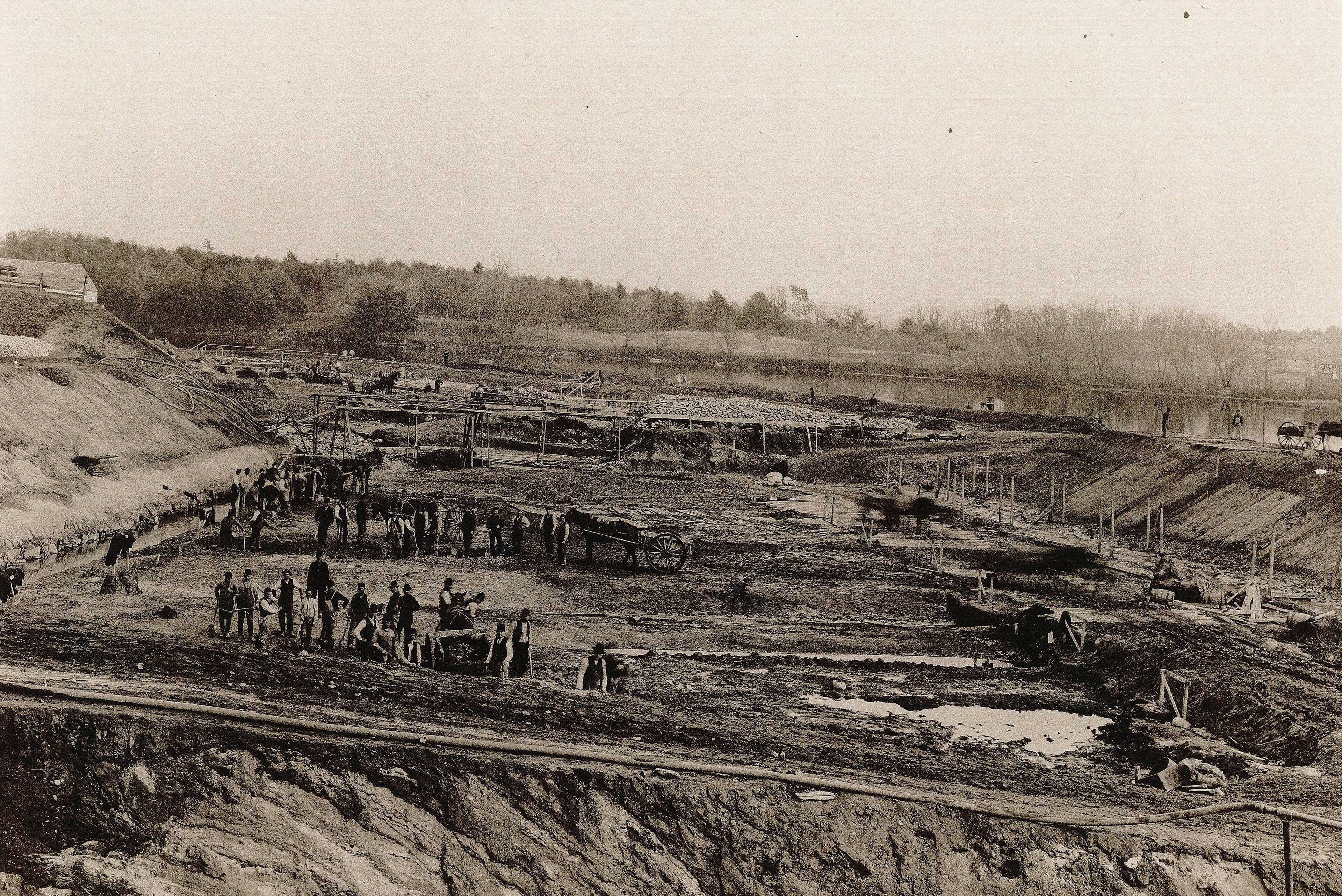
In Hamburg, a physician named J. J. Reincke saw the same thing once that city finally opened its own filtration plant. For every typhoid death the filters prevented, somewhere between two and five deaths from other causes disappeared too. It came to be called the Mills–Reincke phenomenon, and at the time no one could agree on an explanation.
Solving the Mills–Reincke Puzzle
For more than a century, people treated the phenomenon as a puzzle. Why would cleaning a city’s water lower deaths from tuberculosis, pneumonia and bronchitis, diseases that don’t travel in water?
Knowing what we know now, I don’t think it was much of a mystery. The men who described it could only name the diseases they knew: cholera and typhoid. But the water carried far more than those two. It carried a host of bacteria, viruses, and parasites that caused diarrhea, dysentery, and the summer illnesses that killed infants by the thousands.
Take those away, and you get a second wave of benefit. Children who aren’t constantly sick with diarrhea absorb their food, grow stronger, and survive measles and pneumonia. Adults who never catch typhoid aren’t left with damaged organs that fail them years later. The death certificates said tuberculosis or pneumonia, but much of the damage had started in the water.
I also came across another explanation I found particularly relevant. Some researchers suspect the early filters also removed the first wave of industrial waste pouring into rivers in that era: tannery runoff, dye works, metals, and coal tar. Sand and slow time would have caught much of it. If so, the early filters solved two problems at once.
Minerals, Dissolved, Doing Chemistry
Sand was only the first step. Since sand filters clog in muddy water, and most American rivers were muddy, they had to find a way to avoid clogging. In 1897, an engineer named George Warren Fuller solved it with a dissolved mineral.
It was alum, aluminum sulfate, a sulfated mineral salt. Added in small amounts, it changed the surface chemistry of everything suspended in the water, so the contaminants clumped together and fell out. “Not a membrane. Not pressure. Not electricity. Not a drug,” I wrote in ELW. “A mineral, dissolved, doing chemistry.”
Last Came Chlorine
Chlorine came eleven years later. Dr. John Leal began chlorinating Jersey City’s water in 1908, and, as with vaccines, the story has been told as a triumph ever since. It is the step everyone remembers.
But when researchers compared Jersey City’s typhoid deaths after 1908 with those of Newark next door, they found “little evidence of a decline.” Chlorination on its own had “no detectable effect on mortality.” To be fair, cities usually added chlorine after filtration, and where filtration had left work undone, chlorine finished it. But the ranking in the data suggests sand did the most work, and the disinfectant everyone remembers did the least.
I find that ranking remarkable. The interventions that worked best were the ones that copied the ground: water moving slowly through sand, and minerals that made contaminants clump and settle out. The chemical we credit for the victory mostly protected it after it had been won.
What It Bought
By the 1930s, in the cities that had done this work, the “demographic sink” was gone. Before filtration, an American who lived in a city died at a rate 30 percent higher than one who lived in the country, and a city infant at more than double the rural rate. By 1940 that difference had disappeared. Typhoid went from about 100 cases per 100,000 people in 1900 to a rarity. An American born in 1900 could expect to live 47 years. One born in 1950 could expect 68.
How much of that was the water? In 2005, two Harvard economists put it at nearly half of the entire drop in big-city deaths, and three-quarters of the drop in infant deaths. Later researchers reran their numbers and got a smaller answer (which was hotly debated), so the estimated range is wide: somewhere between a tenth and a half, depending on whom you ask and what you count. Studies from England, Germany, Japan and Colombia land in the same range. Even at the low end, nothing a physician did in those decades came close.
A Job Well Done, and a New One To Do
More than a hundred years later, the problem has changed. Our treatment plants were designed for the threats of 1900. They were never built to remove what came after: PFAS “forever chemicals,” microplastics, pharmaceutical residues, pesticides and herbicides, hormone-disrupting compounds, and the disinfection byproducts made by the chlorine itself. Most of these didn’t exist when the filters were designed, and legal limits for most of them are either absent or decades behind the science. The generation that built the filter beds did its job. There is another job to do now.
The industry knows it, sort of. “Emerging contaminants” are among its hottest topics, and PFAS dominates its biggest conferences. But most of the talk is about who pays. In 2024, the EPA set the first national PFAS limits, as low as 4 parts per trillion. Congress set aside about $9 billion, and 3M and DuPont paid utilities more than $11 billion in settlements. Even so, the utilities’ own trade group sued, warning that compliance could cost close to $3.8 billion a year, and in 2025 the EPA moved to delay the deadline to 2031 and drop some of the limits.
The tools to remove PFAS exist, but they are expensive and leave behind concentrated toxic waste. Pharmaceuticals, microplastics and hormone disruptors aren’t regulated at all, and most American water systems serve small towns already struggling to replace lead pipes. So the contaminants nobody requires them to remove mostly stay in the water.
So now you know why a critical care doctor became obsessed with a rock, and why I started Aurmina. Themarox, the mineral concentrate in Aurmina, belongs to the same category of treatment that saved the cities: a sulfated mineral solution, drawn from a single volcanic rock, that makes suspended particles clump together and settle out so a simple filter can catch them.
A hundred years ago they used one mineral salt for one job, making muddy river water filterable. Themarox carries a much broader spectrum of minerals from the stone itself, and in lab testing it pulls out far more than mud. All seventeen pharmaceuticals tested, all 84 volatile organic compounds tested, and four trihalomethanes, the feared byproducts of chlorine, were removed to below detection. That mechanism has worked on water longer than anything else we have tried.
The Pilgrims never had to fix the water they found in Plymouth. It was already fixed, by stone, sand, and time, and they were smart to settle beside it. However, this country has changed a lot since then. I believe we can now (and need to) do on purpose what the ground once did without help. That is why I am grateful to Shimanishi for his “geological shortcut,” which delivers an even better chemistry right to our kitchen counter.
Have a good Saturday, and thank you for supporting a small business.
-Pierre
**I write about what medicine missed, what’s in your water, and what I’m seeing in my patients. Paid subscribers have access to it all.
From the Shameless Commercialism Department (as if this post needed its own department :)
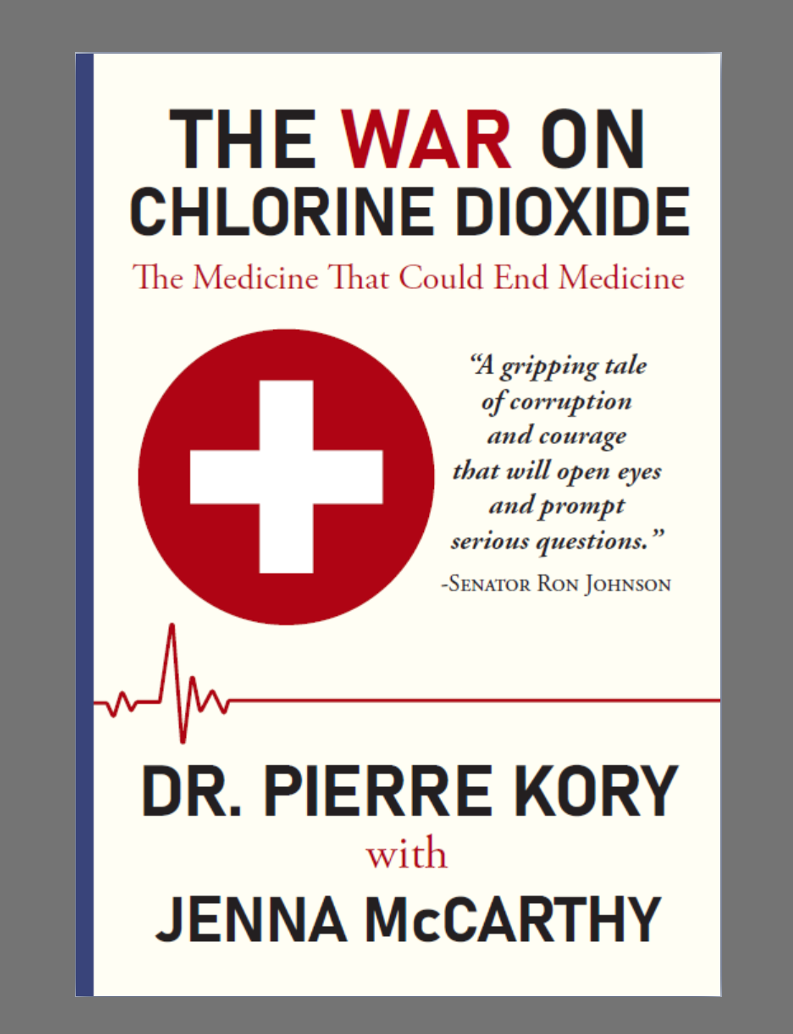
1) The War on Chlorine Dioxide: 20% off with code BLACKFRIDAY
2) The Stone and Water Series: Any book 20% off with code THANSKGIVING

3) Thanksgiving Weekend Sale, now through Cyber Monday: 25% -35% off everything at Aurmina.com.

Little Lazlo Department
This is starting to become a thing…

Leading Edge Clinic

Great stuff, Dr Kory..!
May I recommend the great Substack, "Trust the Evidence", authored by Dr Carl Heneghan and Dr Tom Jefferson..?
They produced a series which traced the investigations into the cholera in London...
Sobering thoughts, considering how close the systems are to collapse, a lot of the time...
Even the BBC produced great series on the pioneers of health-science (Koch, the Curies,
and others), but nowadays the BBC is about as far from Reith's principles as it is possible
to be...
This is one of the best and most important and relevant articles I have read in a long time. Thank you for the historical tour of water problems from so far back, and how they had to fight sludge government consensus to get to a viable solution.