


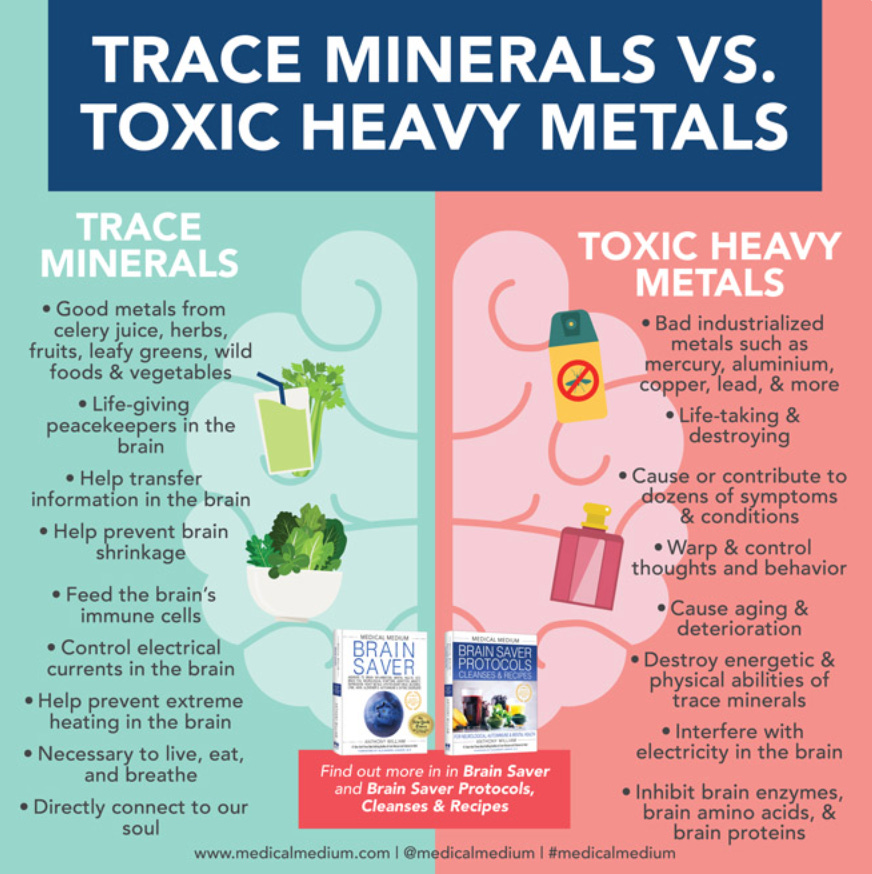
For my mineral minion readers, this post also appears as Chapter 7 in the Table of Contents of “From Volcanoes to Vitality.”
The Real World Health Consequences Of Trace Mineral Deficiencies
Research continues to uncover the links between deficiencies of trace minerals and a wide range of chronic illnesses, immune dysfunction, and increased susceptibility to infections.
A 2022 comprehensive review of nutritional deficiencies emphasized that micronutrients are crucial for sustaining life. The inadequacy of any component of the metabolic system directly affects both individuals and societies, manifesting as poorer health, reduced work capacity, decreased educational accomplishment, and lower earning potential.
Scope of the Problem
In both industrialized and developing countries, micronutrient deficiencies (as currently known and measured) affect more than 2 billion people of all ages, particularly pregnant women and children under five. Micronutrient deficiencies have been linked with almost 10% of child deaths.
Iron, folate, zinc, iodine, and vitamin A rank among the most common micronutrient deficiencies worldwide (again, I argue that such a short list is repeatedly emphasized only because we routinely look for and measure their presence or absence).
Studies show that these deficiencies contribute to intellectual impairment, poor growth, perinatal complications, and higher morbidity and mortality. In addition, research associates micronutrient deficiencies with accelerated mitochondrial decay (a big one here) and degenerative diseases of aging..
What We Don’t Measure
Although the above should be unsettling, I maintain it is not alarming enough. Nearly every scientific paper I have read on this topic focuses on a couple of handfuls of minerals—iron, folate, zinc, iodine, sometimes selenium, copper, and boron.
But again, as above, what about molybdenum, vanadium, manganese, lithium, silver, sulfur, cadmium, chromium, and dozens of others? What happens when we are deficient in any one or several of those? Very little is known. And what happens if we are lacking in the even broader array of trace minerals that exist and whose names you have never heard of? I maintain these have been “forgotten” or “ignored,” or what I think is more likely, “unmeasured.”
Now you know why I am calling the under-recognition of and lack of research into trace and rare minerals one of the biggest “black holes” in the biomedical sciences, something that, as in a prior chapter, AI now recognizes?
Enter The Growing Scourge of Heavy Metal Excess In Our Soils
If you thought the problem of rapidly dwindling trace minerals and/or the lack of study into the broader array of dozens of trace minerals was bad enough, the story gets worse for planet Earth and its citizens. We are also living in a world where heavy metals are being deposited into our soils at a similarly rapid rate.
From this 1987 study:
Human civilization and a concomitant increase in industrial activity has gradually redistributed many toxic metals from the earth’s crust to the environment and increased the possibility of human exposure. Among the various toxic elements, heavy metals cadmium, lead, and mercury are specially prevalent in nature due to their high industrial use.
One study, terrifyingly titled, “Human Exposure to Heavy Metals over the Last 100 Years,” concluded that widespread heavy metal contamination remains a significant global issue impacting food safety. More specifically, this review, titled “Heavy Metals in Foods and Beverages: Global Situation, Health Risk, and Analytical Methods,” discussed how industrialization and intensive agriculture have contributed to increased concentrations of heavy metals such as lead, cadmium, arsenic, and mercury in soil and crops over the years.
The authors highlighted the risks to human health posed by accumulation in staple foods such as rice, vegetables, and meat, emphasizing a growing trend of contamination linked to human activities and pollution.
Know that the “heavy metals” that are most commonly absorbed by the human body from food or water consist of: lead, mercury, arsenic, cadmium, and chromium. Although aluminum is not a heavy metal, it is often mistaken for one, despite being the second-lightest metal after titanium. Most, but not all, of these metals have no physiological role in the human body and are considered toxic, with the potential to cause organ damage, neurologic effects, cancer, and other chronic diseases when exposure or accumulation occurs.
Some metals (like chromium) exist in both toxic and non-toxic forms; for instance, trace amounts of chromium(3+) are essential, but chromium(6+) is highly toxic and carcinogenic. Aluminum, although present in literally everything we eat, is not considered necessary, and excessive accumulation can have adverse neurological and bone effects.???
The potential sources of these heavy metals vary, and all are harmful when absorbed in significant amounts.
Lead: Found in contaminated water, pipes, some foods, and food containers.
Mercury: concerning amounts of methylmercury are absorbed from fish and seafood.
Arsenic: Present in groundwater, rice, and some drinking water sources.
Cadmium: Found in certain grains, vegetables (from contaminated soil), and shellfish.
Chromium: Can be found in water and some foods, especially if contaminated.
A Double Worry: How The Combination Of Trace Mineral Deficiency and Heavy Metal Overload Is Associated With A Large Spectrum Of Human Diseases
Now let’s ask the question: “Is the specific combination of trace/rare earth mineral deficiency (TMD) and heavy metal excess (HME) associated with the development of particular illnesses?
Now, before I get accused of scaremongering, it is a good time to include a disclaimer. What I am about to present are “associations” which are not to be interpreted as “causations”, OK?
But still, hang in and hold on to your hats, folks, the answer to the question of how many diseases are “associated” with TMD/HME is beyond disturbing. So, I will start us off slowly with just a few and then move on to “the big list,” cool?
Alzheimers Disease
Numerous studies find that Alzheimer’s patients have increased levels of heavy metals, while other studies find that Alzheimer’s patients have significantly reduced levels of Copper, Zinc, and Selenium. Shocker.
Autism
In this Saudi Arabian study, hair samples from 77 children with autism were compared with those of controls. They found significantly higher levels of toxic heavy metals, mercury, lead, arsenic, antimony, and cadmium in autistic spectrum disorders as compared to the control children. Moreover, hair samples from children with autistic spectrum disorders contained significantly lower concentrations of calcium, copper, chromium, manganese, iron, and cobalt compared to those of normal children.
Cardiovascular Disease
One study compared Iranian farmers with cardiovascular disease (CVD) to those without and found that the group with CVD consumed rice, bread, and vegetables that had higher levels of arsenic, lead, and strontium. These elements were also present in elevated concentrations in their urine. Unsurprisingly, deficiencies in the trace minerals zinc and iron were also found.
What door have we “slowly” opened here? Are there other diseases associated with the combination of TMD/HME? I asked AI, “List all the disorders and diseases where research studies have found an association of trace mineral deficiency with an excess of heavy metals.”
I warned you, the answer is absolutely terrifying (references are all hyperlinked under the title of each of the 12 categories). Let’s start with the first one:
Neurological and Neurodevelopmental Disorders
Cognitive impairment, neurodegeneration (Alzheimer’s, Parkinson’s)
Developmental disorders: reduced IQ, ADHD, behavioral problems in children
Encephalopathy, seizures, hearing loss, memory problems, ataxia
