
Minerals or Miracles?
From Ethiopia’s volcanic baths to the 72 Church-confirmed “miracles” of Lourdes: a rigorous, data-driven examination of mineral-rich healing waters.

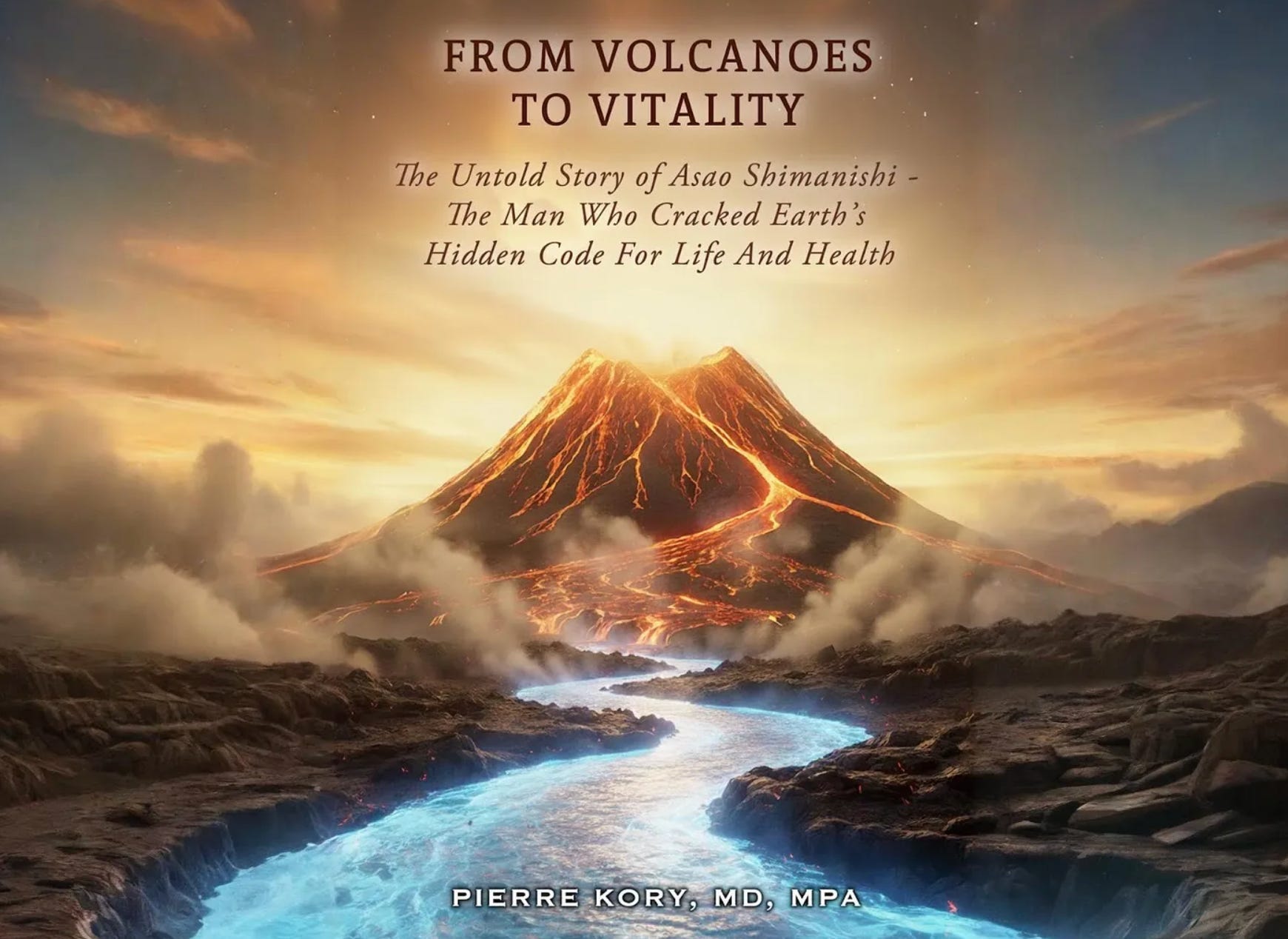
For my mineral minions reading my Substack serially published book, “From Volcanoes to Vitality,” today is Chapter 10.
Peer-Reviewed Evidence-Base
At this point in our exploration of the global consequences of trace mineral depletion and heavy metal excess in our soils—and the warnings of visionary thinkers about the hazards this poses—it’s natural to ask: can restoring minerals tangibly improve health, beyond the theoretical?
While the evidence is still emerging, intriguing case studies and a growing body of preliminary research suggest that mineral-rich environments and therapies may hold considerable promise.
This chapter brings together clinical anecdotes, early studies, and compelling hypotheses. Here, readers will encounter the fascinating frontier where scientific inquiry meets therapeutic possibility, setting the stage for later chapters on the unique biochemistry of volcanic-derived trace minerals.
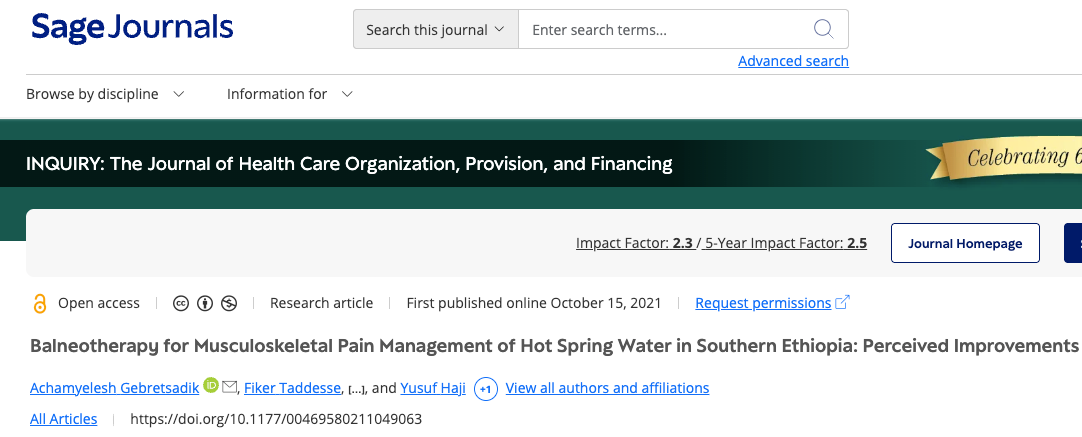
The hot springs featured in the Ethiopian study above are geologically fed by volcanic rocks characteristic of the Main Ethiopian Rift region. Specifically, these springs are often surrounded by and interact with rhyolite lava domes, pyroclastic deposits (including ignimbrites), and basaltic lava flows—all products of extensive volcanic activity over the past 1-1.2 million years.
Researchers assessed the effects of balneotherapy (hot spring bathing) on musculoskeletal pain in 1,279 adult users of four hot springs in Southern Ethiopia. Participants, primarily with joint and muscle pain, were followed for at least 3 days of immersion. After treatment, 83% reported complete pain relief, along with additional improvements in joint stiffness, swelling, and rheumatoid arthritis symptoms.
The study concluded that hot spring baths are a safe, low-cost, and effective supportive therapy for musculoskeletal disorders, including arthritis, and recommended integrating balneotherapy into routine care for those with chronic arthritic pain.
Let’s review that data again: 1,279 patients with joint and muscle pain bathed in a volcanic rock-fed hot spring for 3 days, and 83% reported complete pain relief. So, complete pain relief in 83% of sufferers?
2. Balneotherapy in Rheumatic Diseases
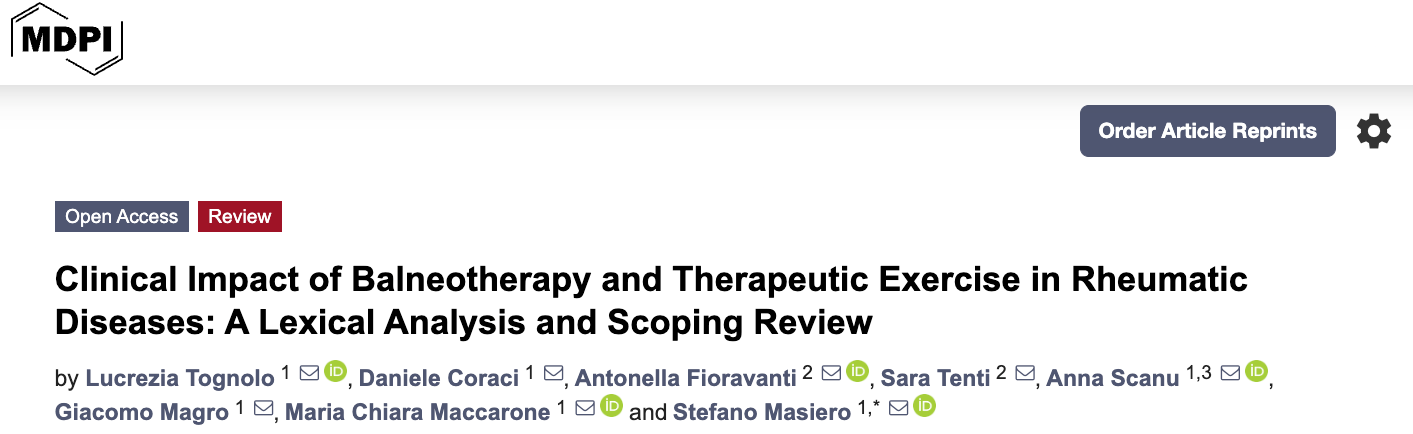
A meta-analysis of 14 studies found that “spa therapy” had a favourable effect on pain, function, and quality of life in patients with Osteoarthritis, Fibromyalgia, and Rheumatoid Arthritis.
3. Systematic Review of Balneotherapy For Chronic Low Back Pain
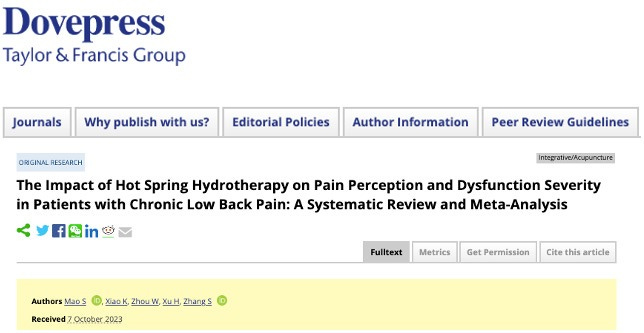
The authors identified 16 studies with 1,656 participants and examined the effectiveness of hot spring hydrotherapy for chronic low back pain (CLBP). Results showed that hot spring hydrotherapy significantly reduced pain intensity and functional disability, as well as medication usage for CLBP. The benefits were most pronounced for patients aged 60 and above.
The authors concluded that hot spring hydrotherapy is a promising complementary treatment for chronic low back pain, particularly in older adults, though, as always, “more research is needed for younger patients” and “to understand the underlying mechanisms.”
Did you catch that last sentence? “More research is needed to understand the underlying mechanisms.” This will become important when we get to the case histories that occurred at the Grotto Of Marabeille, at the Shrine in Lourdes, France.
Using AI, I discovered that, since 2010, at least 28 balneotherapy studies have been published in the peer-reviewed literature on a diverse set of symptoms and conditions (note many were systematic reviews which included various numbers of studies).
Balneotherapy studies and their outcomes… were all positive:
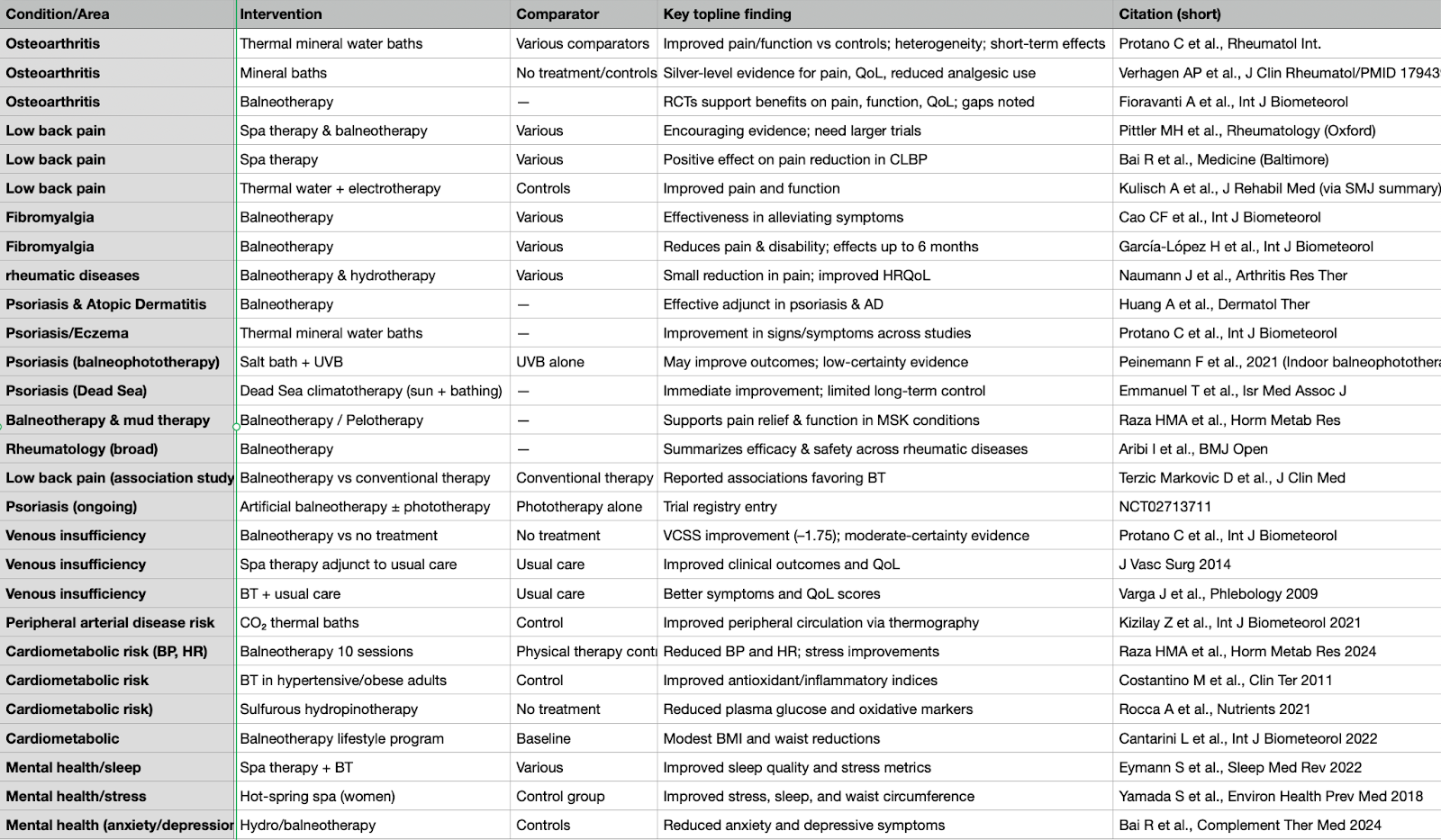
The “Unknown” Mechanisms of Healing Hot Springs
I found the above balneotherapy papers particularly compelling. The three reviews that I presented above led me to ask AI the following:
Q: Identify all locations of purported healing water mineral hot springs and then find any and all detailed accounts of healing from illness with dramatic or miraculous recoveries:
AI then provided specific examples of such springs and gave links to sites where accounts of clinical recoveries have been compiled, but only eight springs were listed. Suspicious that AI was holding back, I then asked:
Q: Can you reproduce the same list above but include all springs that you found in your search, not just the notable ones.
Brace yourself. What followed was a comprehensive list of 203 healing mineral hot springs worldwide, organized by region and spanning every continent:
Africa: Hammam Chellala, Hammam Essalihine, Hammam Guedjima, Guelma, N’Gaous, Kambo (North Kivu), Uvira (South Kivu), Hammam Musa, Oyoun Mossa, Siwa, Dallol Hot Springs (Ethiopia), Sodere (Ethiopia), Ain al-Ati, Fezouane, Moulay Yacoub, Sidi Harazem (Morocco), Ikogosi Warm Springs (Nigeria), Wikki Warm Springs (Nigeria), Bugarama Hot Springs (Rwanda), Mashyuza Hot Springs, Nyakabuye Hot Springs (Rwanda), Aliwal North, Badplaas, Brandvlei, Caledon Spa, Goudini Spa, Montagu, Tshipise, Warmbaths (South Africa), Kikuletwa (Chemka) Hot Springs (Tanzania).
Americas: Banff Upper Hot Springs, Cave and Basin, Miette Hot Springs (Canada), Harrison, Liard River, Nakusp, Fairmont, Radium, Skookumchuck, Lussier, Sloquet Hot Springs (British Columbia, Canada), Glenwood Hot Springs, Hot Springs National Park, Calistoga, Palm Springs, Desert Hot Springs, Paso Robles, Hot Creek, Mammoth, Wilbur, Esalen, Yosemite, Mono, Travertine (USA), Ojo Caliente, Truth or Consequences, Faywood, Jemez (New Mexico, USA), Pagosa, Steamboat, Ouray, Idaho Springs, Glenwood, Conundrum (Colorado, USA), Warm Mineral Springs (Florida, USA), Boiling River, Mammoth Hot Springs, Yellowstone (Wyoming, USA), Hot Springs (Arkansas, USA), Tolantongo, La Gruta, Los Azufres, Aguascalientes (Mexico), Termas de Río Hondo, Termas de Molulco, Termas Geométricas, Termas de Puritama, El Tatio, Aguas Calientes (Argentina, Chile), Tabacón, Arenal, Ecotermales Fortuna (Costa Rica), Baños de Agua Santa, Papallacta (Ecuador).
Asia: Hakone, Beppu, Kusatsu, Arima Onsen, Gero, Noboribetsu, Yufuin, Nyuto, Izu, Dogo, Unzen (Japan), Heosimcheong Spa (Busan), Suanbo, Yusong Spa (South Korea), Soaking towns in Taiwan (Beitou, Jiaoxi, Wulai, Guanziling, Ruisui), Garam Chashma (Pakistan), Chumathang, Manikaran, Vashisht, Tattapani, Rajgir, Suryakund, Sohna (India), Borang, Reshi, Yumthang (Sikkim, India), Mengurada (Flores, Indonesia), Ciater, Cipanas, Cisolok, Maribaya (Java, Indonesia), Hot springs in Cambodia, Vietnam (Bang Spa, Kim Boi, Bình Châu).
Europe: Blue Lagoon, Deildartunguhver, Mývatn Nature Baths (Iceland), Lake Hévíz, Budapest’s baths (Hungary), Saturnia, Bagni San Filippo, Montecatini Terme, Chianciano Terme, Rapolano, Terme di Sirmione, Petriolo, Ischia, Bagno Vignoni, Grotta Giusti (Italy), Baden-Baden, Wiesbaden, Aachen (Germany), Karlovy Vary, Teplice (Czech Republic), Vichy, Dax (France), Edipsos, Loutraki, Pozar, Kamena Vourla, Kaiafas (Greece), Bath (Somerset, UK), Buxton (UK), Băile Felix, Băile Herculane (Romania), Chaves, São Pedro do Sul, Caldas da Rainha (Portugal), Afyonkarahisar, Pamukkale, Yalova, Termal (Turkey).
Oceania: Dalhousie Springs, Peninsula Hot Springs, Innot Hot Springs, Hastings Caves (Australia), Rotorua, Hanmer Springs, Taupo, Whitianga, Maruia Springs, Hot Water Beach (New Zealand), Savusavu (Fiji).
Antarctica: Deception Island (Antarctica, volcanic springs).
Central and South America & Caribbean: Eco Termales, Tabacón, Río Perdido (Costa Rica), Baños de Agua Santa, Papallacta (Ecuador), Termas Geométricas, Puyehue, Termas de Puritama, El Tatio (Chile), Termas de Río Hondo (Argentina), Arapey Thermal Resort, Daymán, Almirón (Uruguay), Fuentes Georginas (Guatemala).
Middle East: Ma’in Hot Springs, Dead Sea region (Jordan, Israel), Ein Gedi, Hamat Gader, Tiberias (Israel).
The list included both highly developed spa resorts and rustic, natural pools, all celebrated for their mineral content, traditional healing use, and sometimes for dramatic accounts of healing from illness.
Interesting, no? Hypothesis generating yes?.
Next, one of my newfound mineral expert colleagues suggested I “look deeper” into the accounts surrounding one particular site of “healing water.” So I did.
The Shrine of Lourdes
I then dug into data from, surprisingly, Catholic Church archives. History—and scripture—overflow with “healing water” stories, mostly in mineral and hot springs, where countless have claimed remarkable recoveries.
The History Of The Massabeille Spring at Lourdes
From February 11 to July 16, 1858, a young woman named Bernadette Soubirous reported 18 apparitions of what she felt was the Virgin Mary. On Mar 25, the Lady identified herself as the Immaculate Conception (a Catholic dogma defined in 1854). Bernadette uncovered a spring after being told to “drink from the fountain,” and reports of recoveries soon followed.
After the investigation, the local bishop declared the apparitions worthy of belief. Pilgrims began to pour in, and the sanctuary began to take shape.
Today, Lourdes is one of the world’s largest Christian pilgrimage centers, welcoming millions yearly (more than the Taj Mahal), especially the sick, who bathe in or are blessed with the spring’s water. The shrine’s identity blends prayer, service to the ill, and careful medical evaluation of recoveries—all centered on the grotto where Bernadette prayed.
Since 1858, over 7,000 healings have been reported, with 72 confirmed as official “miracles”—these latter accounts surviving intense medical and ecclesiastical scrutiny. Once no natural mechanism for healing is found, a cure is deemed “miraculous.”
Lourdes Grotto Geology
Know that the water at Lourdes flows from a natural spring through karstic limestone caves—the Mountain of Caves—creating a mineral-rich profile. Volcanic rock, including dark porphyry, adds complexity, with the area shaped by magma intrusions during the Pyrenees’ formation. Volcanic rock is apparently part of the healing waters’ recipe.
The Miracles
Of 72 confirmed miracles, each has undergone rigorous medical investigation: cures are near-immediate, complete, lasting, and inexplicable. The “International Medical Committee of Lourdes” and a diocesan bishop verify each case.
For those hungry for specifics, both the website Miracle Hunter and the Lourdes Sanctuary site archive every case, which describes dramatic recoveries following immersion in, or consumption of, water from the grotto at Lourdes. Interestingly, a handful show no water contact—fodder for future explorations into ”mind-body healing.”
Each tale shares familiar patterns: dire prognosis, sudden recovery at Lourdes, and long-term follow-up confirming lasting relief.
Signature Cases
Catherine Latapie: Hand paralyzed and pregnant, she bathed in the spring and regained full motion, then delivered her child that evening.
Louis Bouriette: Blinded in one eye, he repeatedly bathed it in the spring and regained his sight.
Mrs. Blaisette Cazenave: Chronic eye disease, declared incurable, resolved after two applications of spring water.
Henri Busquet: Tuberculosis-induced ulcer, cured overnight with spring water from Lourdes.
Justin Bouhart: Chronically ill and failing to thrive, bathed as a last resort and recovered fully.
Mrs. Madelaine Rizan: Nearly 20 years paralyzed, drank Lourdes water and her strength, mobility, and skin health returned.
Marie Moreau: Severe vision loss, bandaged eyes with Lourdes water overnight and awoke healed.
Joachime Dehant: Incurable leg ulcer, healed after baths at Lourdes.
Elisa Seisson: Chronic bronchitis and heart disease, resolved after one bath.
Sister Eugenia Marie Mabille: Longstanding abdominal infection, healed after visiting the Baths—her health remained excellent for decades.
Miracles or Minerals?
What got me started on this path was that, as I was reading through all the cases one particularly resonated with me. I got a “spidey sense” that some may have been the result of a striking “physiologic” response to immersion in uniquely mineralized spring water. A hypothesis, mind you. In particular, the hypothesis was generated from the case of Sister Bernadette Moriau, the last official Lourdes miracle, confirmed in 2018.
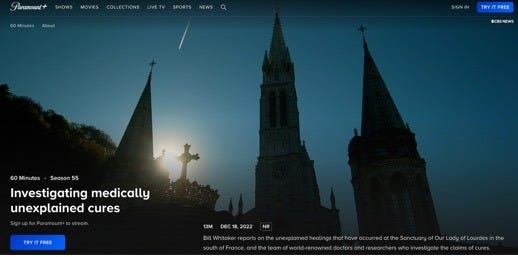
The above image is the opening shot to a televised interview with Sister Moriau by journalist Bill Whitaker for 60 Minutes, recounting her story: decades of complete paralysis, failed surgeries, braces, and unremitting pain.
Yet, after bathing at Lourdes in 2008, as she was returning home, she began to experience the onset of “excruciating burning pain” in her legs (which had not had sensation in 20 years). On the 3rd day, she was able to walk again—an event verified by the International Committee of Lourdes as having no medical explanation for the recovery.
Keep reading with a 7-day free trial
Subscribe to Pierre Kory’s Medical Musings to keep reading this post and get 7 days of free access to the full post archives.