



Excerpted from The Silent Aquifer, Act V: The Evidence.
In a book about humanity’s largely unrecognized and fast-unfolding crisis in producing enough food and drinking water, a chapter on how modern medical evidence is manufactured and applied may seem a strange editorial choice. The reason is contrast: I wanted to set the folly, and the fraud, behind the evidence bases that guide medical decisions next to the evidence base for Themarox in agriculture, the mineral extract I propose as a potential solution to that crisis.
I spent a year assembling that evidence, including a trip to the other side of the world, and it is one of the more improbable bodies of evidence ever gathered behind a single claim. It includes four preclinical and clinical studies from two Soviet-era research institutes, one undated and apparently missing its authors. It includes two short-run, long out-of-print Japanese agronomy books, one of them (Rock-Water) assembled partly from notes taken while Shimanishi lectured in China. It includes exactly one peer-reviewed paper, one UN-funded controlled trial on damaged coastal farmland in Korea, two studies run by distributors who sell the product, a set of studies that Shimanishi-kaken commissioned from outside laboratories, and a stunningly compelling photo album in which growers documented the responses seen in the plants, bushes, flowers, cactuses, and crops that they treated with Rock-Water.
I could not make this sound less like a modern trial program if I tried. That is why I devoted two chapters to what modern trial programs are really like. This is the 2nd.
In my last post, “Insufficient Evidence,” I detailed how Pharma created medicine’s evidence hierarchy to systematically value only the most expensive studies while dismissing equally valid study designs that practicing physicians can produce cheaply.
Although I did not include this in the last post, for those who haven’t read it, I cannot encapsulate the core thesis behind it any better than using, as an example, a chapter I titled “The Big Six” from “The War on Ivermectin.” I showed how the Pharma-controlled institutions of society, namely the journals, the agencies, the professional societies, and above all the media, in a coordinated fashion, were able to dismiss and denigrate the entirety of the massive evidence for ivermectin using only six (later seven) highly manipulated “rigorous” RCT’s published in the top journals in the world. Hyper-focusing on only those trials, “they” got the entire world, including the vast majority of physicians, to ignore the actual evidence:
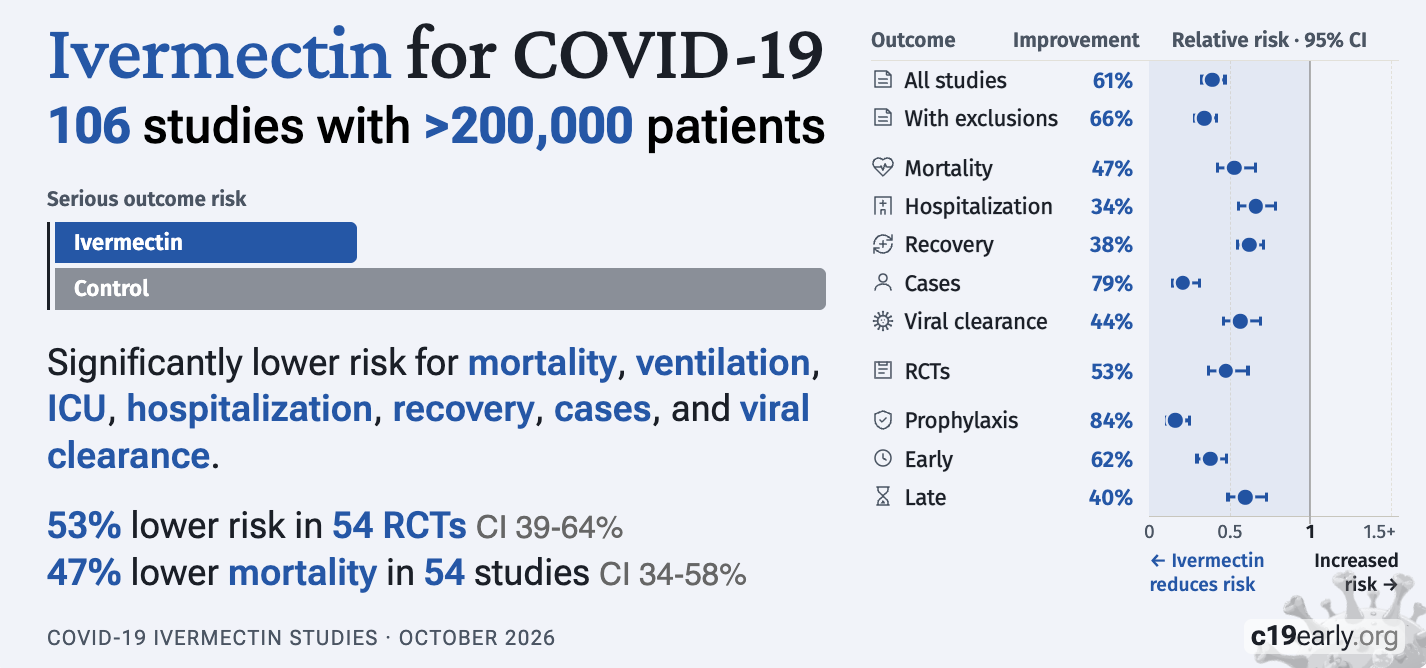
I hoped that book would allow History to record such an astonishing and deadly feat. Unless it becomes required reading in medical school curricula at some point in the future, alas, I fear it will not.
Now the question is: how much control does the company paying for a trial have over what the rest of us eventually read?
Far more than I understood during most of my academic career.
Industry Manipulation of RCTs
If only the most expensive trials count as actionable evidence, then whoever pays for those trials holds enormous power over what medicine believes. How that power is used has been documented in exhaustive detail by people who watched it from the inside.
Three consecutive editors-in-chief of the New England Journal of Medicine — Arnold Relman, Jerome Kassirer, and Marcia Angell, who between them ran the journal from 1977 to 2000 — have each said publicly that the profession has been bought. Relman told the BMJ:
‘The medical profession is being bought by the pharmaceutical industry, not only in terms of the practice of medicine, but also in terms of teaching and research. The academic institutions of this country are allowing themselves to be the paid agents of the pharmaceutical industry. I think it’s disgraceful.’15
Richard Horton, the longtime editor-in-chief of The Lancet, has written,
“Medical journals have devolved into information laundering operations for the pharmaceutical industry.”16
Four prominent physicians, Ben Goldacre, Peter Gøtzsche, Malcolm Kendrick, and Marcia Angell, have each written book-length critiques of the machinery that produces medical evidence.¹⁷⁻²⁰ In different voices and with different examples, they document the same recurring practices that steer a published result: selective publication, outcome switching, favorable comparators, statistical framing, cherry-picked subgroups, and the suppression or marginalization of inconvenient findings. And they show these practices are structural, not isolated.
It was that exact list of tactics deployed in the “Big Six” ivermectin trials that finally woke this 20-year clinician and researcher up to what was really going on in medicine.
Yet I had already lived through one massive fraud, early in my career. When I began my fellowship in pulmonary and critical care medicine, American ICU patients with septic shock were being infused with a drug called Xigris, to a degree nearly identical to the patients infused with Remdesivir in Covid.
The Xigris Affair
Having written the books “The War on Ivermectin” and “The War on Chlorine Dioxide,” I consider myself deeply versed in the dark arts of Pharmaganda, the sophisticated tactics that industry deploys from its well-worn Disinformation Playbook. Even so, after everything I have seen, I am still astonished when I took a look back at the sophistication, power, and coordination behind the approval and promotion of Xigris from a quarter century ago.
In short: Eli Lilly promoted an expensive and ineffective drug that caused bleeding, on the strength of one unusually favorable and heavily manipulated trial. It then helped finance the influential guidelines recommending its use, until confirmatory trials finally showed no survival benefit and ended its reign.
Xigris (drotrecogin alfa, activated) was recombinant activated protein C. It was meant to counter the inflammation and microvascular clotting of severe sepsis, but the same anticoagulant action that made it work also made patients bleed.
A Dramatic First Trial
Lilly’s PROWESS trial enrolled 1,690 patients and was stopped early for benefit. Reported 28-day mortality:
Xigris 24.7% vs placebo 30.8%, an absolute reduction of 6.1 percentage points
Serious bleeding 3.5% vs 2.0%
That implied one life saved for every 16 patients treated, which would be an extraordinary result in sepsis.
But regulators and intensivists had reasons to be uneasy:
The finding rested on a single pivotal trial.
The trial was stopped early, which tends to exaggerate treatment effects.
Eligibility criteria were changed after about 720 patients had enrolled.
The manufacturing process and drug lots changed mid-trial.
The benefit was not uniform and appeared mainly after those changes.
The eventual “high-risk” indication leaned heavily on subgroup analyses.
The drug caused clinically important bleeding.
The FDA advisory committee split 10–10. The FDA approved Xigris anyway in November 2001, for adults with severe sepsis at high risk of death, and required further studies.
A four-day course cost about $6,800 in 2001 dollars. That was an enormous expense for an ICU drug at the time, and not far from the $3,120 commercial insurers paid for a five-day course of Remdesivir.
The Scandal
Sales disappointed. Hospitals were wary of the evidence, the price, and the bleeding (imagine that: caution prevailed). So Lilly mounted an unusually sophisticated campaign. According to a widely cited 2006 New England Journal of Medicine exposé by NIH critical-care physicians:
Lilly hired a PR firm, Belsito & Company, to raise awareness of severe sepsis and Xigris.
Lilly gave a reported $1.8 million grant to a task force on “Values, Ethics and Rationing in Critical Care” (VERICC).
That campaign recast limited access to Xigris as an ethical rationing problem, so hospitals unwilling to pay could be portrayed as denying patients lifesaving treatment.
Lilly funded the “Surviving Sepsis Campaign.” Its goal was good, IMO. Sepsis is among the most common causes of death, doctors vary widely in how quickly they recognize it, and early treatment is literally the difference between life and death. Great idea, crap motives. Lilly supplied more than 90 percent of the funding for the groups that wrote the original Surviving Sepsis guidelines.
Many guideline authors had financial ties to Lilly.
Shocker: the guidelines recommended Xigris, turning a commercially important drug into “evidence-based” standard practice.
The striking feature was the convergence of marketing, medical ethics, professional-society guidelines, quality-improvement “bundles,” and potential hospital performance measures. That last item was a weaker forerunner of the much more powerful “government reimbursement incentives” later used to promote the use of Remdesivir in Covid. Either way, Xigris showed that a commercial message could thus reach physicians disguised as independent professional consensus.
Meanwhile, the follow-up trials kept coming back negative: no benefit, more bleeding. In 2011, after PROWESS-SHOCK found no survival benefit, Lilly withdrew Xigris worldwide. Analysts had once forecast $1 billion in annual sales; by its last full year, the drug was selling about $100 million.
Then and Now
One detail shows how far professional capture has advanced since then. In the early 2000s, the Infectious Diseases Society of America (IDSA) declined to endorse the Surviving Sepsis guidelines, citing concerns about the development process, the evidence grading, and industry sponsorship. Ah, the good old days, when doctors took a professional and ethical stand. Twenty years later, during COVID, the same IDSA proved as captured as any other medical society in the world. It enthusiastically endorsed Remdesivir and the vaccines while specifically recommending against early treatment with repurposed drugs, especially ivermectin and hydroxychloroquine.
My take: Lilly took a fragile result from a stopped-early, mid-course-amended, company-sponsored trial, turned it into an approved blockbuster candidate, and then amplified it through a company-financed guideline and ethics campaign before anyone had confirmed it worked.
What makes Xigris infamous is not that a drug was eventually proved ineffective; medicine reverses itself all the time. It is that the company selling the drug financed much of the machinery that defined it as recommended, even ethically obligatory, care, while the evidence was still contested and patients were bleeding. It remains one of the clearest cases for why manufacturers should never fund or organize the guidelines, treatment bundles, educational campaigns, or performance metrics that govern their own products.
Fun fact: although Xigris was used everywhere in academic ICUs during my first five years in critical care, I never once gave it to a patient. My mentor, Paul Mayo, called bullshit from the start. He told me that drugs targeting the same pathways had been tested and had failed for decades, and that this was marketing, not medicine. He refused to use it. So did I.
Industry Manipulation of RCT’s
A 2005 NEJM survey found that 80% of academic medical centers would accept contracts giving sponsors ownership of the trial data, and 50% would allow sponsors to ghostwrite the resulting studies.21 82% of institutions reported conflicts with sponsors even after contracts were signed; in one case, a company withheld final payment because it disliked the results. Contracts were typically kept secret. 69% of administrators said funding pressure often forced them to accept terms they considered unethical.
A 2005 report estimated that publishing a favorable paper could be worth up to £200 million to a pharmaceutical company, with a share of that value flowing to doctors who promote the company’s products.22 When the BMJ ran a 2003 cover depicting doctors as pigs at a banquet served by drug reps, companies reportedly threatened to withdraw £75,000 in advertising.23 24 The Annals of Internal Medicine lost an estimated $1–1.5 million in advertising after publishing a study critical of industry advertising.25
As I documented in my book The War on Ivermectin, when the pharmaceutical industry wants to bury evidence of efficacy for an inexpensive, off-patent medication, it is highly adept at designing trials to fail before they begin.26 Enroll patients who are too healthy or enroll them too late. Set the dose too low to work. Cut the treatment course too short to have an effect. Change the endpoint mid-trial.
These aren’t hypotheticals; major universities worldwide used them against ivermectin during Covid. Because ivermectin’s effect was so large, the standard tricks often weren’t enough; the trials kept coming back positive anyway, so the tactics grew even more brazen. Tony Fauci’s NIH-funded ACTIV-6 trial changed its primary endpoint well into the trial's conduct—“sus,” to say the least, and, in my view, clear scientific misconduct.27
The original secondary endpoint of clinical progression at fourteen days was highly statistically significant, so they changed it to 28 days, where it lost statistical significance. It gets even worse. 5 months after the trial ended, the heavily NIH-funded principal investigator from Duke, Dr. Susanna Naggie, gave a presentation at the NIH, where one of her slides still showed the highly statistically significant difference at seven and fourteen days. Yet, when the study was formally published less than three months later, the exact same findings “missed” statistical significance by a hair.28 Shucks.
The Oxford University PRINCIPLE trial went even further. When investigators found a highly statistically significant improvement in time to recovery—two full days—they invented a previously undescribed (and unintelligible) statistical metric they called “the Probability of Clinical Meaningfulness,” which they used to support the conclusion written in the study abstract: “Ivermectin is unlikely to provide a clinically meaningful improvement in recovery.”29 So kudos to them: they did not lie, because in the new statistical world they had just created, a two full days faster recovery was indeed, “not clinically meaningful” as per their definition. But it meant that, at that point in my career as a physician, I was forced to accept a new definition of recovery, a “clinically meaningful” one, or the old one—whatever that was. They didn’t stop there either. The very next sentence of the abstract’s interpretation was something I had never seen before in a study abstract: a research-policy recommendation: “Further trials of ivermectin for SARS-CoV-2 infection in vaccinated community populations appear unwarranted.” You don’t say.
And don’t even get me started on the McMaster University TOGETHER trial.30 First, their study began by treating Covid-19 patients with a single dose of ivermectin. Yep, a single dose. After about a month, they realized this approach wouldn’t “prove” anything, so they changed the protocol to a three-day course, even though no other antiviral is used for less than five days. The shenanigans they continued to pull only got worse from there, numbering in the dozens; I have extensively detailed them elsewhere.31–33 But get this, that trial won the “David Sackett Trial of the Year Award” from the Society for Clinical Trials.34 An award named after the father of Evidence-Based Medicine. I wish I were making this up.
Conversely, when RCTs are conducted to demonstrate efficacy for a profitable, patented pipeline product, they will run the numbers on 34 post hoc subgroup analyses until something crosses the significance threshold, and publish that slice as if it were the plan all along.
Once a trial is running, the machinery continues. Stop early when interim results happen to look favorable, locking in a statistical fluctuation before it regresses. Carry the last recorded measurement forward for every dropout, and since patients who drop out are often the ones being harmed, their last good number gets averaged into the final result. Recode adverse events: Merck reclassified deaths, Eli Lilly recoded suicide attempts as overdose, a child in the Pfizer Covid vaccine trial was left permanently disabled, yet investigators entered her injury as functional abdominal pain.
Then publish. Repeatedly. A single olanzapine trial was published 143 times, sometimes with different author lists. Place the favorable abstract in a high-impact journal whose editors, in half the cases surveyed, had taken payments from pharmaceutical companies (by the way, you don’t have to take money from Pharma to know that rejecting a study they want published will not bode well for your tenure as editor). Ghostwrite the paper, attach a credentialed name, and retain the data so no one can check. One internal Pfizer document stated that their studies “belong to Pfizer” and exist “to support marketing.”
If you appreciate the late nights and deep dives into medical rabbit holes that I do, your paid support keeps me going.
When Belief Becomes Law
Everything to this point has been about belief. What counts as knowledge, what counts as proof, which evidence is permitted through the gate and which is turned away at it. That is an epistemological problem, and if it stopped there, it would be a quarrel among academics, conducted in journals, with nothing at stake but reputations.
It does not stop there.
Between the evidence hierarchy and the patient in the bed sits a document, and that document is where the whole apparatus finally touches a human being. It is called a clinical practice guideline, and its logic is simple enough to fit on a card. For condition X, begin with treatment A. If A fails, move to B. Avoid C. Anyone hospitalized with Covid in recent years knows them all too well.
Who writes them? In Covid, it was the government that wrote the treatment guidelines, yet historically the private specialty societies write the overwhelming majority: the American Heart Association, the American College of Cardiology, the American Diabetes Association, the American Psychiatric Association, and their counterparts in every field. These are private membership organizations. They hold no statutory authority of any kind. And their recommendations govern the practice of American medicine, along with much of the medicine practiced in the many countries that adopt American guidelines more or less wholesale.
Technically, they are recommendations. In practice, they are the rules.
Here is why. A guideline determines what an insurer will reimburse. It determines what the hospital protocol says and what the electronic medical record prompts the physician to order. It determines what residents are taught to treat with first. And — this is the part that does the real work — it is used in malpractice litigation as a proxy for the standard of care.
That last one hurts the most. Take it from me, I have spent hundreds of hours, pro bono, in the past 6 years serving as an expert witness for doctors across the country and world whose licenses were being threatened for treating Covid patients with ivermectin, an act that regulators deemed, “outside the standard of care.” I can recall helping win only one case, that of the Canadian physician Dr. Charles Hoffe, which I wrote about in this prior post.
I want to be clear about the mechanism, because it is the hinge of this entire chapter. The evidence hierarchy decides what may be believed. The guideline converts that belief into the standard of care. The standard of care determines what a physician can safely do. Which means that the hierarchy does not merely decide what is true. It decides what is permitted. Dr. Wojak says it more compactly than I can: the guidelines are not the guardrails; they are the cage.
Now recall the word that was used on me, and what it was used to dismiss. Anecdotal — applied to a clinician’s observation of the same cause producing the same consequence, again and again, across hundreds of patients.
But know that roughly half of the recommendations in clinical practice guidelines are based not on high-quality evidence but on the guideline authors’ opinions.1,2
Half. The system that told me my bedside observations were anecdote fills half of its own rulebook with expert opinion — and not opinion standing in for trials that could not be run, but opinion standing in for trials that simply were not. That opinion, once written down and voted through by a committee, becomes the legal standard of care for tens of millions of people.
So expert opinion is permitted to establish medical truth after all. It simply has to be the right experts, seated in the right room, funded by the right people. . That is not an evidence standard. It is a credentialing standard, and the two have almost nothing to do with one another. I ain’t “the right expert,” apparently.
That raises the obvious question: who those experts are.
Of the American physicians who authored clinical practice guidelines in 2020, seventy-four percent received payments from industry. Only thirty-seven percent disclosed them.35 Among guideline chairs — the people who set the agenda, select the panel, and run the room — eighty-two percent had financial conflicts of interest, and not one of them disclosed those conflicts accurately.
Above the panels sit the organizations that appoint them. In 2020, seventy-two percent of the leaders of major American medical associations had financial ties to industry; among the physicians in those leadership roles, eighty percent did.36 Across the ten largest disease areas, payments to those leaders approached $130 million over five years. Not one organization had a leadership free of industry ties. NOT ONE.
Fun fact: I have never in my entire career had a true financial conflict of interest (outside of doing two hours of paid consulting with a GE ultrasound engineer on a super-cool probe he was designing for lung ultrasound, an opportunity I simply could not intellectually resist). This may be the reason why AMD has always told me they find it remarkable that, of all the Covid dissident physicians, I am the only one that has not (yet) been accused of being “controlled opp.”
It gets even worse. The organizations themselves are funded by the same companies whose products their guidelines evaluate. The American Heart Association receives roughly forty million dollars a year from pharmaceutical and device manufacturers.37
The American Diabetes Association receives tens of millions. These bodies write the cardiovascular and diabetes guidelines.38 And when researchers examined the financial relationships of guideline-producing organizations directly, they found that only one percent of guidelines disclosed the producing organization’s own financial relationships.39 Most of those organizations had conflict-of-interest policies. Few had any procedure for enforcing them. The policy existed. The enforcement did not.
The reasonable objection here is that money is not the same thing as influence — that these are serious people, capable of holding a payment in one hand and a recommendation in the other.
That has been tested as well. Guidelines written by panels with financial conflicts were twenty-six percent more likely to recommend the sponsor’s product.40 Industry-funded trials were thirty-four percent more likely to report conclusions favorable to the funder.41
Notice how those two figures sit on top of one another, because the same stacking applies. The biased trials feed the systematic reviews. The systematic reviews feed the guidelines. By the time you can measure a twenty-six percent tilt at the panel, the evidence arriving at that panel has already been tilted upstream, and the panel’s tilt is applied to a body of work that was bent before it got there. Twenty-six percent is not an estimate of industry influence on guidelines. It is the floor.
There is one further bias is built into the guideline system that has nothing to do with any individual’s conflict of interest, which makes it, in some ways, the more serious problem (and one of the most relevant to the MAHA movement), because no disclosure form ever written could catch it.
Guidelines systematically favor drugs over everything that is not a drug. The reason is not scientific. It is structural. A drug has a company behind it — a company that will fund the trials, pay the statisticians, sponsor the conferences, and populate the panel with specialists whose entire careers were built on that class of compound. Diet has no company. Neither does exercise. Neither does sunlight, or sleep, or a mineral, or a glass of well-balanced mineral water. Nobody convenes a panel to write the guideline for something that cannot be sold, and nobody funds the trial that would qualify it for the top of the pyramid. The resulting body of recommendations is not so much wrong as lopsided: exhaustive about every intervention with a sponsor, and close to silent about every intervention without.
If you want to see how early that asymmetry is installed, look at what physicians are taught. Across four years of American medical school, nutrition receives roughly twenty hours of instruction.42
Twenty hours, in total, on the substance every one of our patients puts into their body three times a day, every day, for the whole of their life. My students could recite the mechanism of a dozen antihypertensives. Very few of them could tell you what magnesium does. And don’t even get me started on the importance of drinking water chemistry, or the health importance of its mineral composition. It has only one consensus document: a 2005 WHO review that set minimum levels for calcium, magnesium, bicarbonate, and total dissolved solids. This Substack is also transitioning into that field; over the next few months, I plan to post numerous excerpts, repurposed for Substack, from the 768-page encyclopedia I wrote called, “Earth’s Living Water: Its History, Its Ruin, and The Way Back.” This chapter is one of them.
Not Just a Few Bad Apples
Every industry has its scandals. Wall Street has paid more in total penalties than the drug companies have, and the oil industry has racked up more cases. If the question were only who has paid the most, Pharma would not top the list. The question that matters is a different one: what does a company do after it has been caught, has paid, and has signed a written promise to stop?
Start with the industry as a whole. Public Citizen tracked every federal and state settlement with drug manufacturers from 1991 through 2021: 482 settlements and $62.3 billion in penalties. Companies with two or more federal settlements accounted for 87.5 percent of all federal penalty dollars. Pfizer alone settled 15 separate federal cases, Novartis 12, and GlaxoSmithKline and Bristol Myers Squibb 9 each.64 A study in JAMA of the 26 largest drug companies found that 22 of them were penalized for illegal activity between 2003 and 2016, and that nearly all of those engaged in it for at least four years, a pattern the authors said suggests intent rather than accident.45 You don’t say.
Then look at what happens after the promise. When a company settles a federal health care fraud case, it usually signs a Corporate Integrity Agreement with the Inspector General of Health and Human Services: years of monitored good behavior, a kind of corporate probation. Pfizer signed one in 2004, after its Warner-Lambert subsidiary pleaded guilty to the fraudulent promotion of Neurontin. In 2007 another Pfizer subsidiary, Pharmacia & Upjohn, pleaded guilty to paying kickbacks. In 2009 Pfizer was back again, settling charges over the illegal promotion of Bextra and other drugs for $2.3 billion, including what was then the largest criminal fine in American history, with some of the same marketing tactics that had appeared in the Neurontin case. The acting U.S. Attorney said plainly that among the factors his office weighed in setting the penalty was “Pfizer’s recidivism.”65
Peter Gøtzsche found the same pattern across the industry. In 2012 he searched for fraud cases involving each of the ten largest drug companies and found serious crimes committed between 2007 and 2012 by every one of them. He also noted that as of July 2012, nine of the ten were operating under Corporate Integrity Agreements; only Roche was not. He titled the full report with his conclusion: corporate crime in the pharmaceutical industry is “common, serious and repetitive.” Crimes that are widespread and repeated, he argued, suggest they are committed deliberately.66
That is where the organized-crime comparison comes from, and it is more precise than it sounds. In his foreword to Gøtzsche’s book, Richard Smith, the former editor of the BMJ, noted that U.S. law defines racketeering as engaging repeatedly in certain kinds of offenses: extortion, fraud, federal drug offenses, bribery, embezzlement, obstruction of justice, obstruction of law enforcement, witness tampering, and political corruption. Gøtzsche, he wrote, presents detailed evidence that drug companies have committed most of them. Smith judged the comparison “not entirely fanciful.”67 The insiders have said it more bluntly. Peter Rost, a former Pfizer vice president, quoted by Gøtzsche, put it this way: “It is scary how many similarities there are between this industry and the mob.”66
Why would companies keep doing it? Because the arithmetic rewards them. A 2026 study in JAMA Network Open found that in kickback cases, companies paid a median penalty equal to 2.2 percent of the U.S. revenue the drugs earned during the period of the violation.44 Public Citizen set its $62.3 billion against the $1.9 trillion in net income earned by the 35 largest drug companies between 2000 and 2018 alone. And the people who make the decisions almost never pay. The settlements, Public Citizen found, rarely involve admissions of guilt by individuals or companies, and federal prosecutors brought only six cases under the doctrine that allows executives to be convicted without proof of intent between 2000 and 2021.64 A fine that small, paid by shareholders, with no one going to prison, is not a punishment. It is a cost of doing business, and the settlement record shows the companies treat it as one.
So I will not claim that Pharma has paid the most. Wall Street has paid more, and its biggest banks rival the drug companies as repeat offenders. But the two are not the same kind of criminal. When a bank breaks the law, people lose money. When a drug company breaks the law, people lose their health and/or their lives. An FDA scientist estimated that Merck’s Vioxx was linked to between 88,000 and 139,000 excess cases of serious coronary heart disease in the United States.68 GlaxoSmithKline’s 2012 guilty plea included a charge of failing to report safety data on its diabetes drug Avandia to the FDA.69 Purdue pleaded guilty to federal crimes over the marketing of OxyContin twice, in 2007 and again in 2020, while the opioid epidemic it helped set off killed Americans by the hundreds of thousands.70 A fraud that empties a pension fund can be repaid. A fraud that hides a drug’s harms cannot.
That is why I call it the most criminal of all industries. Not because it has paid the most, but because its largest companies keep committing the same crimes after being caught, after paying, and after signing written promises to stop, and because the cost of those crimes is counted in bodies. That is the comparison Gøtzsche drew, and it rests on the companies’ own settlement record.
So hold all of that in mind: the stopped-early trials, the switched endpoints, the guideline panels on the payroll, the fines paid as a cost of doing business. Because over the next several posts, I am going to show you a very different kind of evidence.
It was gathered decades ago by Japanese agronomists and growers, Korean and Mexican university researchers, and a Russian institute of restorative medicine, along with the lectures Shimanishi gave in China. They studied Themarox in rice paddies, eel ponds, wastewater lagoons, and laboratory rats. None of them had a billion-dollar product to protect, a guideline panel to capture, or a journal to buy. Most of them were simply curious about what this strange mineral water was doing, and they wrote it down.
By the standards of modern medicine, almost none of it counts. You will soon be asked to judge for yourself what those standards are worth.
From the Shameless Commercialism Department:
Aurmina is a volcanic mineral water purifier that cleans water the way the Earth always has. Add it to a pitcher. The minerals bind the contaminants, the burden clumps and settles, and you pour off the clear water. Unlike reverse osmosis, you don’t have to trade off purity for mineral breadth. Aurmina keeps the minerals in — producing one of the purest and most broadly mineralized waters on Earth. Check out our new website here.

Primora Bio relies on the same mineral chemistry in the water that supports what we grow and love: plants, gardens, fish, and pets.

The Stone and Water Series
You can purchase the book series, in whole or in part, from my website ( where all books are personally stamped with my hanko) or from Amazon.

The War on Chlorine Dioxide

Bibliography
1. Pierluigi Tricoci, Joseph M. Allen, Judith M. Kramer, et al. “Scientific Evidence Underlying the ACC/AHA Clinical Practice Guidelines.” JAMA 301, no. 8 (2009): 831–841. DOI:10.1001/jama.2009.205.
2. Kim Boesen, Sarah Louise Klingenberg, and Christian Gluud. “Levels of Evidence Supporting Recommendations in Clinical Practice Guidelines: Meta-Epidemiological Study.” Preprint, medRxiv, August 11, 2025. DOI:10.1101/2025.08.11.25333132.
3. Frank W. Stahnisch and Marja Verhoef. “The Flexner Report of 1910 and Its Impact on Complementary and Alternative Medicine and Psychiatry in North America in the 20th Century.” Evidence-Based Complementary and Alternative Medicine 2012 (2012): 647896. DOI:10.1155/2012/647896.
4. Barbara Barzansky. “Abraham Flexner and the Era of Medical Education Reform.” Academic Medicine 85, no. 9 Suppl (2010): S19–S25. DOI:10.1097/ACM.0b013e3181f12bd1.
5. Evidence-Based Medicine Working Group. “Evidence-Based Medicine: A New Approach to Teaching the Practice of Medicine.” JAMA 268, no. 17 (1992): 2420–25. https://doi.org/10.1001/jama.1992.03490170092032.
6. Jean-Louis Vincent, “We Should Abandon Randomized Controlled Trials in the Intensive Care Unit,” Critical Care Medicine 38, no. 10 suppl. (2010): S534–S538, https://doi.org/10.1097/CCM.0b013e3181f208ac.
7. J. Concato, N. Shah, and R. I. Horwitz, “Randomized, Controlled Trials, Observational Studies, and the Hierarchy of Research Designs,” New England Journal of Medicine 342, no. 25 (2000): 1887–92, https://doi.org/10.1056/NEJM200006223422507.
8. K. Benson and A. J. Hartz, “A Comparison of Observational Studies and Randomized, Controlled Trials,” New England Journal of Medicine 342, no. 25 (2000): 1878–86, https://doi.org/10.1056/NEJM200006223422506.
9. A. Anglemyer, H. T. Horvath, and L. Bero, “Healthcare Outcomes Assessed with Observational Study Designs Compared with Those Assessed in Randomized Trials,” Cochrane Database of Systematic Reviews, no. 4 (2014): MR000034, https://doi.org/10.1002/14651858.MR000034.pub2.
10. I. Toews, A. Anglemyer, J. L. Z. Nyirenda, D. Alsaid, S. Balduzzi, K. Grummich, L. Schwingshackl, and L. Bero, “Healthcare Outcomes Assessed with Observational Study Designs Compared with Those Assessed in Randomized Trials: A Meta-Epidemiological Study,” Cochrane Database of Systematic Reviews, no. 1 (2024): MR000034, https://doi.org/10.1002/14651858.MR000034.pub3.
11. Blakeley B. McShane and David Gal, “Blinding Us to the Obvious? The Effect of Statistical Training on the Evaluation of Evidence,” Management Science 62, no. 6 (2016): 1707–18, https://doi.org/10.1287/mnsc.2015.2212.
12. Jong-Myon Bae, “A Suggestion for Quality Assessment in Systematic Reviews of Observational Studies in Nutritional Epidemiology,” Epidemiology and Health 38 (April 2016): e2016014, https://doi.org/10.4178/epih.e2016014.
13. Sergio Sismondo. “Epistemic Corruption, the Pharmaceutical Industry, and the Body of Medical Science.” Frontiers in Research Metrics and Analytics 6 (2021): 614013. DOI:10.3389/frma.2021.614013.
14. Dr. Wojak [pseud.]. Epistemic Capture of Medicine: Capture by the Pharmaceutical Industry across All Layers of Medical Knowledge Creation, Legitimation, and Dissemination. Version 1.0. Self-published, August 2026. https://drwojakmd.substack.com.
15. Ray Moynihan. “Who Pays for the Pizza? Redefining the Relationships between Doctors and Drug Companies. 1: Entanglement.” BMJ 326, no. 7400 (2003): 1189–1192. DOI:10.1136/bmj.326.7400.1189.
16. Richard Horton. “The Dawn of McScience.” New York Review of Books, March 11, 2004.
17. Marcia Angell, The Truth about the Drug Companies: How They Deceive Us and What to Do about It (Random House, 2004).
18. Ben Goldacre, Bad Pharma: How Drug Companies Mislead Doctors and Harm Patients (Fourth Estate, 2012).
19. Peter Gotzsche, Deadly Medicines and Organised Crime: How Big Pharma Has Corrupted Healthcare (CRC press, 2019).
20. Malcolm Kendrick, Doctoring Data: How to Sort out Medical Advice from Medical Nonsense (Columbus Publishing Ltd, 2014).
21. Michelle M. Mello, Brian R. Clarridge, and David M. Studdert. “Academic Medical Centers’ Standards for Clinical-Trial Agreements with Industry.” New England Journal of Medicine 352, no. 21 (2005): 2202–2210. DOI:10.1056/NEJMsa044115.
22. Kamran Abbasi. “A Tough Nut to Crack.” BMJ 330, no. 7485 (2005): 0. DOI:10.1136/bmj.330.7485.0.
23. BMJ 330 [cover illustration], vol. 326, no. 7400, May 31, 2003. https://www.bmj.com/content/326/7400.
24. Deepak Natarajan. “The Specious Business of Industry-Sponsored Publications in Medical Journals.” The Wire Science, May 2, 2016.
25. Robert L. Goodman and Olveen Carrasquillo. “The Corporate Co-author, the Ghostwriter, and the Medical Society: An Object Lesson.” Journal of General Internal Medicine 21, no. 1 (2006): 102. DOI:10.1111/j.1525-1497.2005.00271_3.x.
26. Pierre Kory and Jenna McCarthy, War on Ivermectin: The Medicine That Saved Millions and Could Have Ended the Pandemic (New York: Skyhorse, 2023).
27. Susanna Naggie et al., “Effect of Ivermectin vs Placebo on Time to Sustained Recovery in Outpatients With Mild to Moderate Covid-19: A Randomized Clinical Trial,” JAMA 328, no. 16 (2022): 1595, https://doi.org/10.1001/jama.2022.18590.
28. Susanna Naggie, “ACTIV-6: 1-Year Later and Trial Results for Ivermectin 400 & Inhaled Fluticasone,” Grand Rounds presentation, NIH Collaboratory / Duke Clinical Research Institute, July 22, 2022.
29. G. Hayward et al. (PRINCIPLE Collaborative Group), Journal of Infection 88, no. 6 (2024): 106130.
30. G. Reis et al. (TOGETHER Investigators), New England Journal of Medicine 386, no. 18 (2022): 1721–31.
31. Pierre Kory, “Fraudulent Trial On Ivermectin Published By The World’s Top Medical Journal. Big Pharma Reigns – Part I,” Substack newsletter, Pierre Kory Medical Musings, March 31, 2022, https://pierrekorymedicalmusings.com/p/fraudulent-trial-on-ivermectin-published.
32. Pierre Kory, “Fraudulent Trial On Ivermectin Published By The World’s Top Medical Journal. Big Pharma Reigns – Part II,” Substack newsletter, Pierre Kory Medical Musings, April 1, 2022, https://pierrekorymedicalmusings.com/p/fraudulent-trial-on-ivermectin-published-859.
33. Pierre Kory, “The False, Sinister, and Duplicitous Statements of the TOGETHER Ivermectin Trial Investigators,” Substack newsletter, Pierre Kory Medical Musings, February 21, 2022, https://pierrekorymedicalmusings.com/p/the-false-sinister-and-duplicitous. Society for Clinical Trials,
34. “David Sackett Trial of the Year Award—Awarded to the TOGETHER Trial (E. J. Mills and G. Reis, Principal Investigators),” 2021, https://www.sctweb.org/toty.cfm.
35. Maryam Mooghali, Laura Glick, Reshma Ramachandran, and Joseph S. Ross. “Financial Conflicts of Interest among US Physician Authors of 2020 Clinical Practice Guidelines: A Cross-Sectional Study.” BMJ Open 13, no. 1 (2023): e069115. DOI:10.1136/bmjopen-2022-069115.
36. Ray Moynihan, Loai Albarqouni, Conrad Nangla, et al. “Financial Ties between Leaders of Influential US Professional Medical Associations and Industry: Cross Sectional Study.” BMJ 369 (2020): m1505. DOI:10.1136/bmj.m1505.
37. American Heart Association. 2023–2024 American Heart Association Funding from Pharmaceutical and Biotech Companies and Device Manufacturers. Dallas, TX: American Heart Association, 2024.
38. Neil Barsky. “Low-Carb Diets Work. Why Does the American Diabetes Association Push Insulin Instead?” The Guardian, April 17, 2024.
39. Paul Campsall, Kate Colizza, Sharon Straus, and Henry T. Stelfox. “Financial Relationships between Organizations That Produce Clinical Practice Guidelines and the Biomedical Industry: A Cross-Sectional Study.” PLoS Medicine 13, no. 5 (2016): e1002029. DOI:10.1371/journal.pmed.1002029.
40. Camilla H. Nejstgaard, Lisa Bero, Asbjørn Hróbjartsson, et al. “Association between Conflicts of Interest and Favourable Recommendations in Clinical Guidelines, Advisory Committee Reports, Opinion Pieces, and Narrative Reviews: Systematic Review.” BMJ 371 (2020): m4234. DOI:10.1136/bmj.m4234.
41. Andreas Lundh, Joel Lexchin, Barbara Mintzes, et al. “Industry Sponsorship and Research Outcome.” Cochrane Database of Systematic Reviews 2, no. 2 (2017): MR000033. DOI:10.1002/14651858.MR000033.pub3.
42. Kelly M. Adams, Martin Kohlmeier, and Steven H. Zeisel. “Nutrition Education in U.S. Medical Schools: Latest Update of a National Survey.” Academic Medicine 85, no. 9 (2010): 1537–1542. DOI:10.1097/ACM.0b013e3181eab71b.
43. Amy Finkelstein, Petra Persson, Maria Polyakova, and Jesse M. Shapiro. “A Taste of Their Own Medicine: Guideline Adherence and Access to Expertise.” American Economic Review: Insights 4, no. 4 (2022): 507–526. DOI:10.1257/aeri.20210591.
44. Tobias Liu, Joseph S Ross, Christopher J Morten, and Reshma Ramachandran. “Pharmaceutical Manufacturer Kickback Resolutions and Associated Financial Penalties, 2000–2025.” JAMA Network Open, 13 March 2026. DOI: 10.1001/jamanetworkopen.2026.1735.
45. Denis G Arnold, Oscar Jerome Stewart, and Tammy Beck. “Financial Penalties Imposed on Large Pharmaceutical Firms for Illegal Activities.” JAMA, 17 November 2020. DOI: 10.1001/jama.2020.18740.
46. John P. A. Ioannidis. “Evidence-Based Medicine Has Been Hijacked: A Report to David Sackett.” Journal of Clinical Epidemiology 73 (2016): 82–86. DOI:10.1016/j.jclinepi.2016.02.012.
47. Trisha Greenhalgh, Jeremy Howick, and Neal Maskrey. “Evidence Based Medicine: A Movement in Crisis?” BMJ 348 (2014): g3725. DOI:10.1136/bmj.g3725.
48. Jon Jureidini and Leemon B. McHenry. The Illusion of Evidence-Based Medicine: Exposing the Crisis of Credibility in Clinical Research (Adelaide: Wakefield Press, 2020).
49. Richard Smith. “Medical Journals Are an Extension of the Marketing Arm of Pharmaceutical Companies.” PLoS Medicine 2, no. 5 (2005): e138. DOI:10.1371/journal.pmed.0020138.
50. Thomas R. Frieden. “Evidence for Health Decision Making — Beyond Randomized, Controlled Trials.” New England Journal of Medicine 377, no. 5 (2017): 465–475. DOI:10.1056/NEJMra1614394.
51. Andrea S. Gershon, Peter K. Lindenauer, Kevin C. Wilson, et al. “Informing Healthcare Decisions with Observational Research Assessing Causal Effect. An Official American Thoracic Society Research Statement.” American Journal of Respiratory and Critical Care Medicine 203, no. 1 (2021): 14–23. DOI:10.1164/rccm.202010-3943ST.
52. Shirley V. Wang, Sebastian Schneeweiss, et al. (RCT-DUPLICATE Initiative). “Emulation of Randomized Clinical Trials With Nonrandomized Database Analyses: Results of 32 Clinical Trials.” JAMA 329, no. 16 (2023): 1376–1385. DOI:10.1001/jama.2023.4221.
53. Miguel A. Hernán. “The C-Word: Scientific Euphemisms Do Not Improve Causal Inference From Observational Data.” American Journal of Public Health 108, no. 5 (2018): 616–619. DOI:10.2105/AJPH.2018.304337.
54. Marcus R. Munafò and George Davey Smith. “Robust Research Needs Many Lines of Evidence.” Nature 553 (2018): 399–401. DOI:10.1038/d41586-018-01023-3.
55. Raywat Deonandan. “Resist the Randomized Controlled Trials Fetish: Different Questions Require Different Pyramids of Evidence.” Canadian Medical Education Journal 16, no. 1 (2025). https://www.erudit.org/fr/revues/cmej/2025-v16-n1-cmej09965/1117323ar.pdf.
56. Alexander C. Fanaroff, Robert M. Califf, Stephan Windecker, Sidney C. Smith Jr, and Renato D. Lopes. “Levels of Evidence Supporting American College of Cardiology/American Heart Association and European Society of Cardiology Guidelines, 2008–2018.” JAMA 321, no. 11 (2019): 1069–1080. DOI:10.1001/jama.2019.1122.
57. Howard Balshem, Mark Helfand, Holger J. Schünemann, et al. “GRADE Guidelines: 3. Rating the Quality of Evidence.” Journal of Clinical Epidemiology 64, no. 4 (2011): 401–406. DOI:10.1016/j.jclinepi.2010.07.015.
58. Maria Popp, Miriam Stegemann, Maria-Inti Metzendorf, et al. “Ivermectin for Preventing and Treating COVID-19.” Cochrane Database of Systematic Reviews, no. 7 (2021): CD015017. DOI:10.1002/14651858.CD015017.pub2.
59. Michael T. M. Wang, Mark J. Bolland, Greg Gamble, and Andrew Grey. “Media Coverage, Journal Press Releases and Editorials Associated with Randomized and Observational Studies in High-Impact Medical Journals: A Cohort Study.” PLoS ONE 10, no. 12 (2015): e0145294. DOI:10.1371/journal.pone.0145294.
60. Paul Ruich. “The Use of Cause-and-Effect Language in the JAMA Network Journals.” AMA Style Insider, September 19, 2017. https://amastyleinsider.com/2017/09/19/use-cause-effect-language-jama-network-journals.
61. Noah A. Haber, Sarah E. Wieten, Julia M. Rohrer, et al. “Causal and Associational Language in Observational Health Research: A Systematic Evaluation.” American Journal of Epidemiology 191, no. 12 (2022): 2084–2097. DOI:10.1093/aje/kwac137.
62. Andrew Hill and Manya Mirchandani. “The Dangers of Non-Randomized, Observational Studies: Experience from the COVID-19 Epidemic.” Journal of Antimicrobial Chemotherapy 78, no. 2 (2023): 323–327. DOI:10.1093/jac/dkac437.
63. Issa J. Dahabreh and Kirsten Bibbins-Domingo. “Causal Inference About the Effects of Interventions From Observational Studies in Medical Journals.” JAMA 331, no. 21 (2024): 1845–1853. DOI:10.1001/jama.2024.8107.
64. Michael T. Abrams and Sidney M. Wolfe. “Thirty-One Years of Pharmaceutical Industry Criminal and Civil Penalties: 1991 Through 2021.” Public Citizen, May 21, 2024. https://www.citizen.org/article/thirty-one-years-of-pharmaceutical-industry-criminal-and-civil-penalties-1991-2021/.
65. Gardiner Harris. “Pfizer Pays $2.3 Billion to Settle Marketing Case.” New York Times, September 2, 2009. See also U.S. Department of Justice, “Justice Department Announces Largest Health Care Fraud Settlement in Its History,” September 2, 2009.
66. Peter C. Gøtzsche. “Big Pharma Often Commits Corporate Crime, and This Must Be Stopped.” BMJ 345 (2012): e8462. DOI:10.1136/bmj.e8462. Full version: “Corporate Crime in the Pharmaceutical Industry Is Common, Serious and Repetitive.” Nordic Cochrane Centre, December 14, 2012.
67. Richard Smith. “Is the Pharmaceutical Industry Like the Mafia?” The BMJ Opinion, September 10, 2013. https://blogs.bmj.com/bmj/2013/09/10/richard-smith-is-the-pharmaceutical-industry-like-the-mafia/.
68. David J. Graham, David Campen, Rita Hui, et al. “Risk of Acute Myocardial Infarction and Sudden Cardiac Death in Patients Treated with Cyclo-Oxygenase 2 Selective and Non-Selective Non-Steroidal Anti-Inflammatory Drugs: Nested Case-Control Study.” Lancet 365, no. 9458 (2005): 475–481. DOI:10.1016/S0140-6736(05)17864-7.
69. U.S. Department of Justice. “GlaxoSmithKline to Plead Guilty and Pay $3 Billion to Resolve Fraud Allegations and Failure to Report Safety Data.” Press release, July 2, 2012.
70. U.S. Department of Justice. “Justice Department Announces Global Resolution of Criminal and Civil Investigations with Opioid Manufacturer Purdue Pharma and Civil Settlement with Members of the Sackler Family.” Press release, October 21, 2020. On the 2007 plea by the Purdue Frederick Company: Barry Meier, “In Guilty Plea, OxyContin Maker to Pay $600 Million,” New York Times, May 10, 200
I was a former fairly frequent "patient" and am now "impatient" with the ongoing criminal incompetence, greed, and arrogance of too many "garden variety" docs educated by a system that has turned them into pharmaceutical product salespeople. Like millions of others, I have tried to become my own doctor, researching on my own, trusting what happens to me as I experiment with my own body, and trusting what I see happening to others. I think we should trust ourselves more than we trust this corrupted industry.
Another great article!
I had personal experience with a Xigris trial (~2001-2003) and my experience was much worse than you describe. As a resident in the SICU I noted it killed basically everybody. I remember distinctly in 2002 noting with a friend (also a surgery resident) that I had one of my patient's survive it. He'd had none of his patient's on it survive. We were involved in the trial, so couldn't choose to not give it to our patients, only report the results. If my memory serves me correctly it was 'randomized' but the way it went in, we all knew who got what.
When we (taking care of the patients on Xigris) complained to the Trauma/SICU director of how bad the drug was, we were given a series of 're-education meetings' by very attractive female reps in tight clothes who laughed at all our jokes and well put together men who gave perfectly scripted presentations with language of 'every ICU doctor of quality recognizes this as a game changer that saves lives', and our attending were sold. We were commanded /shamed/ bullied into continuing the trial.
My understanding through back channels is that Xigris was pulled in 2011 reportedly because it 'didn't improve outcomes' but the reality is they pulled it before they were crushed by upcoming lawsuits for the high mortality rate it induced. The removal from the market was a 'limited hangout' for the company to avoid the real fraud that had been committed for years that actually caused a lot of life lost.
Obviously I never prescribed Xigris when given the opportunity to choose and only made fun of any doctor at any ICU I worked at that contemplated it.
Saw something similar with a study I participated in that was published in the NEJM during covid about appendicitis/abx to treat, it was a multicenter trial. The trial was total crap and when we at our institution pointed it out, we were subject to 're-education' , the lead investigator from our institution who actually had ethics was forced to step down as lead investigator and another physician took over as lead investigator and signed off on the crap data being repackaged to fit the pre-determined narrative. She's now published in the NEJM and rose to local prominence. This trial didn't kill a ton of people, but it was crap data.
I have no conflicts of interest to disclose :)