


**If you want to skip today’s post and go straight to our Labor Day sale, check out our new website at Aurmina.com (which, across its pages, tells a similar story to what I will tell today). Use code LABORDAY25 to get 25% off the 8oz and 32oz Aurmina bottles as well as our new Korea Ceramic Gravity Filter.
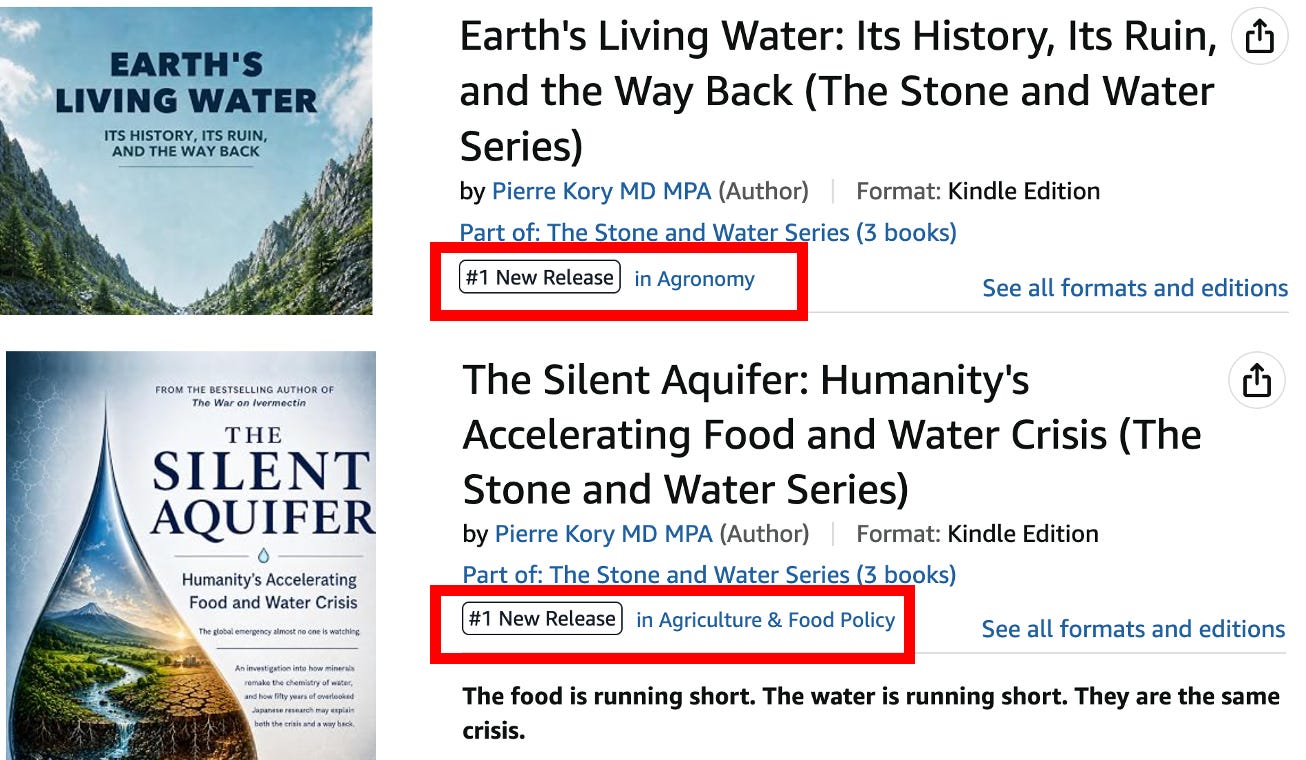
The other day I promised you the story of how an ICU doctor ended up topping the new release agronomy charts, a ranking I am somehow still clinging to—ELW is the #1 new release in Agronomy, and TSA is #1 in Agriculture and Food Policy:
That post is coming Monday. Today I want to address something else first: admitting to a particular kind of embarrassment that is available only to people who start a company before they finish their homework.
Ten months ago, I formed Aurmina (“golden mineral essence”) for drinking water and later Primora Bio for watering plants and irrigating gardens and greenhouses, after coming across a body of Japanese mineral chemistry and becoming convinced it was immensely important. Not sorta convinced, but fully convinced. I have only gotten that feeling a couple of other times in my career, when the potential of something you come across is obvious long before you can confidently explain it or fully understand all its nuances.
What really pulled me in was not a testimonial. It was Asao Shimanishi — an old-school pharmacist, not a marketer, who spent close to fifteen years trying to get minerals out of rock, a feat he achieved in 1977, and whose subsequent exploits and achievements stayed almost entirely unknown outside his home country, and even there his work was largely obscure.
But I figured others would be able to see the value in it that I had, so, with the help of the North American importer, Lisa and I started a company to sell a finished product made from his raw material, which Shimanishi called Themarox, or “Rock Extract.”
I also want to say how strange that decision was. I had never sold anything in my life. I had never wanted to. In a career in medicine, I had recommended treatments, argued for them, and occasionally gone to war over them — but there was never a transaction with my name on the other side of it, and I liked it that way. Selling is not in my nature, and I was genuinely hesitant.
What overrode the hesitancy was simple: I believed this mattered, and no one outside Japan was going to encounter it unless somebody put it in front of them. That somebody turned out to be me, which is not a sentence I ever expected to write.
In my defense, and in retrospect, the alternative would have been to sit on it for a year while I researched and wrote. However, I have to say that Aurmina helped support the immense amount of time I devoted, especially after retiring my patient panel, but I also want to acknowledge what that process must have looked like from your side of the screen, because I think some of you noticed.
You watched me effectively “rebrand” my own product a half-dozen times.
If that was confusing, it’s because it was confusing. It was confusing for me. I was doing my research in public and asking you to buy from me in the middle of it, which is not a normal way to run a business, and I don’t especially recommend it.
Thinking it was a health supplement (which it is not), I tried to find evidence for it impacting human health, but I had almost no human data to work from. Beyond Dr. Nojima’s book, what I had was agricultural and biological: field trials showing dramatic yield shifts, premium Brix scores, increased photosynthesis, antioxidant improvements, all written down in Japanese technical manuals which also included impacts on aquaculture: eels raised in Themarox-conditioned water growing to harvest in half the time at 30% higher stocking density while producing unusually high-grade meat, soils showing increases in microbial biomass, pest and disease pressure falling away, earthworms returning to treated fields.
One standout finding was a study showing up to 85% (average 50%) less pesticide uptake in treated plants when the soil received Themarox-treated water.
For the first time in my career, I was looking at something reported to act across nearly every layer of biology at once, with no precedent I could name. No vitamin, antibiotic, immune modulator, cytotoxin, or metabolic therapy I had studied operated on bifidobacteria, basil, eels, and soils simultaneously. The only analogy I could even vaguely think of was aspirin, since salicylic acid participates in signaling in plants, but even that broke down quickly. No one treats a microbe with aspirin.
To understand what this mineral extract was doing, I had to leave medicine and enter microbiology, plant nutrition, soil biology, hydrology, irrigation science, mineral chemistry, and eventually the physical chemistry of water. I had crossed into animal literature many times in my career, but I had never crossed into agriculture, soil biology, or water chemistry. At first it felt absurd, almost like a category error, until I saw that the borders between those fields exist only in universities and journals. They do not exist in Nature.
From Mineral Depletion to Geodynamic Conditioning
Every theory I built around these observations eventually failed somewhere. That failure became instructive. Each collapsed theory redirected me: away from missing nutrients, single pathways, and therapeutic mechanisms, toward the primordial properties of water on Earth.
Although I am the named author of the books, the arguments they contain emerged through close collaboration with Matt Bakos, now a close friend and colleague. Intellectually, he is its co-author and, in some respects, its senior author. Matt has been the sole importer of Shimanishi’s Themarox in North America for more than two decades and has studied them with a depth and persistence that borders on obsession. My equally obsessive interest in the mineral solution, along with my writing skills and ability to perform systematic research, produced the books, but Matt’s knowledge guided almost every step along the way.
The other unexpected catalyst was artificial intelligence. With it, I could access and integrate PhD-level knowledge across disciplines that rarely speak to one another, and that I had never studied. Incessant questioning with artificial intelligence transformed the scale and speed at which synthesis became possible. It let me traverse fields that normally remain isolated behind academic boundaries and assemble mechanistic models with a coherence that would have taken several degrees and many years to construct alone.
But it also taught me something unsettling: coherence is not proof.
More than once, I arrived at models that appeared complete, internally consistent, and strongly supported by literature, only to watch them fail under deeper challenges. AI could align papers, connect mechanisms, and produce explanatory symmetry so persuasive it became easy to mistake coherence for truth. Every prior version of the main book had evidence to back it up. Every version could be defended with references. Every version reached a conclusion. Yet each eventually collapsed because of an observation it could not explain or an assumption I later realized was wrong. A seventy-chapter manuscript does not enjoy being rebuilt five times. Neither, for the record, does the person writing it (nor the person who pre-ordered it last November, yeesh)
The mineral repletion theory came first: Themarox appeared to restore what a century of falling nutrient density had stripped from our food. That was the theory I was selling under, and why the label read ionic sulfated minerals, and later deep earth minerals. That collapsed when I calculated the concentrations of the 29 elements we measured in the solution—all were minute, far too small to supplement anything. So I moved to the rock itself. Biotite, or black mica, carries one of the most diverse mineral inventories in the Earth's crust (industry experts have said it can contain up to 80 elements), so perhaps the extract was restoring the ultra-trace and rare-earth elements that nutritional science had largely ignored and that modern soils and bodies had lost, thus “awakening a dormant physiology.” I called the theory behind it Mineral Spectrum Collapse and held onto it the longest. Clever, heavily referenced, yet it failed to explain what it needed to.
Then agriculture shifted the problem from mineral absence to mineral access, and I named the lithobiome — the microbial fraction that weathers minerals out of rock — and wondered whether Themarox was stimulating it. But animals have no lithobiome, and the effects crossed plants, microbes, animals, soils, water, and people at once. So I expanded it into Carbon–Mineral Collapse: disrupted microbial carbon flow impairing weathering, ion mobility, water chemistry. The messiest of them, and the quickest to die.
The problem was that each theory kept requiring another theory. The explanations grew more enticing, but less constrained. AI could find threads of supporting data for almost anything, and what first looked like explanatory power was, in fact, gaps papered over. Coherence is not proof.
They had all failed for the same reason: none of them went deep enough. That is when I realized that everything alive requires three things — water, minerals, and carbon — and I had spent four theories on the last two. Water I kept treating as the backdrop.
Then I started seeing it as the layer connecting every relationship I was studying: minerals and microbes, microbes and plants, plants and animals, cells and tissues, organelles and cytoplasm, etc. And beneath all of those, every biological process: the signaling, the gradients, the exchanges, the transport, the electron and energy transfers. All of it happens in aqueous solutions.
It was only when I began studying how water and minerals become a functional biological medium that I exited the labyrinth.
The Structured Water Pivot
But I still didn’t get it right at first. Once I decided that the water that Shimanishi’s minerals produced was unique, my next theory, if I am being honest, was a structured-water theory, largely because a UV absorption test of Themarox-treated water revealed Pollack's characteristic peak of 270 nm, which he claimed was diagnostic of his Exclusion Zone (EZ) water, and which many began to call “structured water.”
But I eventually set that down for two reasons, after spending a difficult and immense amount of time within Gerald Pollack’s work. The first is that Pollack’s EZ water, with the same absorption peak — the fourth phase — contains no minerals, and minerals were the entire subject I was studying. The second is that “structured water” had become a swamp, both scientifically and commercially, undefined and overclaimed, and language that is compromised cannot carry a serious theory even if something real lies beneath it.
But I still couldn’t let the concept go. I shifted to “coherent” water, thinking I had found a related property in the work of Franz Hofmeister, who in the 1880s described how different ions change the ordering of water molecules and of the proteins dissolved in it, e.g., cosmotropic and chaotropic ions. Since Themarox contained one of, if not the strongest, cosmotropic mineral profiles I could find, at one point, our website said “cosmotropic mineral solution” or something like that. But eventually, I decided that coherent and cosmotropic water was just structured water under a more careful name. So it died the same death.
Rock, Water, and Time
What finally survived was “geodynamic” water, after discovering that geodynamics is an actual scientific discipline. Geodynamic processes produce water whose redox, ion-exchange, and hydration properties have been shaped by prolonged interaction with Earth’s active geological processes. I started to see that water is not a solvent that minerals happen to dissolve into, but the downstream expression of the planet’s own processes: the product of a long geological history.
Which is what Aurmina makes. It is what Shimanishi called Rock-Water — a phrase I had been repeating for months before I was finally able to understand it literally. Water brought back into contact with the geochemical history of rock.
And beneath all the dysfunction I had been chasing across plants, animals, soils, and people, I finally saw what they shared: a broken inheritance between rock, water, and life. Somewhere in there, the thing I’d been selling for ten months resolved into focus, and it turned out I had been describing it wrong the entire time.
It is not a supplement.
It is a water purifier and a water conditioner.
That’s it. That’s the whole correction, and it took me ten months and three books to arrive at a sentence I could have fit on a business card. But there was also something on the back of the card, which took me longer to see: it works by the same chemistry the Earth has used to make water since the beginning.
Nature Always Cleaned Its Own Water. We Just Gave It Too Much To Clean.
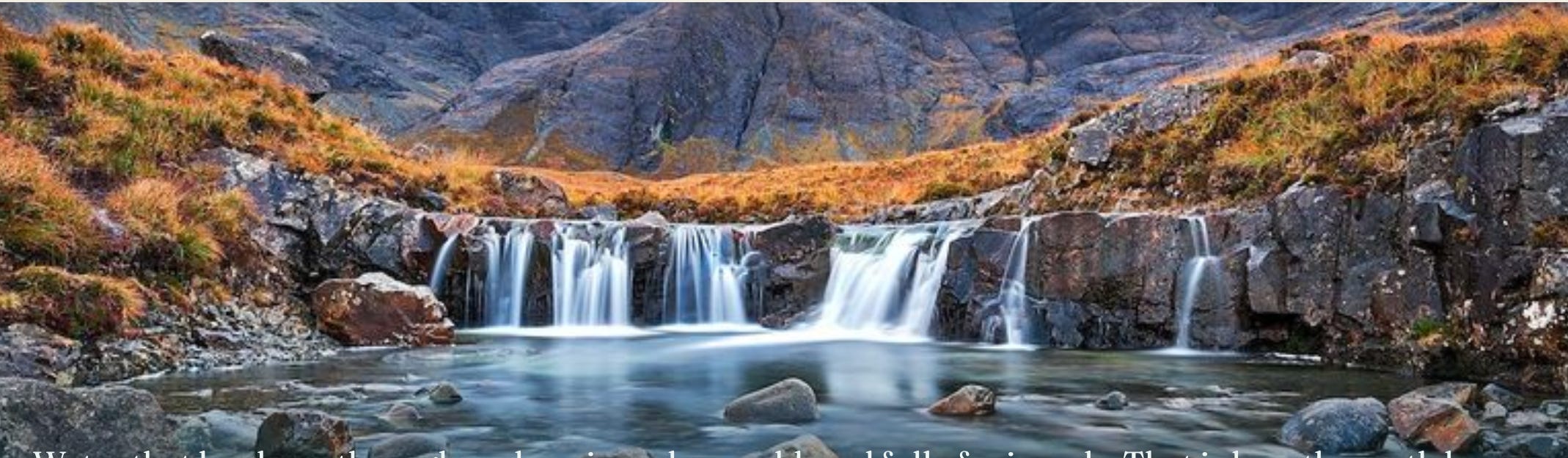
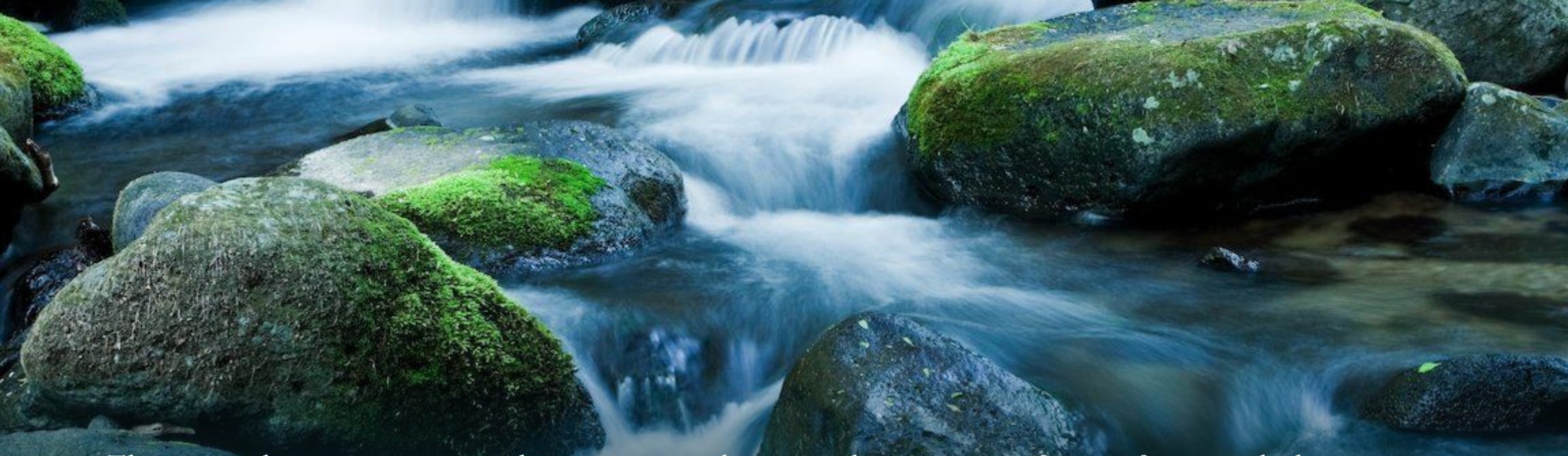
For nearly all of history, the Earth purified its own water — and what it had to purify was mostly organic. Rotting leaves, dead animals, microbes, sediment, the ordinary waste of living things. Stone, minerals, and time broke it down, bound it, and settled it out, while keeping the water biologically alive. Think of the springs of antiquity — waters people traveled to, wrote about, and built cities around, sought out for refreshment and for healing. Some cold and clear, some steaming out of the ground. What the waters had in common was that rock that had made them what they were- different rocks, different waters, but all were rock-conditioned water.
That was simply what water was.
I look at pictures like these with new eyes now:
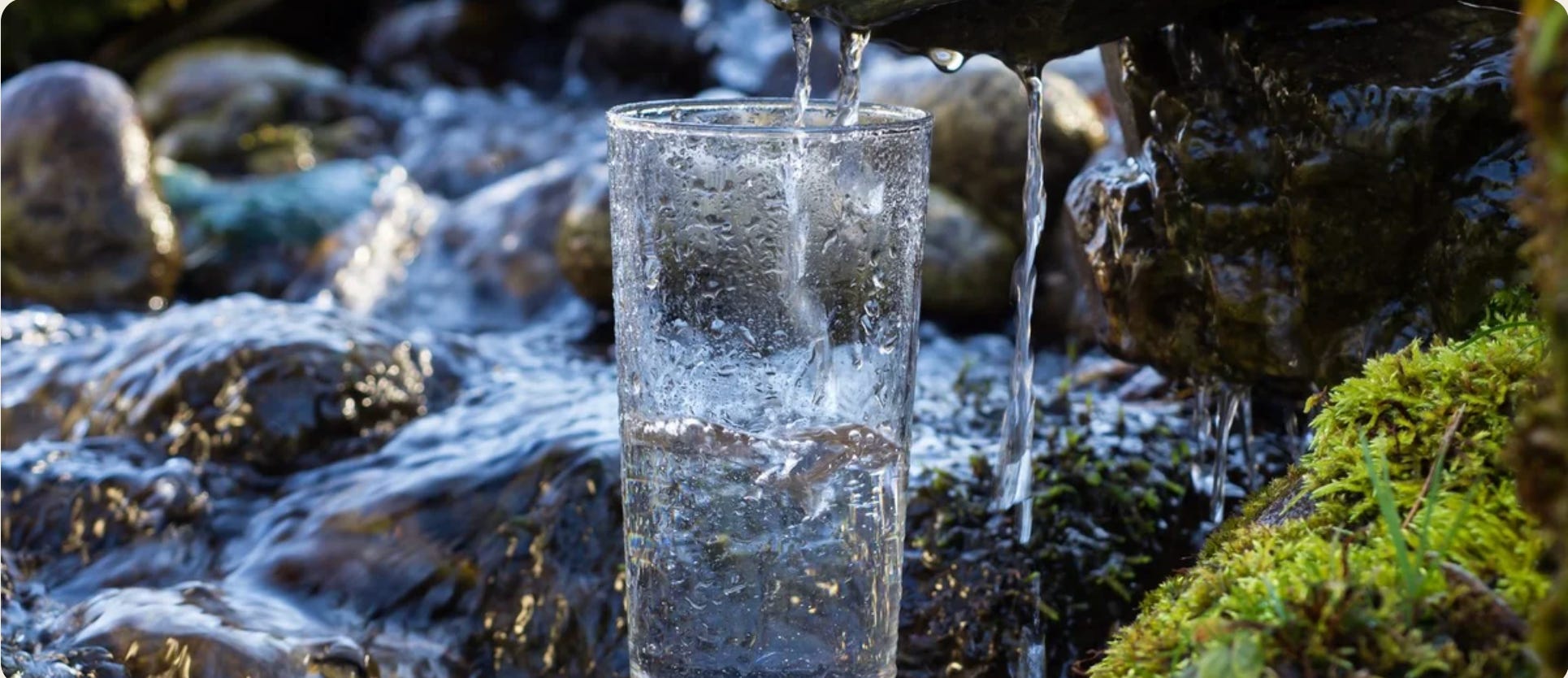
Earth’s system still works. It is just that it was never built for what we started handing it.
There are now hundreds of thousands of chemicals in commerce — pesticides, solvents, pharmaceuticals, industrial byproducts — almost none of which existed a century ago, and nearly all of which end up in water. And there are eight billion of us, up from a tiny fraction of that two centuries ago, concentrating our waste into the same rivers, lakes and aquifers nature once kept clean for far fewer of us.
One major argument of my book (s) is that the world’s water quality has been degrading, not only in the aquifers but in surface waters too, and that this change — largely driven by the Green Revolution and modern industry — amounts to what I’ve termed a Geohydrological Shift. I then argue that this shift is driving annual agricultural yield gains below what is needed to feed the human population, threatening our very survival in the lifetime of those reading this post. Some of us, anyway.
But those are not the only forces changing our water. I also went deep into modern water treatment: what its goals are, what its goals are not, and what goals it can never achieve. Knowing those limitations, many people, particularly in wellness circles, have gone looking for purity, and what they found was reverse osmosis. RO is what’s under everyone’s sink now.
RO works by force
RO pushes water through a membrane at pressure and strips out essentially everything, contaminants and mineral content alike. That is the whole design. It does not distinguish between what you want gone and what you want kept, because it can’t.
It also means that the water it delivers is not neutral.
I hate being the one to tell you this, because I sell an alternative and you have every reason to hear that as marketing. So let me hand you the least excitable source available. Twenty years ago, after years of desalination plants and RO systems being used around the world to produce drinking water, the World Health Organization published a chapter titled Health Risks from Drinking Demineralized Water, and it is not equivocal.
Water below roughly 100 mg/L of total dissolved solids (TDS) increased diuresis by about twenty percent in human volunteers, raised serum sodium, and lowered serum potassium. It doesn’t just fail to deliver minerals; it pulls them. Cook with it, and you lose up to sixty percent of the magnesium and calcium in the food itself, and more of some trace elements — 66% of copper, 70% of manganese, 86% of cobalt. It is aggressive enough to dissolve metal out of the plumbing it passes through, and the chapter documents three infants lead-poisoned that way, one at 42 µg/dL.
WHO’s recommended minimums are 10 mg/L of magnesium and 20 mg/L of calcium, with optimums well above both. Reverse osmosis delivers a tiny fraction and distillation none. And municipal water often barely clears the bar itself:
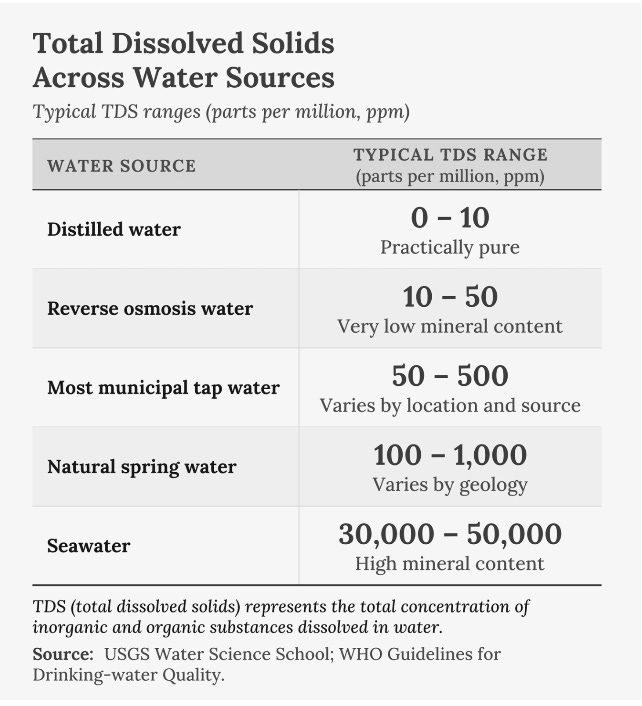
There is also a fifty-year epidemiological literature associating soft, low-magnesium water with cardiovascular morbidity and mortality. I know: correlation, not causation. The WHO says so itself, and so must I.
“Fine — I’ll just put the minerals back”
That is the first thing anyone says when they hear this, and it is a reasonable thing to say. That is why remineralization cartridges exist and why they sell, although from the many discussions I have had with my patients about their RO systems, surprisingly few have either installed or maintained a remineralization filter.
Either way, I looked at how well they actually work and found that only two companies publish reasonably complete data on the water their filters produce. Here is that data:
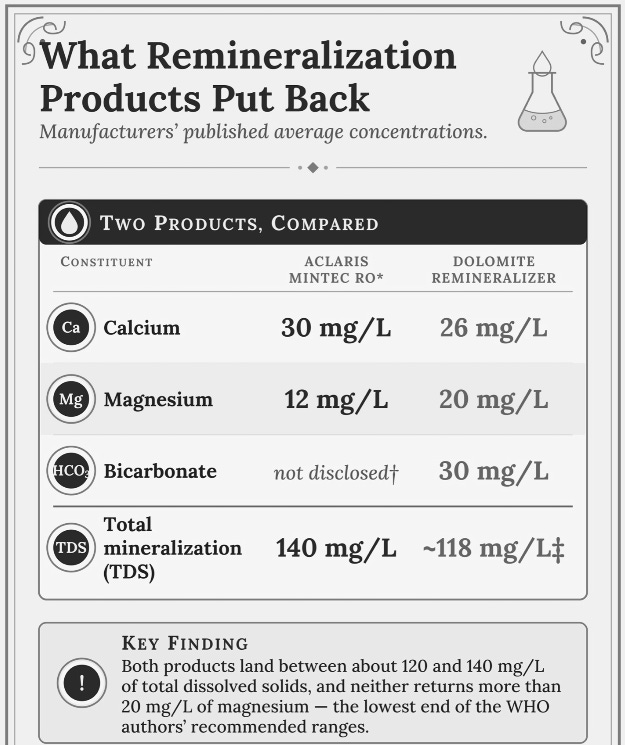
I was shocked. What they add is a short list of minerals at concentrations that don't approach the optimums that the WHO recommends, let alone what water that has moved through rock actually carries—and the two companies willing to publish are, presumably, the two with the least to hide.
What It Costs the Homeowner and the Aquifer
RO recovers only 10–25% of the water it filters, which means three to nine glasses go down the drain for every glass you drink. The EPA’s own figure for a point-of-use system is about 5,320 gallons discarded a year to deliver roughly 940.
That is a strange thing to have discovered while writing a book about the world’s aquifers being depleted faster than they can recharge.
And it is expensive: $300 to $585 a year for a typical under-sink system, once you count the membrane, the filters, and the water on your utility bill. It needs energy. So you pay for the privilege, twice — once at the utility and once at the aquifer.
Clean Shouldn’t Have to Mean Empty
So empty is not a neutral condition. It is a deficit, and the body pays for the deficit.
With the rarest of exceptions, every water humans have drunk throughout our species’ history has been in contact with rock. A distinct geological mineral composition was the default condition of water on Earth.
Clean shouldn’t have to mean empty. That’s the argument, and I think it’s right.
A “Geological Shortcut”
Here is the part that took me three books to see.
Nature’s chemistry works better than the membrane does. But it is slow, too slow for the modern load. Historically, the Earth had weeks, seasons, sometimes years to do this work, but it has never had to keep pace with the flood of novel compounds and the amount of human refuse we now pour in faster than it can break down.
What Shimanishi did (I believe, without intending to) was take Nature’s purification process out of rock and make it portable. Themarox concentrates the same mineral chemistry the Earth uses to clean water, but it does so in twenty-four to forty-eight hours, in a container, on your counter.
That’s the whole idea. It is a geological shortcut — a way to make water the way the Earth makes it, without waiting on the Earth’s schedule.
The Price of Purity
Ultimately, anything done to treat your drinking water has to achieve two goals. The first goal is to remove as much of the modern burden as you can. The second is to leave behind the mineral composition that supports its biological properties.
The problem is that every current approach trades some or all of one for some or all of the other. None does both.
Reverse osmosis wins the first and completely loses the second. It strips contaminants more effectively than the mineral approach does, and I’ll admit that plainly: on removal alone, RO takes out more. But it takes out everything else along with them, and hands back water the body then has to repair at its own expense.
Municipal treatment doesn’t come close to achieving either one. Start with the first goal, because legal isn’t clean. Water can pass every limit on the books and still carry a long list of things you’d rather not drink. Many federal limits haven’t been revisited in a generation while the number of chemicals in circulation keeps climbing. Standards are shaped largely by what utilities can afford to remove. And whole categories — hundreds of individual contaminants — simply aren’t on the list anyone tests or treats for. What is never measured never counts as a problem. As for the second goal, you saw the numbers above: municipal water often barely clears WHO’s minimums, and frequently doesn’t.
Which brings me to the third option, and why I spent a year on it.
Themarox doesn’t work to a legal limit. It takes the burden down to where the lab can barely find it. Testing was done on three separate finished products, all identical 10% dilutions of Themarox, and you can find the full inventory of lab reports for each on the Open Science Framework: Purinize, Adya Clarity, and Aurmina. In summary:
245+ contaminants removed or greatly reduced
147 driven below the limit of detection entirely
100 more reduced, most by better than ninety percent
All four trihalomethanes to non-detect
All 36 pharmaceuticals tested were reduced >99.5%; glyphosate 98.9%; arsenic 99.1%; lead 98.7%
Eight estrogens reduced 74–97%, measured in parts per trillion
That’s the purifier part. That’s the claim. That’s the whole claim, and it’s the one I can stand behind in a room full of people who want to argue with me.
And then there’s the geochemical conditioning part. Removing the contaminants is only half of what happens in that pitcher or container. Dozens of minerals, aside from the ones that did the removing, stay in solution, and they change what the water is at a fundamental level. Redox balance is restored — the water’s electron potential returns to where naturally mineralized water has always sat. And the capacity for ion exchange returns, so the water can trade ions with the surfaces it meets rather than stripping them.
Reverse osmosis and distillation produce the opposite: water that is demineralized, chemically aggressive, and with nothing left to trade. Clean by one measure, impoverished by another. Themarox doesn’t just help filter your water clean; it also conditions it — the same chemistry stone and water run underground, compressed into a teaspoon.
What Aurmina is Not
One more thing I should remind you, because I’ve just spent a long section on WHO’s mineral minimums: Aurmina is not a mineral supplement. It contains some calcium and magnesium, but nowhere near the levels WHO recommends, and at the dose you use it will not appreciably change the calcium or magnesium concentration of your tap water in either direction.
So if you are starting from RO or distilled water, you still want a remineralization filter, and Aurmina is not a substitute for one. If you are starting from tap water, you keep what your tap water already has.
I am curious as to what the optimal major and trace mineral content of drinking water is, as no-one has yet researched it. It is near the top of what I want to study next.
What I’m Not Claiming
This is the part where a person in my position usually gets carried away, so let me be precise.
It would be false to tell you there is no evidence in human health. There is. There are randomized, albeit unpublished, trials run by Soviet-era research institutes, a long series of clinical observations from my own practice, and a metal excretion study we hope to see published shortly. Some of you will encounter all of it in Earth’s Living Water, and I’m not going to pretend otherwise.
What I will not do is offer any of it to you as a reason to buy a Themarox-derived product.
The reasons aren’t bureaucratic. The trials are unpublished, the clinical observations are uncontrolled — I saw what I saw, in patients I was treating several ways at once, with no comparison group and every opportunity to fool myself. And nearly all of it involves Themarox at concentrated doses, which is neither the product I sell nor the way I am telling you to use it. Two teaspoons of a diluted product in a gallon of drinking water is a different proposition from what produced those observations.
So: evidence, yes. Proof, no. And evidence about a chemistry is not evidence about this bottle, at this dilution, for that purpose. I am not claiming, and you should not infer, that Aurmina does anything for your health. It cleans and conditions your water, and it leaves the minerals in. That’s it.
The new website
This is the first version of Aurmina’s website that is accurate on the front page and across all the pages. A few pages of them may be worth your time, although today’s post already crystallized them well.
If you want the coagulation, redox, and ion-exchange steps laid out properly, that’s the Science page.
If you want the more detailed comparison to RO, that’s the Compare To R.O. page — the argument above, laid out side by side, including annual cost.
How to use it: How To Use
What to filter it through and how to filter it: Filtration
Shimanishi’s story: The Whole Story
Labor Day Sale
Use code LABORDAY25 to get 25% off 8oz and 32oz Aurmina bottles or our new Korea Ceramic Filter.
One 32 oz. bottle is a year’s supply for one person, or about six months for a couple. The 3-pack and 6-pack are already discounted 22% and 33% off, and the sale doesn’t stack on top of that — if you’re buying in volume, those are still the better deal.
If you’ve been reading me and you’ve come away worried about your water — and I’ve given you plenty of reason to be — this is what I’d put in your hands. It took me ten months and three books to say that clearly. Thank you for your patience while I was figuring it all out.
*If you value the late nights and deep dives into all the “rabbit holes” I write about, your support is greatly appreciated.
If the above piqued your interest and you want to learn more from the rabbit holes I have lived in over the past year, you can purchase the book series, in whole or in part, from my website here ( where all books are personally stamped with my hanko) or from Amazon here.

Just have to say, I bet all those people responsible for attempting to destroy you during the plandemic are infuriated at your successes and intelligence. I am loving this. Keep it up, Doc!
You’re so right… I’ve been fascinated by water for years, studied, researched, read and tried many versions of modified water. From my earliest awareness of Rudolf Steiner’s observations, John Wheeler’s research on water, Masaru Emoto’s research, John Feighery who co-founded mWater Foundation and a purification system for NASA and oil drilling companies, to colloidal and structured water, Ormus water, etc…Because I studied energy and vibrational medicine, everything took me full circle right back to Rudolph Steiner’s observations of water flow, eddies, whirlpools, etc. rushing over mineral-laden rocks, purifiing moving water. Once I knew this, I knew the minerals were in reality homeopathic dilutions and when I saw the reality of water as a shapeshifter and receptacle, I knew it stored information, vibrations, frequencies of everything it touches. Water is a wonder! And we must protect, value and keep it pure. God bless your amazing mind and research❣️🙏🏼