


I promised you the story of how an ICU doctor ended up having one book hit the “#1 New Release in Agronomy and the other as #1 in Agriculture and Food Policy. But wait, the latter is no longer true; now it is #1 in Water Supply and Land Use. Hilarious.
Here it is, and it’s shorter than you’d think. As I neared the end of mapping out the science and mechanisms of Shimanishi’s mineral solution, I was forced to spend a disturbing amount of time in the agronomy, soil biology, and hydrogeology literature.
Disturbing because — what the heck is an ICU doc doing studying agriculture?
Easy. That’s where the science and data on Shimanishi’s minerals lived. There was no medical literature to read. So I had no choice but to develop real working expertise in soil structure, soil biology, and agriculture to understand how plants, soil, microbes, and minerals interact, and how water connects all of them.
I hereby confer upon myself an AI-Assisted Internet Degree in Agronomy, Soil Biology, and Geohydrology.
I stole that line from myself. For years, whenever a patient turned up having read deeply enough to propose a better option than the one I’d landed on — rare, but it happened — I’d say: “Which Internet School of Medicine did you go to? I’m impressed.” They loved it.
As it turned out, it also had an agronomy department.
Anyway, that is the whole story of the agronomy charts. There was no plan. I went where the evidence was, and the evidence was in the dirt.
Now let me tell you what getting there actually took.
A Trail I Never Could Have Imagined
Here is what made this year unlike anything I’ve ever done, and I have devoted enormous stretches of my life to researching narrow questions in medicine. The evidence behind this particular mineral extract was everywhere except a medical journal, a textbook, or a database.
It wasn’t in journals or anything peer-reviewed. The vast majority came from two Japanese agronomy technical volumes I had to have translated (by AI, of course). The rest were institutional agricultural studies or reports from a handful of countries — Mexico, Korea, China — unpublished and held in company or institutional archives. Then a handful of commissioned studies from distributors of Themarox-derived products, saved in Word files, or even relayed to me in an email with a couple of soil test reports. Oh, and let’s not forget the three Soviet-era research institute documents, which I also had to have translated from Russian, whose sophisticated in vivo and human studies remain unpublished and, in one case, didn’t even list the authors. Then the “Holy Grail,” a single, peer-reviewed, journal-published study on the effects of Themarox on the antioxidant activity of buckwheat sprouts.
It was the most bizarre evidence base I’d ever encountered.
As much as I want to hand this to an AI and get a slick graphic back to show you, I won’t. So here is the bulleted list of what I actually studied this year:
The early mineral pioneers — Weston Price, Elmer Heinrich, Linus Pauling.
The mystics of water — Viktor Schauberger’s vortices and the primordial sea of René Quinton.
Mineral springs and healing waters — their history, their importance, and their recurrence across essentially every tradition and culture on Earth.
Origin-of-life science — Lane, Russell, Hansma and others; deep-sea hydrothermal vents and layered silicate structures.
A century and a half of mineral lock-up in our soils and the falling mineral content of our food, traceable back to the Broadbalk experiment of the 1860s.
How the essential minerals were identified in the 1930s — largely by feeding rats single-mineral-deficient diets to see whether they’d collapse into illness. If they didn’t collapse, or if we couldn’t measure the element at the time: non-essential. That’s the standard. The rest of the soil’s mineral inventory has been almost entirely ignored by modern science ever since.
The deep evidence bases for the importance of boron, lithium, and copper in treating and preventing numerous human diseases, while exactly none of them are routinely tested for or recommended for supplementation, despite a near-universal inability for human populations to hit even the falsely low daily allowances.
Heavy metals, which I learned to divide into “industrial” versus “essential” (half our essential elements are heavy metals), including a deep dive into the non-toxicity and ubiquity of aluminum in our food and water.
Many weeks spent inside Gerald Pollack, Gilbert Ling, and Franz Hofmeister’s work, plus critically evaluating their dissenting water chemistry papers, which were the most scientifically dense material I have ever tried to navigate.
Modern water treatment — its goals, what’s in our water, what never gets tested or removed, and how much is still contaminated, untested, and poorly mineralized when it comes out of the tap.
The cost of empty water - the proliferation of desalination plants, RO systems, and the little-known financial and physiological consequences of drinking demineralized water.
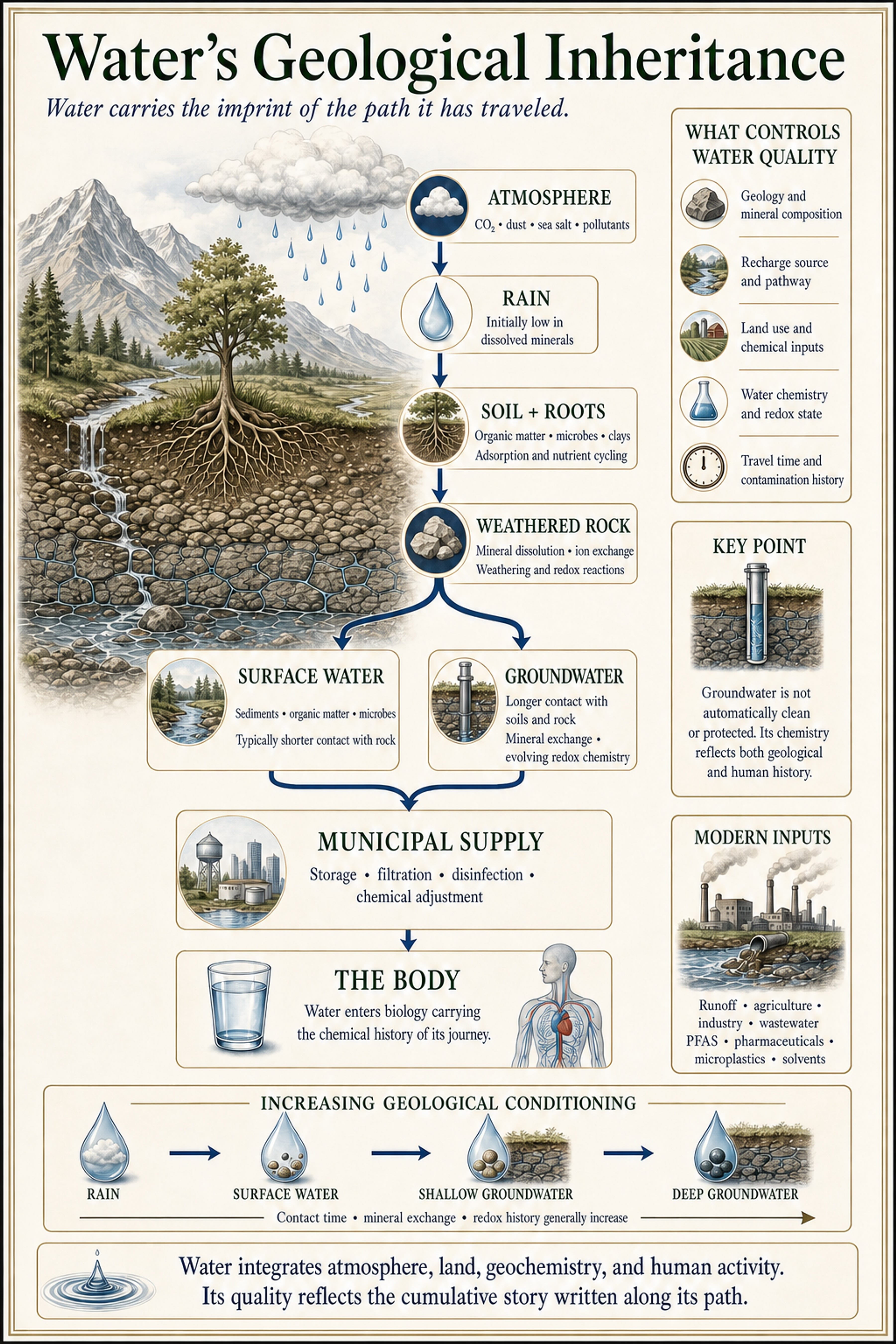
The geological inheritance of water:
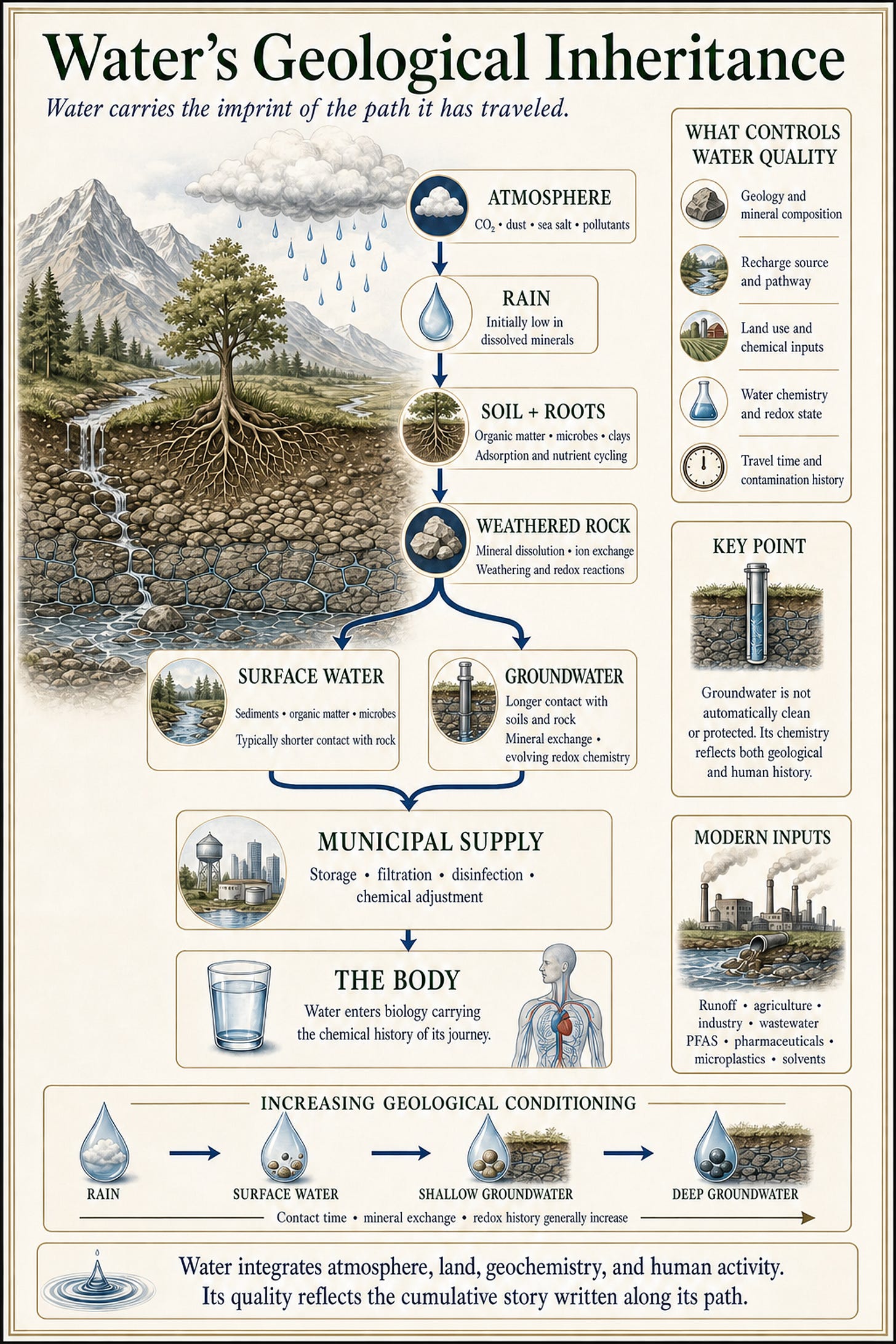
Total immersion into the state of the world’s water, above ground and below: how its quality and chemistry have been degraded by industry and agriculture over the last hundred years, how rapidly it is being extracted and how it is beginning to actually run out in specific places, and what those places are now doing to keep people alive — and how almost none of it registers in the world’s media, because it is dwarfed and buried inside the larger, obsessive climate change story.
What It Cost
Over what became almost exactly a year, I lost a not insignificant number of subscribers (especially paid) to Medical Musings. Some left because the direction and scope of my research no longer interested them. One wrote, memorably, “I am not that into water.” Fair enough.
Others left for worse reasons. When the research for The Blueprint of Life took me into a small, discrete set of ancient Hermetic texts, some recoiled, convinced I was delving into the occult and practicing dark arts or some nonsense. Nothing, and I mean nothing, could have been further from the truth. I was following evidence about minerals and water back into antiquity, and into fewer than a handful of densely cryptic texts. When that path continued past those texts and into Scripture, it brought some of them back to the fold. But not enough. Oh well.
It isn’t that I didn’t care that I was hemorrhaging paid readers. I simply didn’t have a choice. Writers write about what captivates them. Yes, I had departed from the hard-charging, enraged-dissident health establishment attacks, interspersed with transformative research on the efficacy of repurposed and “alternative” therapeutics for COVID, cancer, and post-COVID vaccine syndrome — the work I’d become known for. But it was still a search for health. Just across physical, ecological, and eventually spiritual realms instead of only the first one.
Why I Couldn’t Keep Fighting
What really happened is that I could no longer keep up the daily intensity of fighting, uncovering, and exposing the fraud and lies we all lived through in COVID. Not because that work stopped mattering; I just couldn’t sustain interest in it any longer. I felt I had reached as many as I could reach, and further efforts were simply validating and satisfying those who already knew rather than continuing to enlighten the unenlightened. Plus, so many were still doing it so well.
How long can one man scream about the toxicity and lethality of the Covid (and all) vaccines, the efficacy of the innumerable repurposed drugs suppressed and distorted by mainstream media, medical journals, public health agencies, and universities, the corrupting practices of Fauci and the pharmaceutical companies, the devastation of illness I see all around me, and the horror and the unfairness of all of it?
The work I put into the first four years of Medical Musings effectively turned me into an expert on Disinformation tactics. But teaching the public about disinformation all the time just… stopped exciting or inspiring me as it once did.
I started to feel like “Johnny One-Note,” plucking the same sound on the same instrument over and over. As I started to realize this, I also saw my admiration soar for friends who could sustain that intensity and focus — like Steve Kirsch, bless his heart. Steve is the quintessential dog with a bone. Five-plus years now of daily, indefatigable effort, first exposing the COVID vaccine catastrophe, then the century-long vaccine myth, and finally, proving to the world that autism is, in the end, simply vaccine-induced encephalopathy. The world needs more guys like Steve.
Once I exposed how deeply the COVID fraud ran through so many of our institutions, some really interesting people started finding me—a cadre who had been awake far longer than I had, some reaching out directly, others simply appearing in my circles. That is when my education moved past disinformation tactics and into considerably darker territory.
It began with a documentary, From JFK to 9/11: A Rich Man’s Trick, and what I learned afterward—that some of the most consequential events in modern history were false flags: Pearl Harbor, the Gulf of Tonkin, 9/11, and more.
So the history books are lying too? I remember thinking.
From there it ran into the long history of secret societies — the Illuminati, the Masons, the Rothschilds — and into what people born into that kind of power, or handed it, appear to turn to once fame and money stop doing anything for them. Pedophilia. Trafficking. Sacrifice.
Eye-opening, mind-boggling, world-perspective-changing. But then my interest in that waned too, and fast. Too depressing, too predictable, and ultimately too powerless to do anything about. I wasn’t learning anything that would help me live a better life or be a better person. Wiser and savvier, maybe. But nothing to build a life around.
So I got bored and exhausted with it all. Tired of the lies, the fraud, the corruption, and frankly, tired of learning about the pure evil in the world.
That doesn’t mean I’ll never drop the gloves to fight evil and fraud and lies again. I still will when it’s needed — like the post on our legal win over California Attorney General Rob “Bastard” Bonta, or the piece I wrote with attorney Aaron Siri about the insane suppression and misrepresentation of the two Texan Mennonite girls who did NOT die of measles. But those are going to be the exception now, instead of the norm they were for years.
Yeesh. When I look back over the first 350 essays I wrote here — man, do they bang that drum, louder and more powerfully and more accurately over time. I understand that is what a lot of you came to like me for. I just don’t like me doing it all the time anymore.
So if you don’t want to stay, I get it. There’s not enough time in the day to read everybody, especially if other things interest you more.
What Saved Me
The real reason I couldn’t do it anymore is that I got saved. Not in the way you’re thinking; it was more like being intellectually saved. It started with Shimanishi’s extract: fifteen solitary years of labor, finished in 1977. Soon after encountering it, I began watching its various applications produce responses across biological kingdoms.
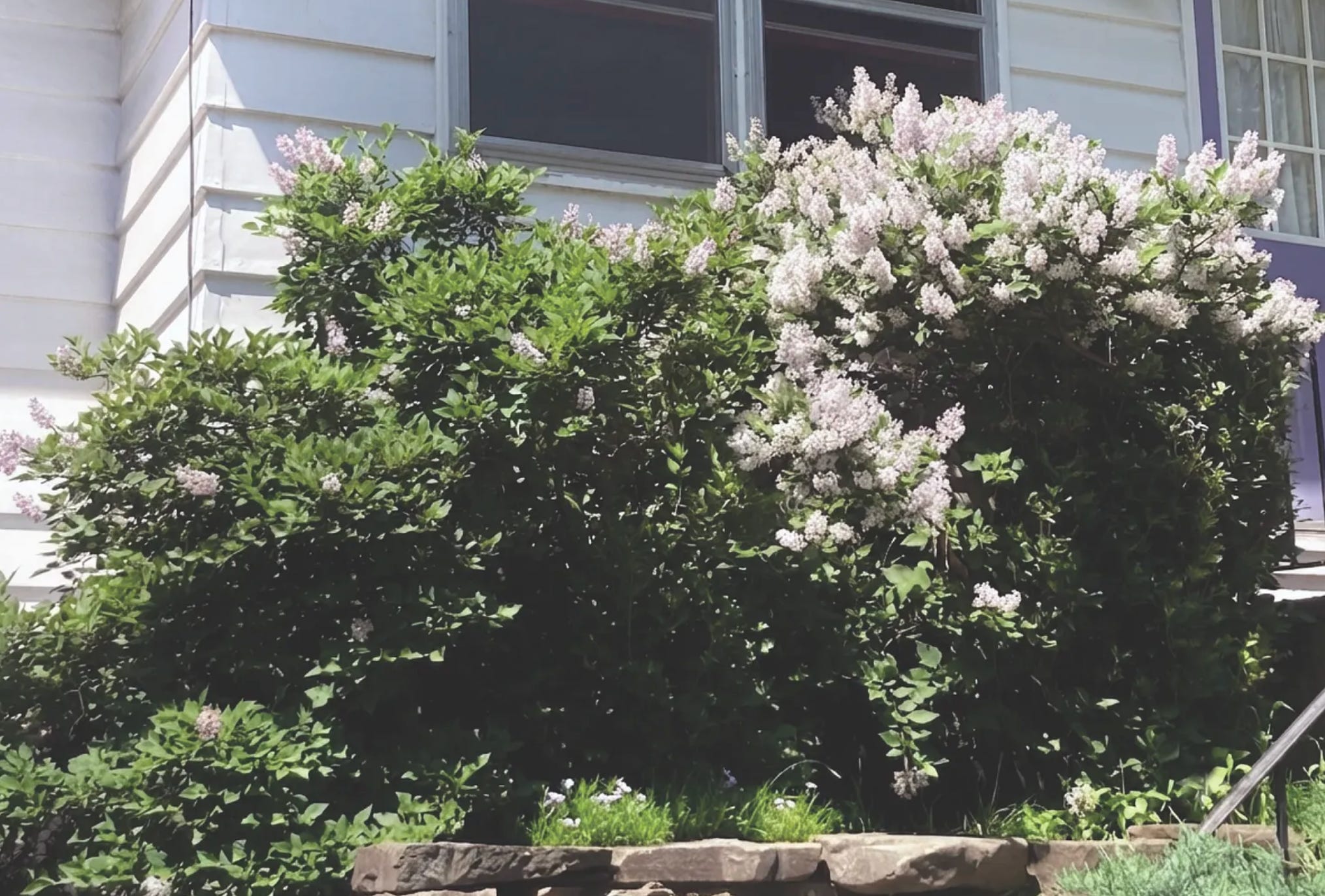
A lilac bush sprayed with Themarox-treated water exploded into bloom, while the one catching less of the spray only produced three or four sparse blooms.
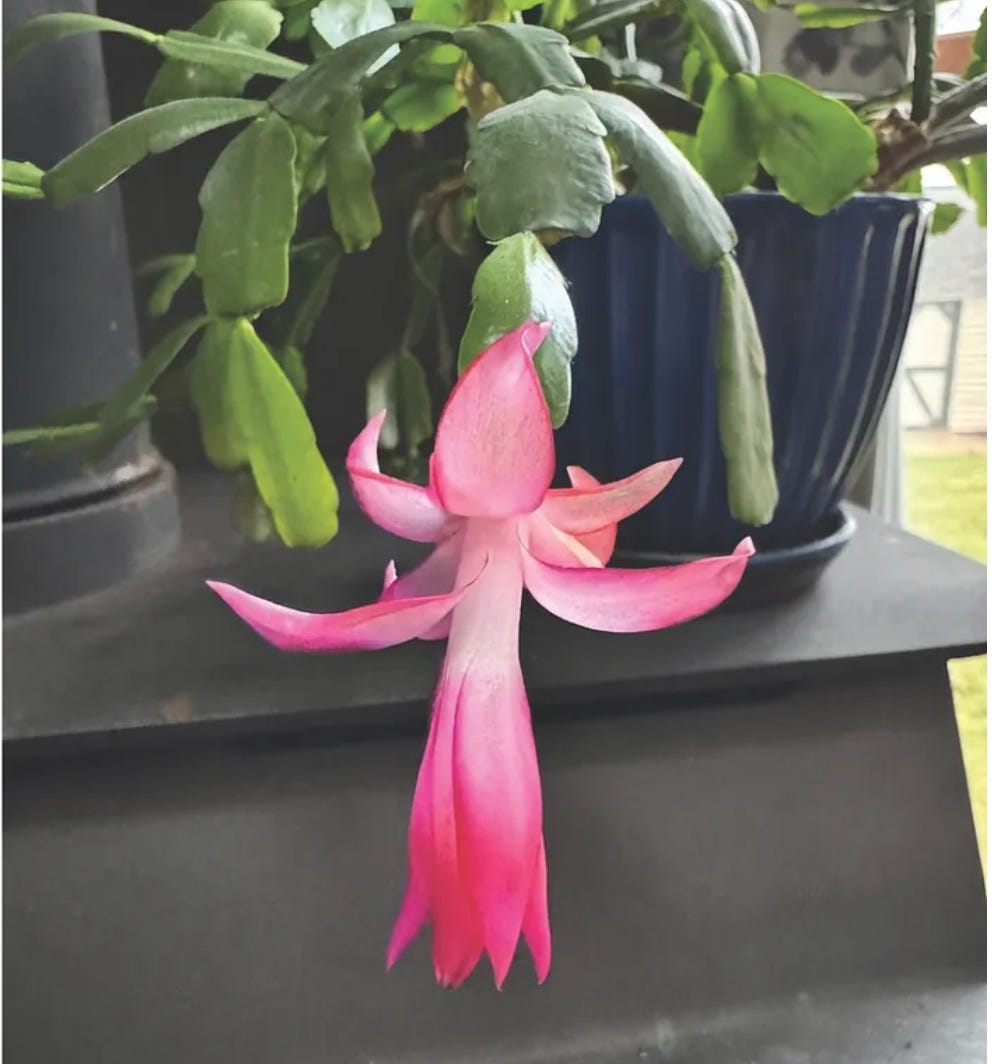
One family’s Christmas cactus, inherited from their grandmother, suddenly flowering after receiving Themarox-treated water— something they hadn’t seen in fifty years.
A potato thriving in a glass of Themarox-treated water while the one submerged in regular tap water rotted.
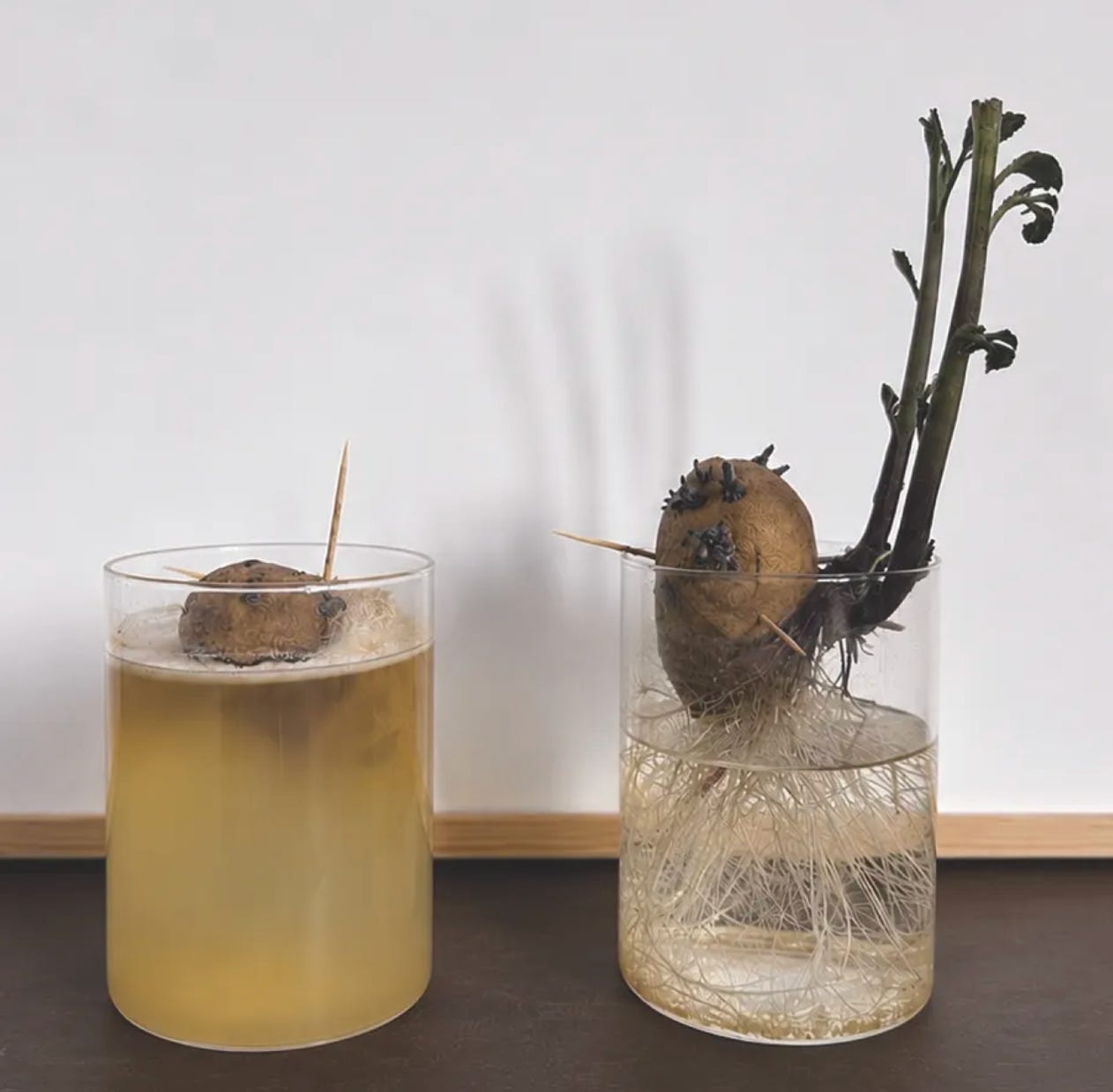
Then I came across Russian researchers describing rats hydrated with Themarox-treated-water as becoming more active, with shinier, healthier fur than the rats given ordinary water. Then I received testimonials from colleagues of patients who reported things like increased energy, improved vision, thicker hair, and faster-growing toenails on concentrated dosing protocols.
So I found myself pulled deeper and deeper into a single question: what is this? How does it work? Why does it work? And what else can it do?
The Book I Thought I Was Writing
My first impression was simple: it worked by supplying minerals that biology had become deficient in. So I wrote a book about the history, the science, and the importance of minerals in health and life. I called it From Volcanoes to Vitality. I put it up for sale. And I was done — three intense months, start to finish. That was mid-October of 2025.
I still feel guilty about keeping those early purchasers waiting so long. I’ve sent progress updates and sincere apologies along the way, but I suspect more than a few of them concluded they’d been grifted.
Last week is the week I proved them wrong. Sort of - the printer just reported a two-week delay, ugh.
But here’s what happened. Every time the manuscript was being readied for the printer, another door opened. Another insight arose. Another inexplicable piece or set of data appeared. And back down the rabbit hole I went, accompanied by my research collaborator and mineral expert, Matt Bakos.
That happened over and over for the next year.
The Work
Eighteen-plus-hour days at my desk, in between seeing patients. Obsessively. For a year.
No other stretch of work in this admittedly highly productive ICU doctor’s career ever approached it. Building the FLCCC with Paul in the early years of COVID, then fending off the global media attacks while losing our careers and reputations, none of it came close because this was more solitary, more focused, more intense, with only a single collaborator at my side. Matt was indispensable, central even, but he also did not write a word of the books.
The scope of the work nearly buried me. There were weeks I spent down inside the electron transport chain, studying the way iron and sulfur hand electrons down the line, while Matt kept showing me yet another process that depended on yet another mineral: every organ, every enzyme, every receptor I looked at seemed to lead back to the same handful of elements, and the deeper I went, the more granular and unmanageable it became. I had a large story I was trying to tell, and I kept getting stuck in the weeds of mechanisms I couldn’t simplify or skip, and the frustration was constant.
It was harder still because I was doing it in the cracks of a busy working life. Until the final month, I carried my patient schedule, and the two could not both have me. Every time the writing finally caught fire, it was time to see a patient, and every time I was with patients, the book was pulling at the back of my mind. I felt divided in a way I could not resolve, and I gave neither side the whole of my attention as often as I wanted to.
Why I Stopped Seeing Patients
I should be open about why I stopped, because the timing was no coincidence. Two things were happening at once, and they pulled in the same direction.
The first was that my inspiration for tending to patients, which had carried me for decades, was quietly running down — not into bitterness, and not into any failure of care, but into a kind of completion, as though that particular well had given what it had to give.
The second was harder to admit, and I know how it sounds. The pull toward this work — toward the minerals, the research, and the task of carrying what Shimanishi achieved out into the world — had stopped feeling like just another in a series of research rabbit holes I had gone down since opening my practice, and started feeling like something I was simply meant to do. I am wary of men who believe they are called to the world, yet I cannot describe what happened to me over these months in simpler terms.
The honest version is that I was finished, spiritually and intellectually, with one kind of work, and overtaken by another. For a while I tried to carry both. A man doing that does neither well. So I stopped.
My only regret is that I did not do it sooner.
*If you value the late nights and deep dives into all the “rabbit holes” I write about, your support is greatly appreciated.
The Life Around It
Somewhere in the middle of all of it, I also started a company — which turned out to be a full-time education in everything that no one teaches a physician.
How much warehouse space you need, and how much inventory to put in it. Where to find bottling and labeling equipment. How to hire a warehouse manager. What the FTC, the EPA, and the FDA each require on a label — three different answers to the same question. How to argue with UPS and USPS about a broken package, and who eats the cost of a return.
And how to build a customer service department, which in our case was initially very easy — Lisa K.
However, I have to say that Matt and his wife Lisa (“Lisa B”) made all of it considerably less painful than it should have been.
We also lived out of suitcases for a good stretch. Even though I have only a small circle of friends here in Sarasota, and my only leisure is the occasional meal out, home dinner invitation, or a round of golf — err, half a round of golf; who has time for eighteen holes? — I felt I needed complete solitude and disengagement.
So, despite the irony of being Swedish and famously intolerant of cold, Lisa agreed to be snowed into a cabin in Montana with me for two months, pregnant and far from her friends and her routines, while I wrote eighteen hours a day and lost all sense of time.
The Wild Looking Back
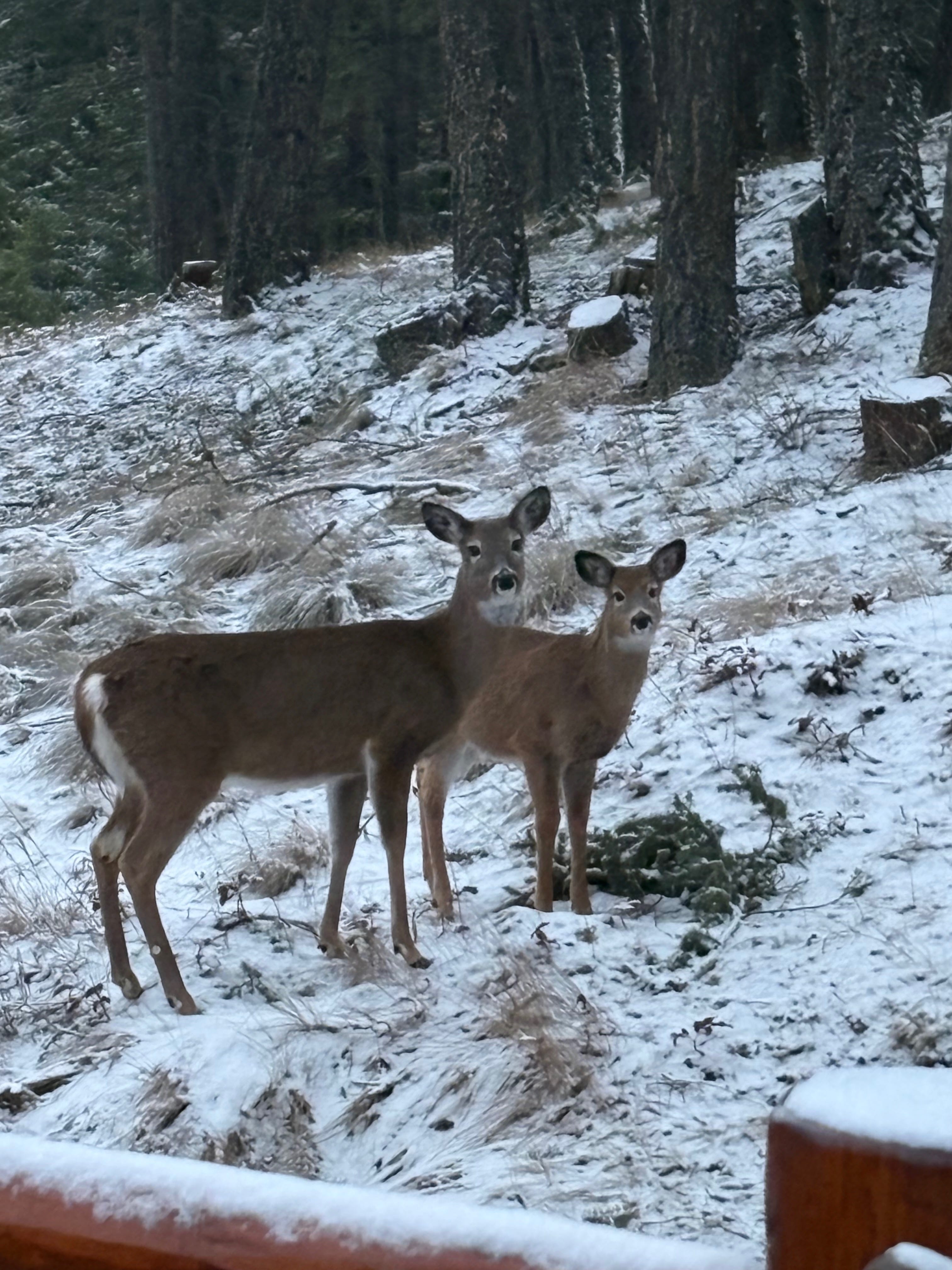
One memory I will always keep is that the cabin came with a bag of deer feed and permission to use it.
I put some out the second day and watched them come, and that was that. It became the thing I did, and something I had never done in my life. Every time I looked up from the desk and saw them on the slope, I was out of the chair before I had decided to be — Lisa can confirm this, and found it considerably funnier than I did.
There were a dozen or more deer in the area, but two of them, a mother and I presume a daughter, came alone, and most often by far. I named them Margie and Bambi. They would stop eating and look up, and we would hold each other’s gaze for a while, and I have no scientific word for what passed between us.
Over the weeks I set the feed closer and closer to the cabin, until they were eating a few feet from where I stood, shivering on the back deck in my slippers. I had never been so close, for so long, to such majestic animals. The energetic connection was intense.
I would then come back in, regaling Lisa with the closeness I felt, the intimacy, the joy, the beauty. It was weird, a former two-pack-a-day chain-smoking, drug addicted, foul-mouthed Long Islander pulmonologist going on and on about the relationship he was forming with two deer in Montana.
Soon after, I started coming back in swearing, all upset because a different, more dominant pair were muscling in and driving Margie and Bambi away. So I stopped putting food out until they let Margie and Bambi come back alone. Which they did. Often. The whole time I was there.
I will never forget the sadness and longing for them that I felt in the days after I left back to… Florida.
At one point during that time I actually asked an AI why deer make people feel like that. It gave me a long and serious answer. I read the whole thing. The short version was that a deer offers nothing but presence. It is vulnerable and entirely wild, and when it stops and looks at you, the usual chatter falls away. For a moment, life itself seems to be looking back. Some people call that wonder. Some call it God.
I chuckle, thinking back to the fact that I spent much of that time buried in electron transport chains and mineral deficiencies, but what I remember most about Montana were those two deer.
And then, at the end of the year, our son Lazlo arrived — the one deadline in all of this that was never going to move.
The Crisis I Wasn’t Looking For
Somewhere towards the end of that self-assigned dissertation, I stumbled onto a largely man-made global food and water crisis that has little to do with climate change. It began subtly around the year 2000. It is now accelerating rapidly. And the world’s leading scientists and policymakers barely discuss it.
The crisis began slowly, and almost imperceptibly, driven by the progressive degradation of the world’s water quality and chemistry, a result of decades of NPK fertilizer being laid down over nearly the entire world’s farmland, compounded by reckless corporate industrial pollution over the same decades.
The massive 2.4% annual agricultural yield gains produced by the Green Revolution, which helped support an unprecedented rise in the human population, started to slow. And slow. As they slowed, for the first time in decades, food prices started to rise. Something they are doing faster and faster of late.
That crisis is underway and being documented in the agronomy literature.
But then I stumbled onto the upcoming water bankruptcy crisis, documented in the hydrology literature, which will soon compound the unfolding food crisis. Water shortages are both increasingly projected and popping up across the world, arriving faster and larger, with each region and aquifer opening up more rabbit holes for me, like the slow-moving car crash that is the Colorado River Basin’s Lake Mead and Powell, and how Saudi Arabia effectively ran out of groundwater so they started borrowing (effectively stealing) Arizona’s.
But the Indus Basin is the one that keeps me up at night. Indian Punjab grows a tenth of India’s rice on water it does not have, and 72 percent of its irrigated land now runs on tubewells. As the table drops, shallow wells go dry, so farmers drill deeper and fit stronger pumps—each round pulling harder on the same shrinking reserve. It is a race to the bottom with a literal bottom. India’s Central Ground Water Board projects that, at current extraction rates, Punjab will exhaust its usable groundwater in the upper 300 meters by roughly 2039.
That is within the working life of a farmer planting there today.
Why There Are Two Books On the Crisis and Not One
That crisis is what Earth’s Living Water builds toward and explores in depth. But then I realized something uncomfortable: a message that urgent, affecting that much of the planet, was never going to travel fast or far as a 715-page, 70-chapter, 200,000-word book in an unwieldy 7×10 inch format.
Hence, The Silent Aquifer. Short. Fast. Hard-hitting. Built to be read in a couple of sittings and handed to someone else. Same emergency. Different weapon.
The Strangest Turn of All
And then there was the side excursion, if I can even call it that, given that it produced an entire book.
While chasing the mineral and water trail backward, Matt kept pointing to unimaginably cryptic descriptions in certain ancient texts that he had encountered in his own twenty-year journey, which, once deciphered, depicted three things at once with striking precision: the steps by which Shimanishi’s extract is produced, the properties it holds, and the kind of man capable of producing it. Discovering a 500-year-old Hermetic text that described Shimanishi's character to a T really spooked me. I still haven’t gotten over that one.
I never could have imagined writing a book on those subjects. I stopped posting most of that work here, because I knew my readers couldn’t hold a thread that I myself could barely hold.
And then the search moved past the texts. And to God.
I want to be careful about how I say this, because it is the largest claim I have ever made in public and it deserves more than one sentence.
What I found is that those ancient texts appear to record knowledge of the hydrogeologic cycles that a growing number of modern scientists now believe birthed and regenerated life on Earth: aluminosilicate architectures visited by iron and sulfur — none of it possible without water.
Those cycles, and water’s central role in them, are pointed to sometimes literally and sometimes metaphorically across a number of ancient texts, and above all in Scripture — written by people who should have had no way of knowing any of it.
Which is what brought me to the Blueprint‘s ultimate conclusion. Knowledge like that could only have come from the Architect of the thing described. I suddenly saw clearly that the world we live in was designed and governed by a physical architecture of remarkable order and elegance—and by a moral architecture running alongside it. Most importantly, I came to the understanding that the more closely we live in accordance with both, the better off we all are, individually and communally.
I still can’t quite believe I just wrote that paragraph. I am aware of how it reads. I made the argument carefully and at length in the book precisely because it cannot be made carelessly and in brief, and if you want to fight me on it, fight me on the pages where I actually built it.
The Return
If you’re still with me and haven’t left thinking this man is evincing such delusions of grandeur that you can’t stomach another word (I get it), but there’s one more thing.
The whole journey, with all of its stops and starts and reversals and wrong turns, had also delivered a way out. I call it the Return: a feasible, viable path to averting the same catastrophe I’d spent the year diagnosing.
Three things make it plausible at scale. Shimanishi’s mineral solution is extracted from biotite, which makes up roughly seven percent of the Earth’s crust. It can be produced by an unpatented process. And it is catalytic, which is what matters most here: tiny amounts condition enormous volumes of water. Whatever else turns out to be true, this is not a scarce answer, and it is not a proprietary one.
Now, where I think it would actually matter.
Agriculture runs on two kinds of water. Green water is rain, held in the soil, feeding crops where they stand. Blue water is what we pump — rivers, reservoirs, and the aquifers we are steadily emptying. The crisis in my books is, at bottom, a blue water crisis: for fifty years we have compensated for green water’s underperformance by pumping harder, and the pumps will soon be running out.
Which is why the largest opportunity, and the one the evidence supports best, is raising yields on rain-fed land. If green water can be made to produce substantially more, the demand on blue water falls — and the world can grow what it needs without draining the aquifers beneath it. That, more than anything else, is what I mean by the Return.
The second is reclaiming wastewater, which matters most in the blue-water regions under the heaviest stress.
The third is bringing sodic and saline ground back into production — land already farmed to death, in either kind of region.
The fourth is the broadest and the least defined: better yields generally, higher nutrient density, more productive aquaculture. More food per acre, more nutrition per calorie, and perhaps less land under the plow to begin with.
I want to be honest that this is where my certainty ends. I do not know how far any of it goes. What I believe is that if this material’s potential were fully explored and properly validated, the uses for repairing, restoring, and preserving what we have left would be innumerable, especially when focused on and plotted by far greater minds than I have.
One Conclusion
One year. Thousands of hours. The end of a twenty-five-year medical career, and the abandonment of very nearly every social and living habit I had built my adult life around. All of it produced a single conclusion. Just one. Here it is.
The living water that has sustained this Earth since its beginning has been altered. Not yet depleted, although that will soon come, but altered in its chemistry, and faster than the planet’s own systems can answer. And the way back is a rock. Shimanishi’s mineral solution, and the biotite it is drawn from — a mineral so ordinary it lies under nearly everyone reading this — is a pathway to restoration. I would use the word salvation, while also acknowledging how insane it sounds when used quickly or loosely.
Because the problem underneath the Earth’s fields and aquifers is, at bottom, the degradation of water chemistry. And that is precisely what these minerals restore: binding and removing the thousands of chemicals humans have manufactured into that water, while returning to it the redox-balancing, ion-exchanging, and hydrating properties it needs to fully support the biology living on top of it.
A problem in water chemistry. Answered by rock.
Which is, in the end, the oldest arrangement on Earth.
What A Year
Publishing three books feels like reaching the first peak. It isn’t the summit — I have a feeling there are more of those out there than I can see from here. But this one feels good.
That’s the story. A year of eighteen-hour days, one collaborator, three books, a company, a lot of suitcases, a baby, a lot of lost subscribers, and a research trail I could not have envisioned, imagined, or come close to anticipating — even after devoting immense stretches of my life to researching medicine.
It was also the year I ended my medical career. I retired my patient panel, set down the bedside, and gave the hours to soil and water instead. I did not see that coming. I don’t regret it.
To those of you who stayed through a year in which I published in incoherent spurts, disappearing down one rabbit hole and prematurely reappearing from another: thank you. You paid for this year. It’s yours as much as mine.
To those who bought From Volcanoes to Vitality back in October of 2025 and waited: it eventually grew into three books. I hope that’s a fair trade.
And to the reader who left because he wasn’t that into water — no hard feelings. I understand completely. But let me tell you what I’d tell him.
There is no such thing as not being into water.
You are about sixty percent water. Seventy percent of all the fresh water humanity withdraws goes to growing what you ate today. It is the only subject I have ever worked on that has no out-group — nothing it doesn’t touch, nobody it doesn’t reach, no one who gets to sit this one out.
I previously spent four years writing about a fight that came down, in the end, to a handful of drugs and the people who buried them. That work mattered. It still does, and it is still true.
This is bigger. This is the ground and the water beneath the food that is beneath everyone.
I’m going to keep following it, and I’m going to keep reporting it here — the aquifer crisis almost no one is covering, the evidence base I’m still uncovering, and whatever the next collapsed theory ends up teaching me. I opened the lid on this story. I’m not closing it.
So if it matters to you, stay. And if you know someone who drinks from a well, or farms, or who has simply wondered what is actually in the glass in front of them — send them this.
Onward.
— Pierre
*If you value the late nights and deep dives into all the “rabbit holes” I write about, your support is greatly appreciated.
Labor Day Sale:


The Stone and Water Series
You can purchase the book series, in whole or in part, from my website ( where all books are personally stamped with my hanko) or from Amazon.

I'm in, still, Doc, and appreciate the journey you've been on. My concern for your overall health and well-being relates to being certain that you understand that God matters, in everything, every way, and all the time. That's why I'm here, because I believe you were indeed, CALLED. I think you have a job to do, and I think you are doing it. This world is a miracle, and it will take a miracle to keep it that way. So much harm has happened to the world by ignorance, greed, and hatred of God , as well as apathy toward His creation, which we are stewards of. Restoring people's health by getting back to the old paths, is the right way, and I am grateful that you are on the trail. My Cardiologist was very excited to learn that I own a deep well that has been established a one of the best water supplies in quality, in the world. He proposed that WE go into the water business. I declined. His Nurse Practitioner was assigned to do a routine yearly check up on me for my license, and commented that my appearance and chronological age do not match. I thanked her for the compliment. I am really into water... God's gift to us. Good water is great, but great water is the best for health, longevity, and quality of life.
Pierre, I first came across you in a senate subcommittee, and it was your earnest, intense and vulnerable demeanor that pled to those in the room to allow for ivermectin to be shared with the country. I asked myself, who practically BEGS the senate to share this treatment? I had high hopes then of being able to get some, but was completely unaware of the immense influence of the pharmaceutical industry at that time. I ended up getting horse paste by the cartons. Though it cost me a bit, I used it more to help other people, and quite possibly saved their lives as they were sliding downwards precipitously, and one wife was deathly afraid of her husband's isolation, intubation and decimation with remdesivir. I gave her husband the paste, and let him use my older CPAP machine, and he pulled through. I have you to thank for that.
A man who has endured as much tribulation as you have, at the hands of the worlds most powerful institutions, for years... before pouring that level of dedication into a topic such as water... and acknowledges God, not only in deer he bonds with but in the water he has sacrificed to much to study, is certainly worth listening to again.
I am but one man... with little influence on others, but share what I find so that others may escape the treachery that seems to be everywhere.
Thank you for sharing this with me. With us. With the world.
Thank you!