
Chapter 14B Sulfur: The Switch That Turns Detox On
How sulfate, minerals, and a few enzymes keep chemistry clean and tissues strong.


Again, (sorry but this is Substack so I have to keep repeating this), not that I want you to, but if you are uninterested or unknowledgeable in the biochemical and metabolic pathways that I will elucidate in the following, again, I suggest skimming, or just outright skipping to Chapter 15 - “Minerals Made Simple: How Nature’s Elements Keep Water, Plants, and People Alive” This way you won’t get annoyed with me or complain that I am being too “scienc-ey.”
Sulfur - Everything You Wanted To Know But Were Afraid To Ask
Let’s talk about sulfur again. Excited, right? If you are not, you are “dead” wrong my friend. Without sulfur, there is no life. Like water, sulfur is essential—it’s embedded in proteins, metabolism, and cellular communication.
Sulfur’s journey through the human body is one of transformation, touching everything from metabolic regulation to the strength of connective tissues.
How Sulfur Enters the Body
Sulfur enters the body in numerous ways, from the foods we eat, the air we breathe, and even through the skin. Protein-rich foods provide the most sulfur, primarily through amino acids like methionine and cysteine, which form the backbone of biological sulfur intake.
Two Critical Processes: Sulfoxidation and Sulfation
After ingestion, the body performs sulfoxidation—the conversion of sulfur from amino acids into a usable compound known as sulfate.
Once sulfate is formed, sulfation enables the body to regulate and neutralize chemicals, activate certain hormones, and build the structural components of joints, cartilage, and gut linings.
Problem: people differ in their ability to handle these conversions due to genetics, inflammation, gaps in their diet—and no surprise here— trace mineral deficiencies (you knew I was going there).
Why These Processes Matter
I think of sulfate as a “molecular multitasker.” The body’s enzymatic detoxification pathways—centered in the liver, kidneys, and intestines—use minerals and sulfur compounds to convert reactive substances into water-soluble forms for excretion.
Sulfate also participates in pathways that maintain connective-tissue structure and support the integrity of cellular and gut barriers. However, sulfur cannot do this alone - trace minerals act as essential enzyme cofactors in sulfur metabolism pathways.
Trace Minerals as Sulfur Pathway Cofactors
Molybdenum: Essential for the activity of sulfite oxidase, the enzyme that converts toxic sulfite to usable sulfate in the body.
Selenium: Integral to the activity of glutathione peroxidase and thioredoxin reductase– enzymes whose function closely relates to sulfur metabolism.
Copper: Important for enzymes managing oxidative stress and cellular redox balance, which are linked to sulfur and glutathione metabolism.
Zinc: Functions as a cofactor in enzymes involved in the transsulfuration pathway and cellular antioxidant defense; supports glutathione synthesis.
Iron: Required for enzymes involved in hydrogen sulfide generation and iron–sulfur cluster proteins that support various redox reactions.
Deep Dive Into the Current Fate Of Just One Trace Mineral
Of the minerals above, only molybdenum is solely and critically required for the reaction that converts toxic sulfite to harmless sulfate in humans. Why? Because of sulfite oxidase. That enzyme simply does not work without molybdenum—it is literally the one process that converts sulfite and cysteine into “gold” (sulfate).
Not-so-fun-fact: Although molybdenum is present in many foods, it is among the trace minerals being depleted from Earth’s soils due to overuse of fertilizers that acidify soil.
Here’s the problem: acidic soils prevent the uptake of molybdate, even if it’s present in sufficient amounts in the soil. Whoa.
By contrast, other micronutrients like iron, zinc, manganese, and copper actually become more available in acidic soils but less available in alkaline soils. Molybdenum does the opposite — it becomes more available in alkaline conditions but is locked up in acidic soils.
This seesaw effect highlights how delicate soil chemistry is—and why certain trace minerals rise or fall in availability depending on pH shifts caused by fertilizers and modern farming practices.
(Below is a chart for PH mineral absorption. Note that 6.5—slightly acidic—is the sweet spot.
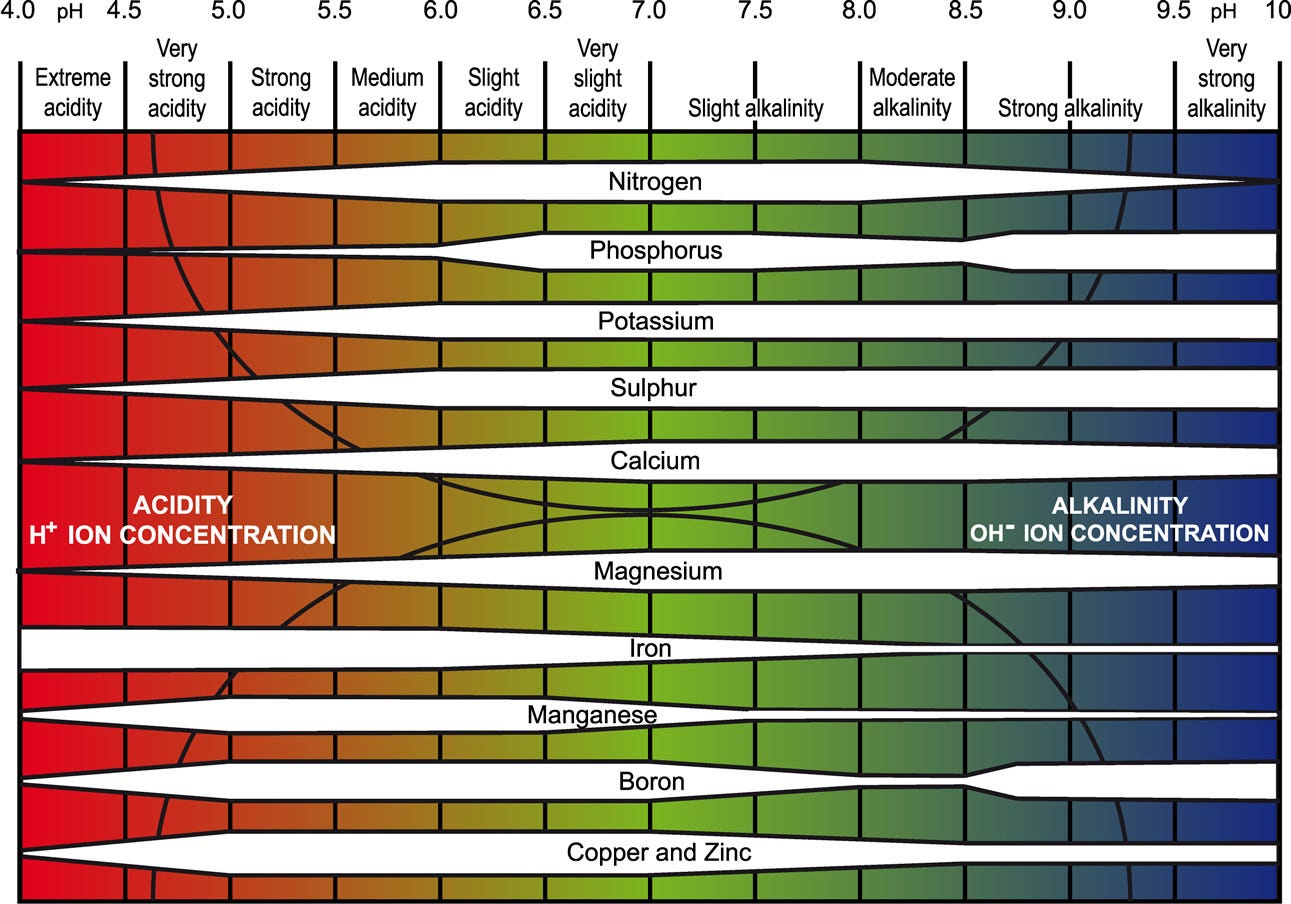
Further, soils in some regions of the world are naturally low in molybdenum. An international study involving field trials in 15 countries found that molybdenum deficiency was often detected only through reduced yield— without obvious signs of stress in the crops—yet it was the most widespread deficiency after zinc and boron.
In Australia, molybdenum deficiency ranks as the second most common micronutrient deficiency, affecting large areas of cropland with acidic soils. In China, it affects nearly half of all agricultural soils.
Ok, sorry, took a detour—let’s get back to sulfur, sulfation, and sulfoxidation since you are so clearly obsessed with the topic.
What Can Go Wrong
When sulfur isn’t properly processed, toxic intermediates—like cysteine or sulfite—build up. For many, such metabolic bottlenecks can set off chain reactions that strain energy metabolism and redox balance, creating a sense of systemic overload many people now recognize as modern chemical sensitivity.
This all stems from stress on the nervous system and immune systems, often triggering heightened chemical sensitivity— a topic nobody seemed to discuss decades ago, yet now everyone’s talking about. To be fair, I probably wasn’t paying attention to much back then anyway. Insufficient minerals (like molybdenum and magnesium) and excessive exposure to sulfites drive much of this imbalance.
As I was writing the above, I recalled the article I quoted in Chapter 10 about the healing waters at the famous spa in Hamam al-Alil, Mosul, Iraq. The below is an observation made by one of the subjects of the article;
“Khaled is now a masseur at the spa and bathes regularly. He says the sulphur-rich waters have cured him of an allergy and dermatological problems.”
(Such personal accounts have been reported for centuries at sulfur springs around the world. These observations are part of the long cultural and scientific history of balneotherapy, and are shared here for historical interest only—not as evidence that similar effects occur with any modern product or mineral supplement.)
Cool, right?
Since sulfate supports the body’s glycosaminoglycans (GAGs) and mucins, when it’s in short supply, cartilage weakens, joints ache, and the gut barriers can lose resilience.
The Sulfite Problem
Here’s the kicker: the food industry loves sulfites. They’re one of its favorite preservatives, because they:
Prevent spoilage
Maintain color and prevent browning (by stopping oxidation)
Preserve flavor and freshness
Control fermentation
Improve appearance (most important to the industry)
Sulfites are everywhere. So imagine your average citizen who’s low in one of the key trace minerals needed for sulfoxidation — they’re now being hit with sulfites from every direction. Not good.
Cysteine is a bitch, too. Excessive amounts promote metabolic imbalance and can even cause stress on intestinal cells.
Sulfur’s story is ultimately one of conversion: dietary sulfur (sulfite) must become sulfate—then serve the body in its many roles, from detoxification to building structural tissues.
How Sulfation Works to “Detoxify”
For the body to rid itself of accumulated toxins, hormones, drugs, neurotransmitters, and other chemicals, sulfation attaches a sulfate group (SO₄²⁻) to them. By doing this, they become more water-soluble, less reactive, and easier to excrete.
Now, if you are asking:
“If sulfating a mineral makes it more bioavailable, how does sulfating a toxin or chemical make it less bioavailable? What gives, Pierre?”
Great question. Let’s break it down.
How Sulfation Regulates Molecular Balance
In the liver and other tissues, sulfotransferase enzymes attach a sulfate group (–SO₃⁻, or SO₄²⁻) to an organic compound or toxin. This process increases the molecule’s negative charge, making it more polar (hydrophilic) and usually ionized at physiological pH.
As a result, it becomes more water-soluble and less able to diffuse across lipid membranes, and its new “bulkiness” makes receptor binding sites to no longer recognize it effectively. The one aspect that confused me in the last sentence was the statement that “they become more water soluble thus less able to cross membranes.” I would have thought the opposite, no?
It’s subtle but important: cell membranes are made of lipids, so only non-polar, uncharged molecules can easily slip through by passive diffusion. When a molecule is sulfated (adds a –OSO₃⁻ group), it becomes highly polar and negatively charged, which makes it more water-soluble but much less able to cross lipid membranes.
As a result, it remains in the aqueous phase and depends on transporters (like OATPs or MRPs) to move in or out of cells (which after sulfation, often but not always lessens entry into cells)..
For minerals, the story is different: sulfated minerals disassociate rapidly into the ion and sulfate, and once it exists as an ion, it uses specific transport channels, so higher solubility actually aids absorption by keeping them dissolved and available.
In short:
Greater water solubility → more charged/polar → poorer membrane diffusion, unless a transporter assists.
So when there is less membrane diffusion, the body can then transport it out of cells or into bile or urine for excretion. For hormones or toxins, sulfation typically inactivates them and prepares them for elimination.
How Sulfation of Minerals Increases Absorption
Again, as above, with minerals that are sulfated, these are sulfate salts (like magnesium sulfate). In water, these salts dissociate completely into free ions (Mg²⁺ + SO₄²⁻), so your gut is absorbing Mg²⁺ or Ca²⁺, not a big, bulky sulfated compound. The sulfate part simply goes along as a counter-ion and can also be absorbed or excreted on its own. Recall from above: sulfur is life-giving and good for you.
So, in summary, a sulfate salt of a mineral = free mineral ion + free sulfate ion in solution.
The human body absorbs the mineral as is. Conversely, a sulfated organic molecule has a sulfate group attached, so it stays as one large, polar molecule. Thus, when an organic toxin, hormone, or neurotransmitter becomes sulfated, it generally becomes more water-soluble, more ionized, less able to cross membranes, and therefore easier for the body to excrete.
That’s why sulfation is a detoxification pathway.
Can people tolerate sulfated minerals?
Of course silly. Always have, always will. Understanding why humans tolerate “sulfated minerals” so well compared to other forms comes down to simple chemistry and physiology.
Sulfate Is a Normal Dietary Component
It’s everywhere: in food, water, and the environment.
Natural waters often contain tens to hundreds of mg/L of sulfate, and many foods like tofu (calcium sulfate), fortified flour (ferrous sulfate), or some bottled waters (magnesium sulfate) include it naturally. Sulfate is the body’s main source of sulfur for synthesising essential sulfated compounds—such as heparan sulfate, chondroitin sulfate, and other molecules involved in detoxification pathways. It’s not foreign; your body depends on it to function.
Rapid Absorption and Excretion
Sulfate is readily absorbed through the intestines and efficiently excreted by the kidneys. Because it’s highly water-soluble and doesn’t accumulate in fat, it passes through the body with ease. Unlike heavy metals such as lead, cadmium, or mercury, sulfate ions don’t bioaccumulate or bind strongly to tissues.
Low Intrinsic Toxicity
Toxic effects from sulfate occur only at very high doses and are primarily osmotic in nature. Large acute doses of magnesium sulfate or sodium sulfate, for example, can cause diarrhea due to water being drawn into the gut—not because the sulfate ion itself is inherently toxic. At normal levels, sulfate does not interfere with enzyme function. Unlike heavy metals, which can displace essential metal cofactors and disrupt biochemical reactions, sulfate remains chemically stable and biologically compatible.
“Allergy” Concerns - Do People with Allergies to “Sulfa Drugs” Tolerate Sulfated Minerals?
Despite the facts laid out above, some people hesitate to use sulfated trace minerals because of a misunderstanding about “sulfa-allergies” or “sensitivity to sulfites.”
If you are one of them, rest assured—you’re not reacting to sulfate itself.
Let’s break it down clearly:
Sulfate (SO₄²⁻): The fully oxidized, stable, ionic form of sulfur. It’s a normal dietary component found naturally in water and foods and is required for forming proteins, cartilage, and various sulfated compounds in the body. No one develops a true IgE-mediated “allergy” to sulfate ions—they’re simply too fundamental to life.
Sulfite (SO₃²⁻): A different oxidation state of sulfur used as a preservative in wine, dried fruit, and many packaged foods. Some people experience asthma-like reactions or intolerance to sulfites, but that’s not the same as a sulfate allergy.
Sulfa drugs: Some synthetic pharmaceuticals (such as certain antibiotics) contain a sulfonamide group. People with “sulfa-allergies” react to the drug’s molecular structure, not to sulfur or the sulfate ion itself.
So, when someone says they’re allergic to “sulfates” in shampoos or food, what they’re usually referring to are irritants (like sodium lauryl sulfate), preservatives (like sulfites), or antibiotics with a sulfonamide group, but not to sulfate minerals themselves.
True immune allergy to sulfate ions essentially doesn’t occur—they’re too simple, too stable, and too essential to life.
Regulatory Perspective and Safety
Sulfate often acts as a “carrier” for essential minerals such as magnesium or iron (as in magnesium sulfate or ferrous sulfate). Regulatory bodies set limits based primarily on the mineral’s cation and on the mild, reversible osmotic effect of sulfate.
For example, according to WHO guidelines, sulfate levels up to 500 mg/L in drinking water are considered safe; even at 1,000 mg/L, the main effect is a temporary laxative response — not toxicity. In the water purification product called Aurmina (diluted from Themarox), one teaspoon contains approximately 80-105mg of sulfate. When added to a gallon of water as directed, this = 24mg/L, far, far lower than WHO limits.
For comparison, heavy metals like arsenic and lead are limited to 0.01 mg/L, thousands of times lower, due to their cumulative toxicity and persistence in the body.
Summary
Sulfate is a normal and necessary part of the diet and metabolism—water-soluble, easily excreted, and well-tolerated.
At very high levels, it may cause only mild, short-lived gastrointestinal effects, unlike many other mineral forms that can accumulate or interfere with enzymes. In short, sulfate belongs in the body’s natural chemistry, not on the list of things to fear.
Conclusion
Trace mineral deficiencies can create “roadblocks” in the body’s ability to convert sulfite and/or cysteine to sulfate. Just as an excess of heavy metals can cause imbalance, so too can a shortage of the cofactors required for these essential conversions.
Next, we’ll explore how sulfur contributes to managing oxidative stress—one of the body’s most fundamental balancing acts.
Next: Chapter 14C. Redox with a Ruler: The Proton–Mineral Balance
P.S. If you’re curious about the volcanic-mineral water purification product that this book led me to help develop, you can find it at Aurmina.com. Think of it as a quiet act of restoration — starting with your water. And yes, I know — I’ve become the guy who includes links at the end. But this one just might change your water (and your mind)

.
© 2025 Pierre Kory. All rights reserved.
This chapter is original material and protected under international copyright law. No part of this publication may be reproduced, distributed, or transmitted in any form or by any means, including photocopying, recording, or other electronic or mechanical methods, without the prior written permission of the author
Another very interesting and informative chapter, thank you!
How does one measure their Sulfite or sulfate levels?
I am fascinated by how all the current interesting topics to me revolve around, hydrogen, oxygen, water, other oxygenated molecules. Now I need to add Sulfur to my hit list!