



Below is the simple, reliable, three-part system we recommend for most households. This setup gives you purified, structured, mineral-balanced water using affordable equipment available online.
🔧 The Three Components
1. Treatment Containers – where you dose, stir, and let Aurmina do its thing
2. Gravity Filtration System – the “polisher” - filters out precipitants
3. Collection Chamber and Dispenser – holds and dispenses your purified, structured water for drinking and cooking
🧊 1. Treatment Containers
How Many Containers You Need (approximate)
To keep a continuous supply of fully treated water, you need a minimum of two containers (one is for water undergoing treatment, and one is for post-treated water that you will pour into your filter system, followed by refilling and treating with Aurminia.
2-person household → two 2.5 gallon containers (Lisa and Pierre use three 5-liter containers ≈1.3 gal each)
3-person household: two to three 2.5-gallon containers or four to five one-gallon containers
4 or more people: At least three 2.5-gallon containers
Tip: The above supports a 48-hour treatment cycle, which is ideal for municipal water.
Choosing Your Containers
Option A — Glass (Best for Countertop / Aesthetics)
Great if the containers will be visible in your kitchen or living areas.
Examples:
IKEA glass beverage dispensers and stands (like Lisa and Pierre)
Google search: “large, pretty glass beverage dispensers.”
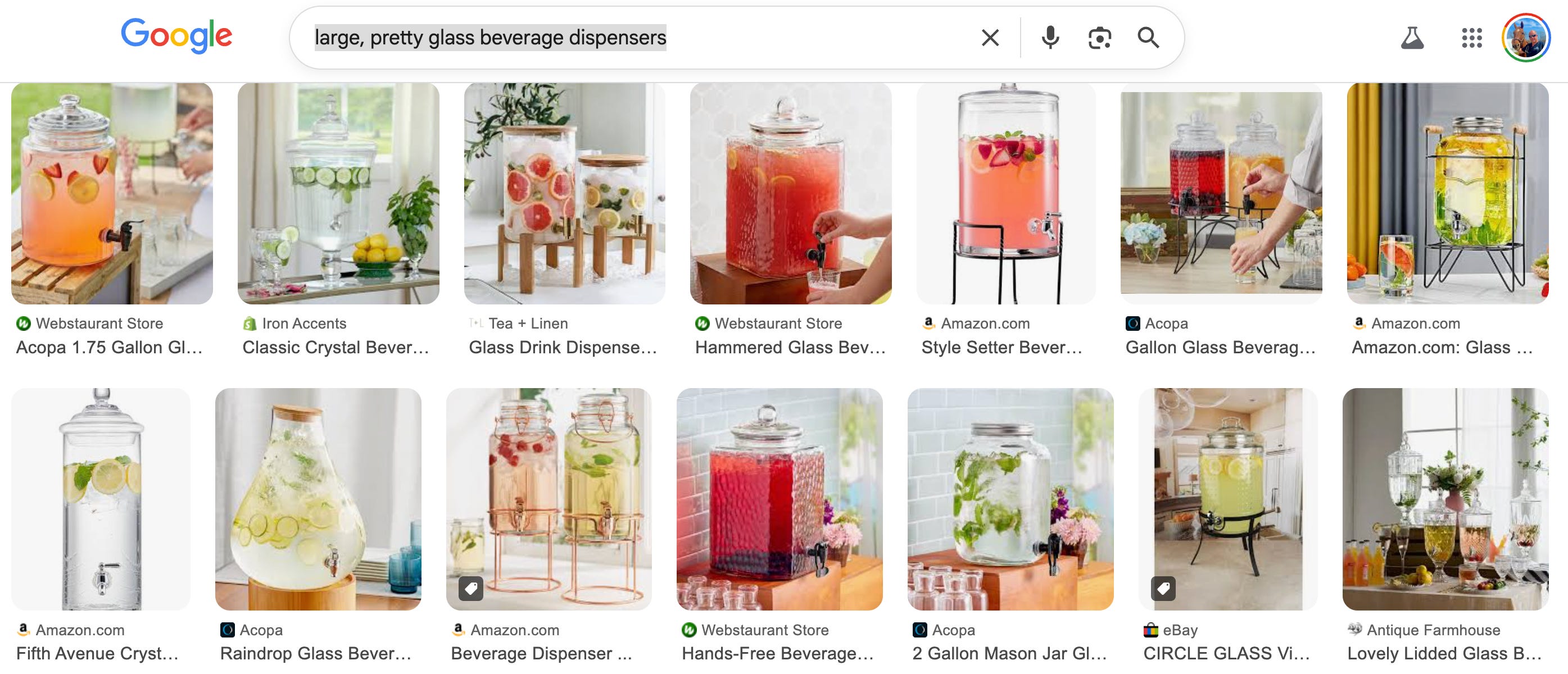
Optional: Add wooden or metal stands for easy pouring.
What Pierre and Lisa’s Set-up looks like:
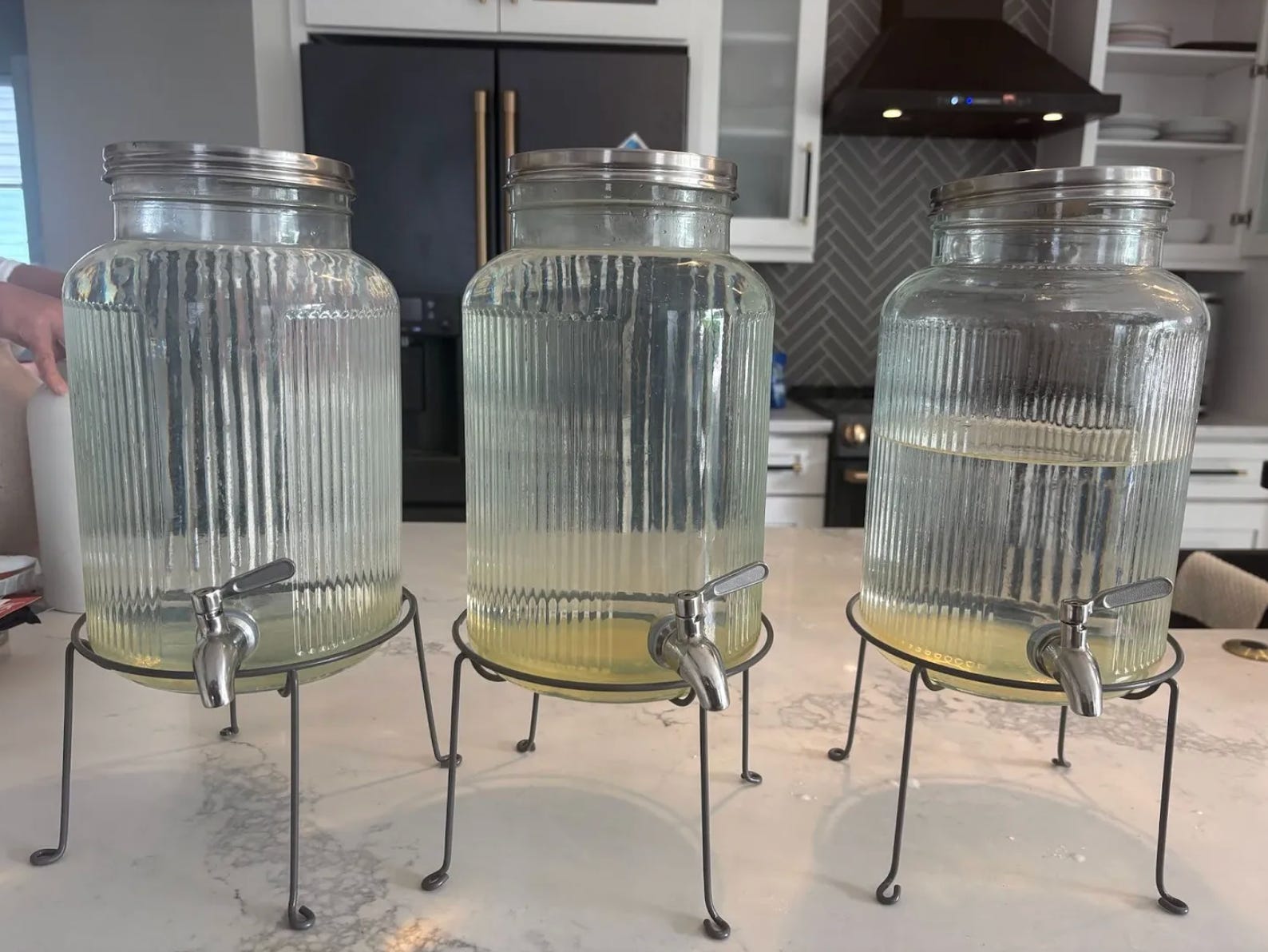
**The one furthest to the right holds water that has been treated with Aurmina the longest; thus, it has the most sediment at the bottom (they shoot for 48-72 hours). The left-most one was recently treated. As they empty “the most ready” container into their ceramic gravity filter system below, they fill it with tap water, add Aurmina, and move it to the back (left-most) of the line of containers above.
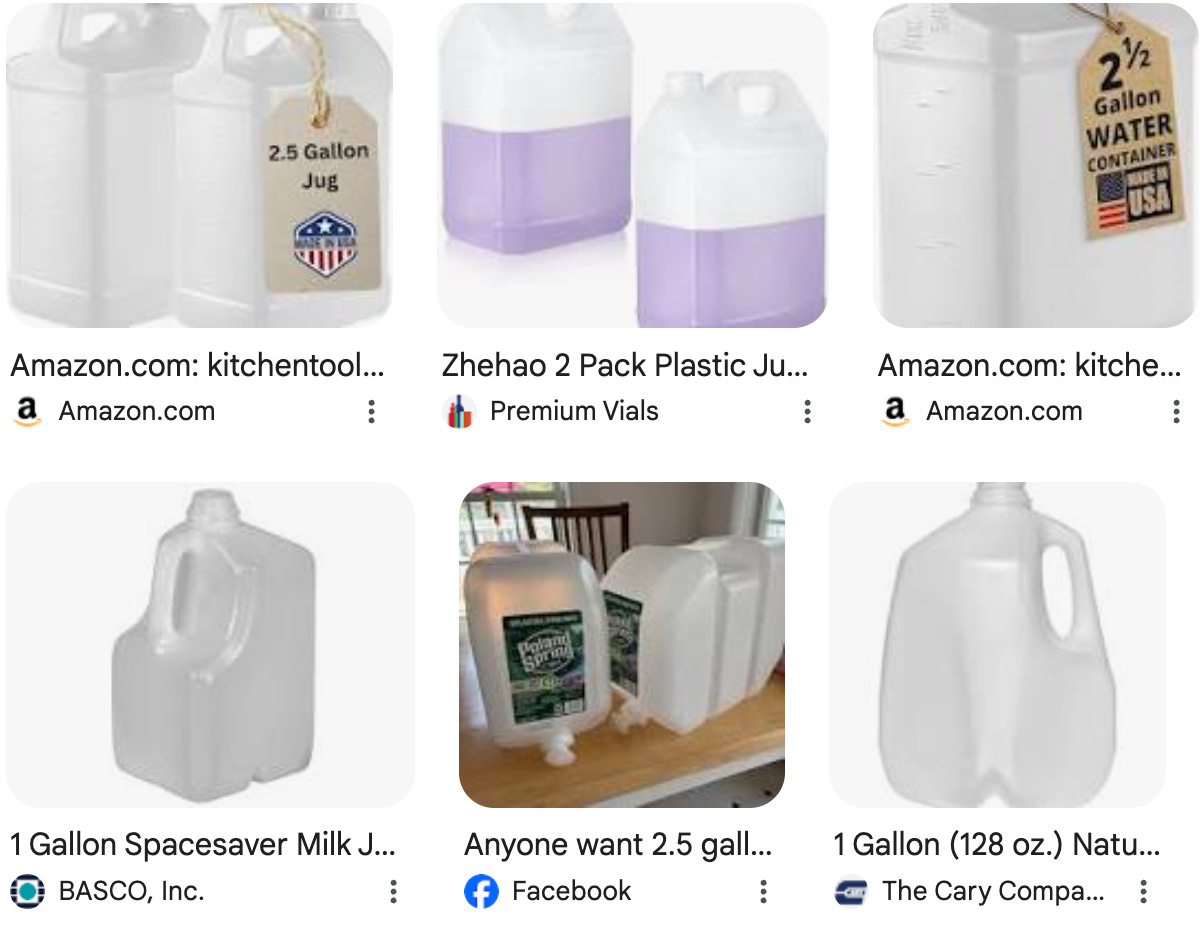
Option B — Plastic (Best for Budget or Pantry Storage)
If containers will be hidden or cost-sensitive:
Search: “2.5 gallon water jugs”
These are lightweight, durable, and very inexpensive.
Combined Treatment + Filtration Systems
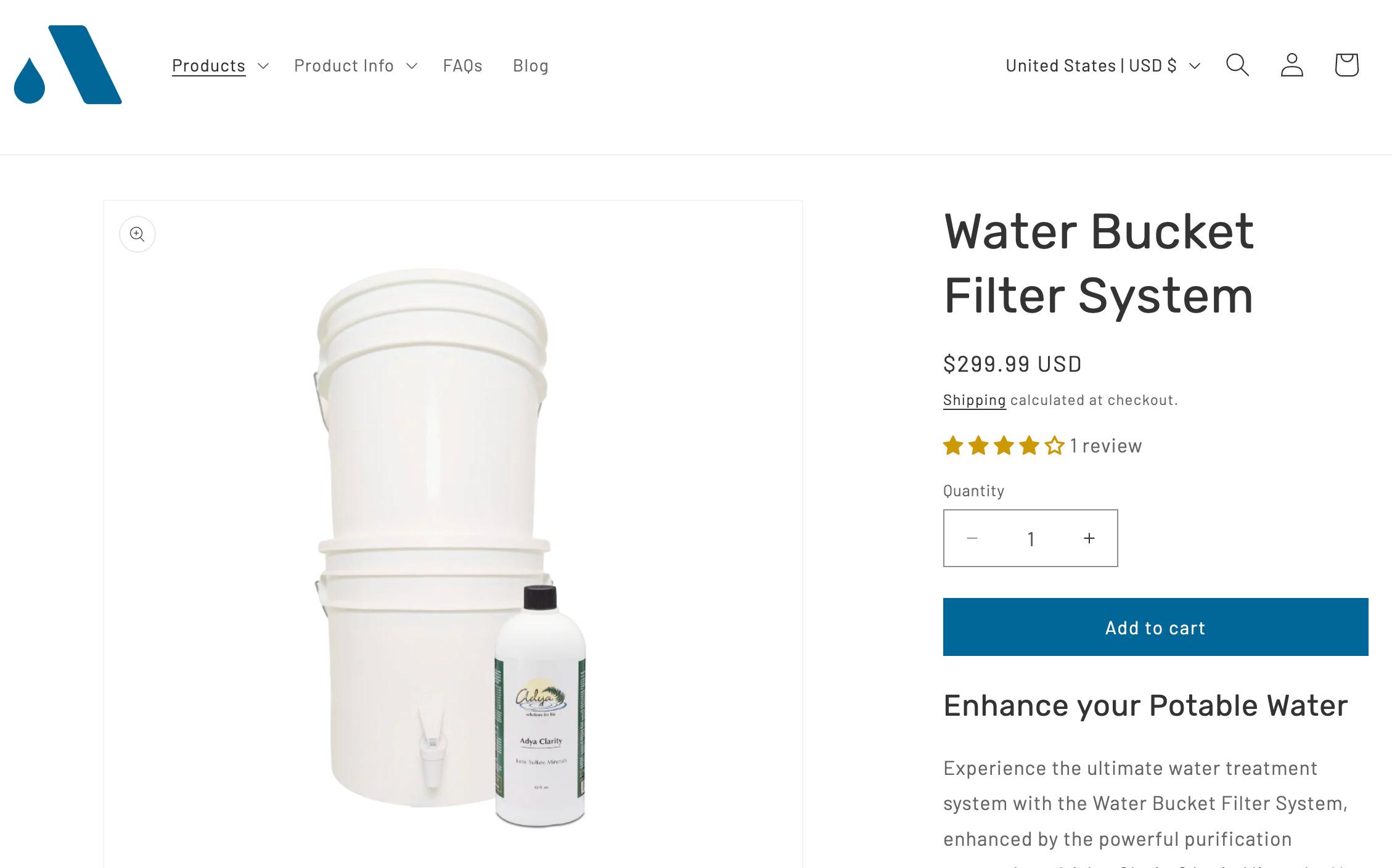
These units are in their own category, because you do not have to buy storage/treatment containers and a filter system separately. It is a single integrated setup (bucket-style):
Example: Adya Water two-bucket system
To find similar or cheaper models, search:
👉 “ceramic water filter candle kit bucket.”
💧 2. Gravity Filtration System (“The Polisher”)
After Aurmina flocculation, the gravity filter removes:
Fine particulate
Microbial load
Residual chemical/metal traces
Where to Look
Search: “Gravity Water Filter Systems” on Google or Amazon.
🫙 3. Choose By Collection Chamber Size
Choose a reservoir size in the above systems that matches your daily consumption.
Example:
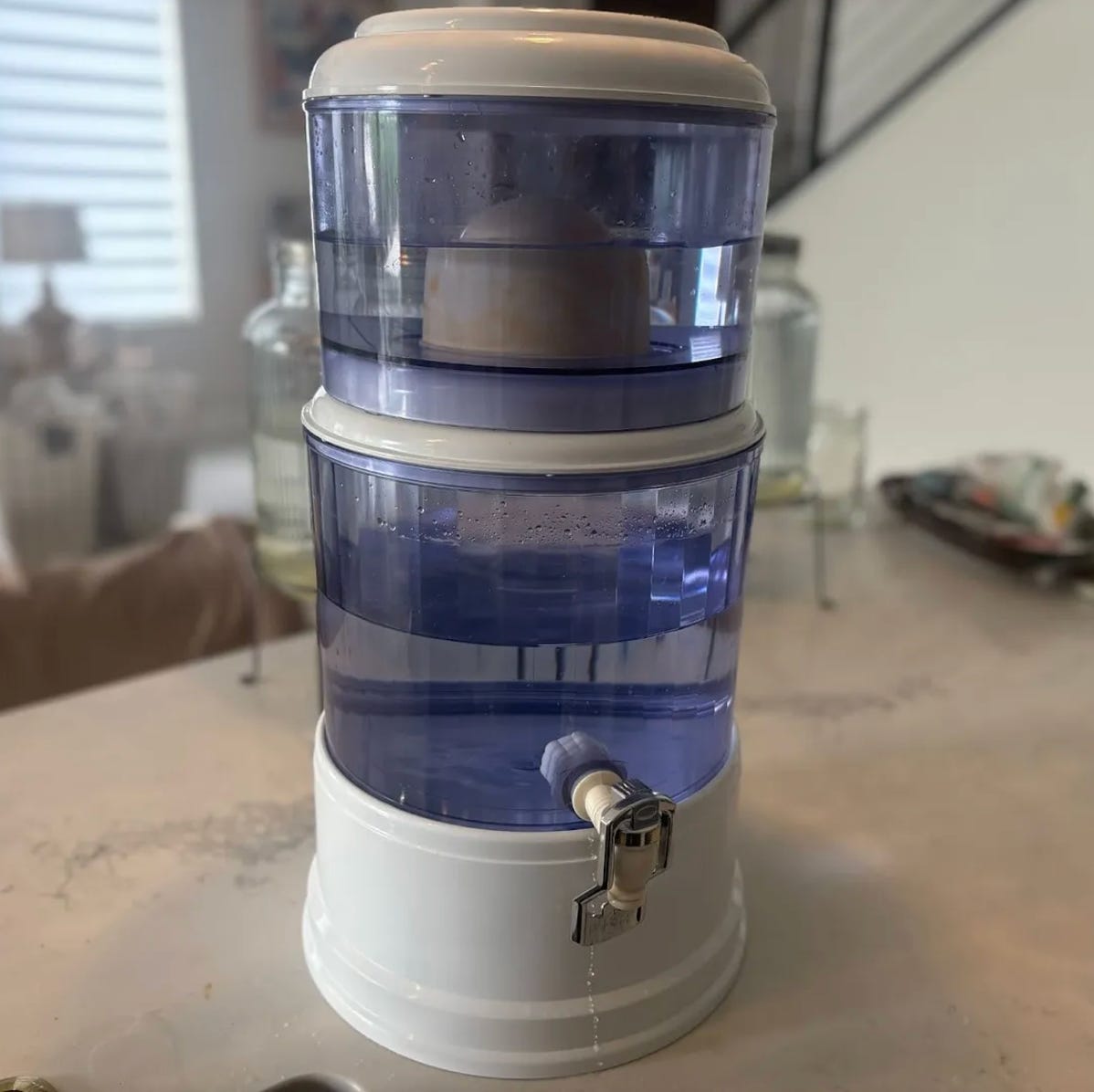
Lisa and Pierre use this ceramic gravity filter system with a large, 3.5-gallon chamber. Their system is from Korea, but is no longer available (we are thinking about importing it):
Tier 1 — Higher-End Systems
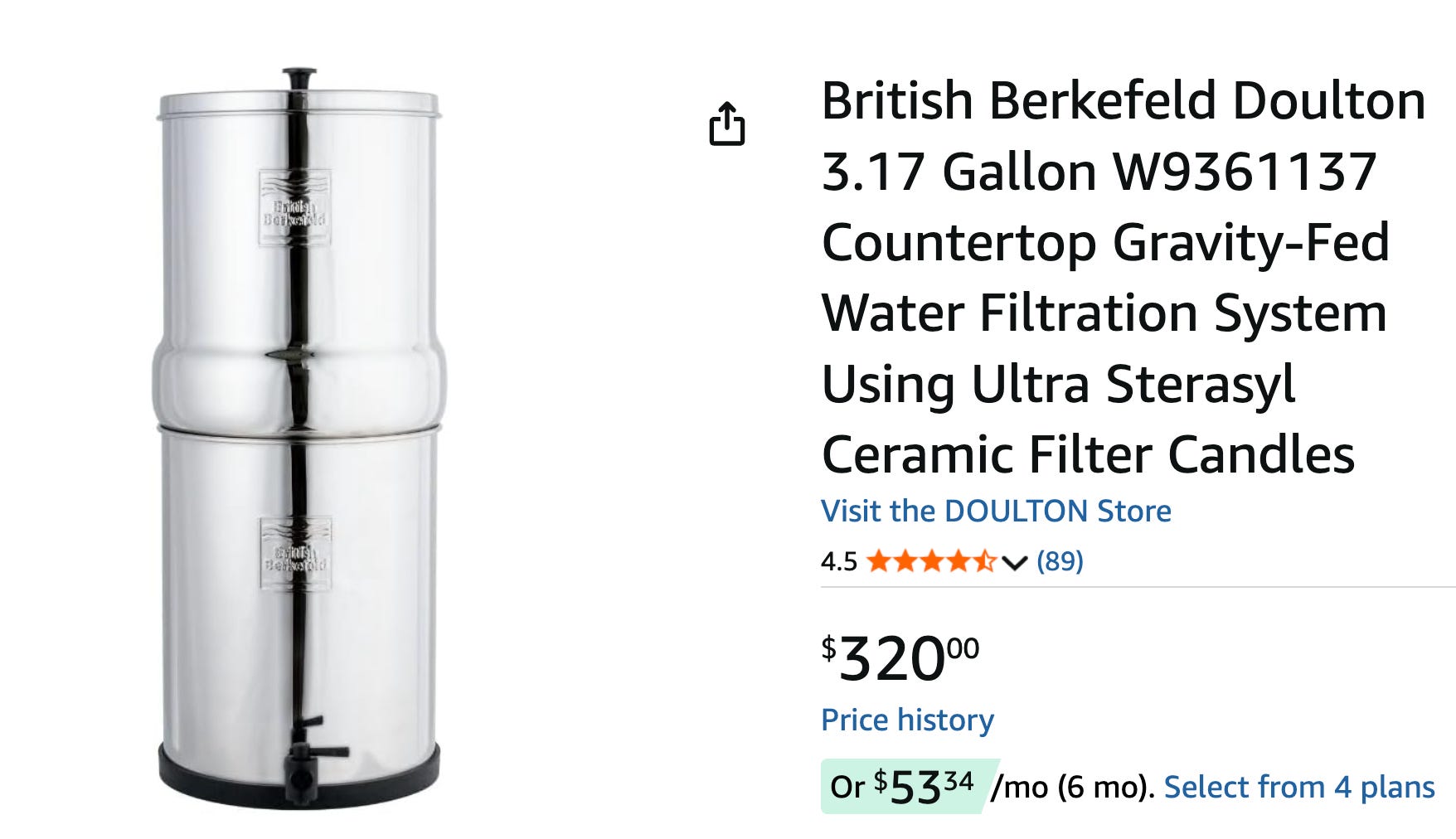
These use ceramic elements that can be scrubbed clean, making them ideal after flocculation.
Berkefeld / Doulton (Ultra Sterasyl)
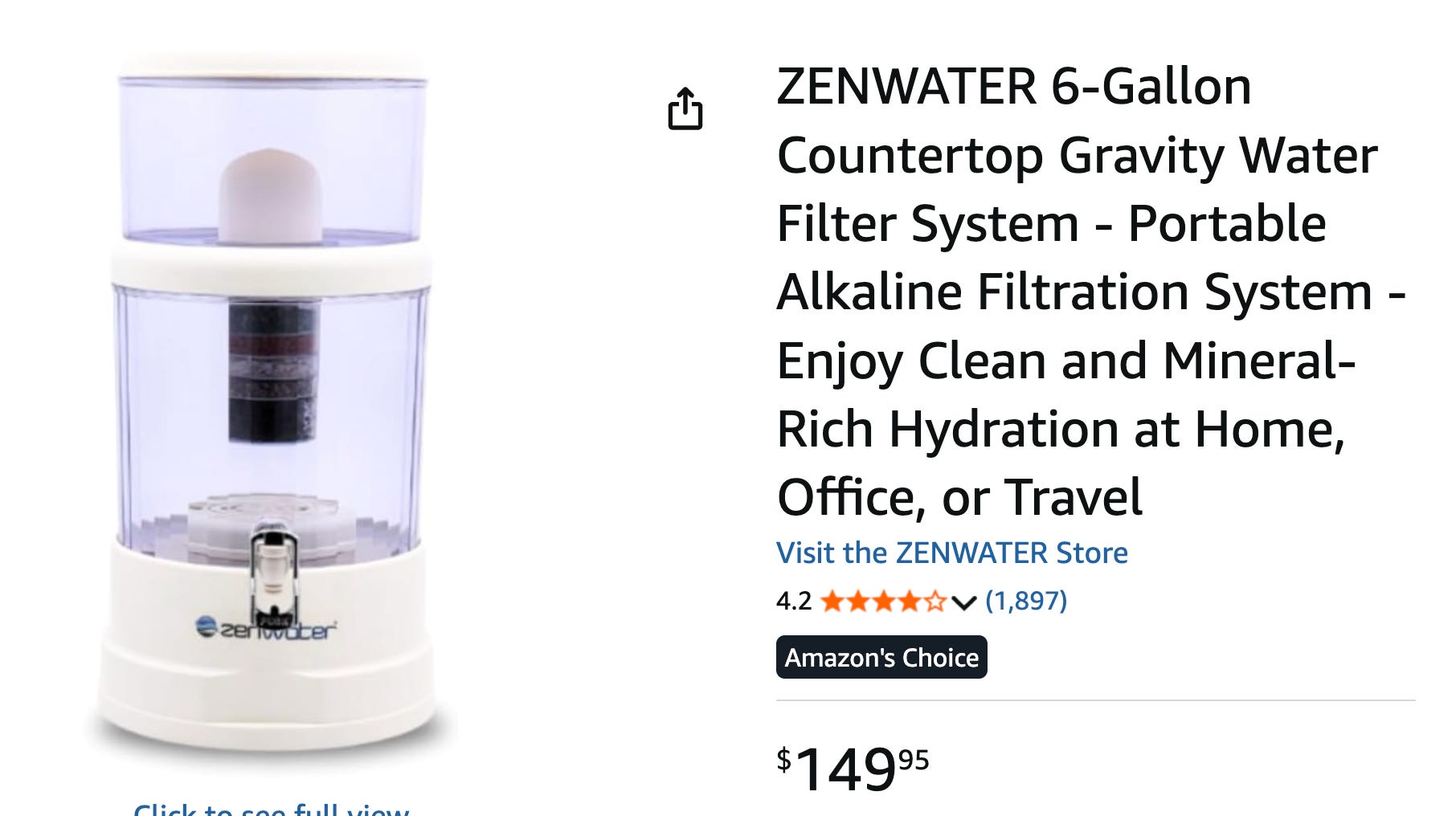
Tier 2- Middle-Tier Systems
Tier 3 — Budget-Friendly Systems
Good for single users or light usage:
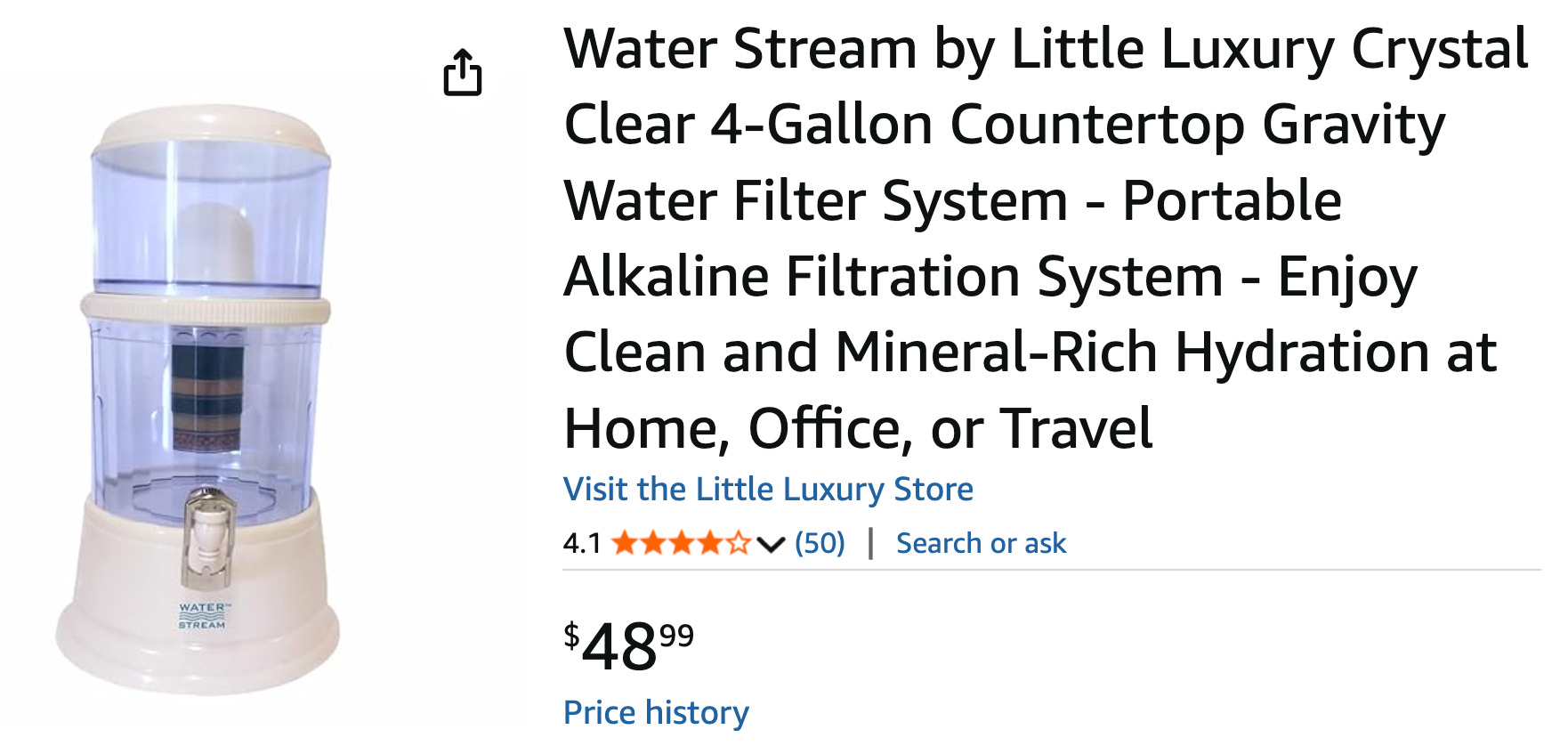
Ultra-Low Cost Option (not ideal but works)
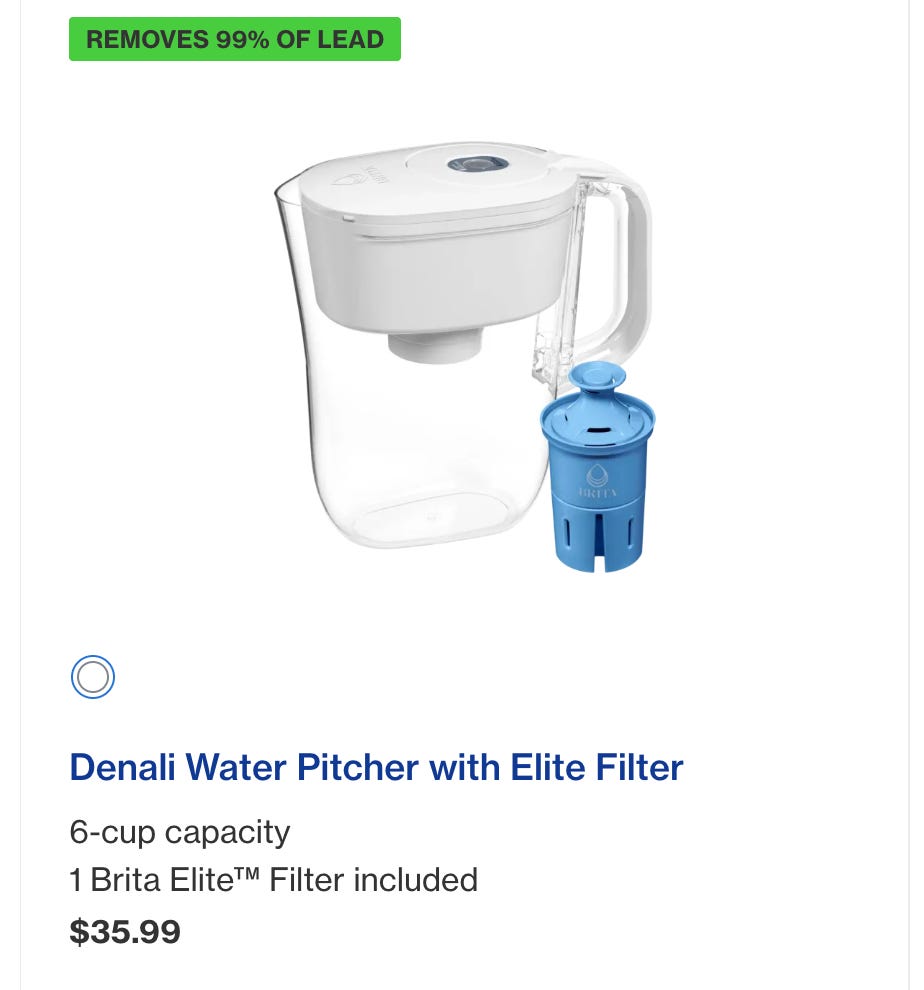
Filter Pitchers
OK as a final polish
Filters clog fast with sediment
Best for one person with low particulate load

🔄 How to Transfer Aurmina-Treated Water Into a Gravity Filter
Here is the correct sequence to prevent clogging and maximize filter life.
1. Let Aurmina Fully Complete Its Reaction
Add dose
Stir
Wait for full contact time (24-72 hours, depending on water source)
You should see:
→ Clear water (supernatant) on top
→ Settled floc at the bottom
2. Decant — Don’t Dump
Pour or siphon only the clear upper water into your gravity filter
Leave the settled floc behind
Do not pour heavy sediment directly onto a ceramic filter
This is the #1 cause of premature clogging.
Suggested illustration:
🖼️ Diagram showing “clear upper water” being poured off, while floc stays below.
3. Use the Gravity Filter as a Polisher
Its role now that the water has been decanted without the floc:
✔ Catch fine particulates
✔ Reduce microbes
✔ Capture chemical/metal traces
It is not meant to handle sludge (that is why you don’t dump the floc in the pre-filter chamber).
4. Clean Your Ceramic Elements Regularly
When flow slows:
Remove ceramic filter candles
Rinse with water and use your hand to get any floc off the filter.
If the dripping seems to be much slower than normal, use the green scrub to remove a small surface layer to restore the filter. (Only when first method fails)
Rinse with running water
No soap
This restores flow and removes accumulated floc film.
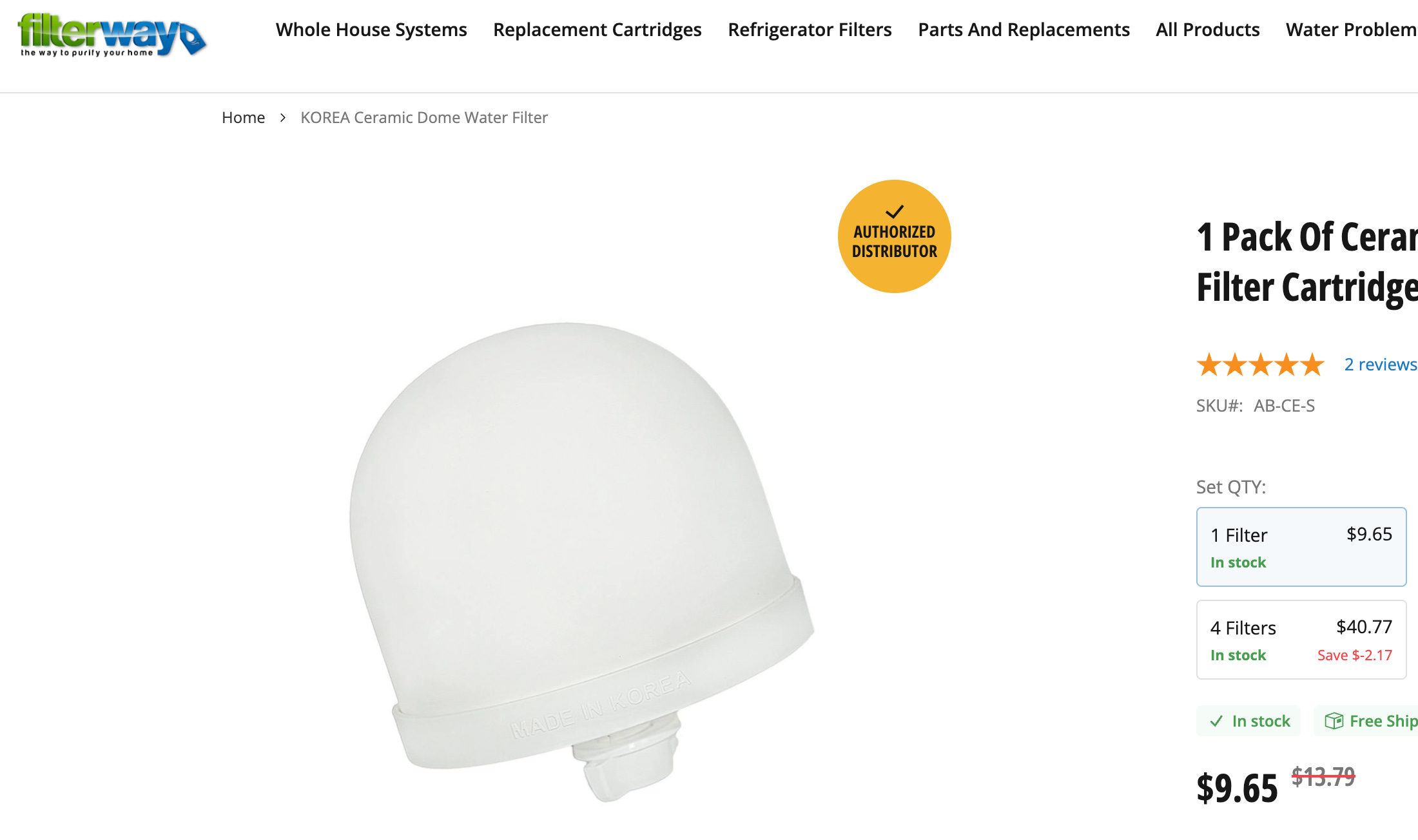
5. Keep Spare Ceramic Candles
Especially if you:
Treat turbid water
Use it heavily
Recommended spares:
Filterway (these are excellent)
Although not pertinent to this post - if you value the late nights and deep dives into all the other “rabbit holes” I then write about (or the Op-Eds and lectures I try to get out to the public), supporting my work is greatly appreciated.
1) Aurmina
If you want to learn more about the water purifier we made from Shimanishi’s volcanic-mineral complex, go to Aurmina.com.

2) Upcoming Book Publications
Yup — not one, but two books are dropping from yours truly (at the same time? What?)

If, instead of (or in addition to) this Substack version, you prefer the feel of a real book—or the smell of paper—or like to give holiday gifts, pre-order From Volcanoes to Vitality, my grand mineral saga, shipping before Christmas.
And if you want to read (or gift) another chronicle of suppression, science, and survival, grab The War on Chlorine Dioxide—the sequel you didn’t see coming—shipping mid-January. On this one, I say: “Buy it before they ban it.” Hah!
This is fascinating stuff and I've been following your chapters Pierre, thank you for all the work you've done.
I have a question - we installed an under counter RO system a few years back, and I'd like to use Aurmina in the filtered water, to restructure and remineralize this "dead" water. Do you think I might be able to skip the involved process of post-filtering? Would be great to simply fill a 2.5 gal container and be done.
I thought you’d originally written that we don’t need to filter it? I’ve just been dispensing to the level of the spigot and using the bottom bit for watering plants outside, as I recall you saying that it’s now inert?