


**This post is a day late! I wanted it as a post to celebrate World Water Day, but my 10-hour trip from Honolulu to Tokyo had no WiFi (I had planned to finish and send it on the plane). So, we are extending the sale one more day. Enjoy the 25% discount code Springsale26 at Aurmina or Primora Bio. Also, this post begins with lots of personal reflection; if you just want to get to the Spring Garden Vitalization Protocol, scroll down.

The Same Work, A Different Scale
As an ICU and lung doctor in the U.S, I was called an “intensivist,” while in France, my French compatriots were called “reanimators.”
The first time they told me that, it connected, like an “ah-hah” moment, as it so perfectly described the essence of our work, given that critically ill patients are often unconscious and immobile, appearing almost lifeless to the uninitiated, either from a primary brain insult, brain failure secondary to overwhelming illness (encephalopathy), or a need for deep sedation to synchronize them with the ventilator while we try to reverse their often multi-organ failure.
When successful, we restore the coordination of their organ systems such that their brain functions return, allowing them to either wake up or be woken up, thus “re-animating” them.
With that in mind, here perhaps I may be extending that metaphor too far, but I feel like, even though I long ago left critical care, now that I have been drawn to work guided by that same spirit and aim, but on a far grander scale, of “re-animating” the Earth’s soils, crops, aquifers, and surface waters.
So funny. How did a New Yorker go from running inner-city ICUs to going on a mission to resuscitate soils, plants, and waters?
There is both a simple and complicated explanation for that. Among the many rabbit holes I have gone down in my journey researching therapies that might repair the Covid vaccine-injured, for the first time in my career, I landed on one that applied to patients as much as it did plants, grasses, microbes, and animals, one central to every biological process that supports life.
My initial intrigue stemmed from a fascination with the responses I observed in some patients, albeit using off-label protocols distinct from water purification. The research and investigation into its obscured and fragmented history in Japan and then in the U.S. showed me the potential for benefits far beyond my clinic, my practice, and my patients.
I sensed it before I understood it, and that sense only intensified as I traced it across geology, hydrology, biochemistry, soil biology, and agriculture—until, to my surprise, its effects in other living systems proved more compelling than anything I was seeing in human physiology.
Something Started to Shift
Although I studied mathematics in college, I have wanted to be a doctor since I was a teenager. Problem: I kinda, sorta, failed out of college. It then took me 7 years and an impeccable performance in grad school before I was accepted into medical school (overseas), allowing me to finally leave the restaurant business where I had spent my 20s.
However, I soon discovered that, unlike the increasingly joyless and elusive higher-order problem-solving in mathematics, I loved my new role in life as a “diagnostician,” facing the daily task of figuring out why someone was sick and suffering. Getting that puzzle right meant everything, and in the ICU, what the residents called “medicine on steroids,” getting it wrong raised the stakes as high as they come, with up to 20% of my patients dying in some weeks. When successful, we relieved suffering and restored function, a satisfaction far more fulfilling than arriving at a successful solution to a complicated equation or devising an elegant logical proof.
The Point of No Return
Over these months, it became clear that my life was moving in a new direction. The work took on the shape of a mission: to uncover and disseminate Shimanishi’s insights, examine the potential of Themarox, and address a critical gap affecting soils, agriculture, water, and ultimately animal and human health.
But, at the same time, I think this year broke me. What I stumbled upon held an importance I could not ignore or reduce to a side project or hobby, as these books and this research took over my life to a magnitude that makes my previously frenetic, all-consuming advocacy for ivermectin in Covid pale in comparison.
I have been so inspired by Shimanishi’s work and the realization that I had stumbled upon something so impactful, with such potential, and that had somehow slipped under History’s gaze, only retained in small pockets of people around the world.
But what happened was that the joy and fulfillment I had always gotten from seeing patients began to feel like a detractor from what I was supposed to be doing. I began to wake up with frustration and exhaustion, knowing that each day was taking me away from what I increasingly felt was more important work.
I really don’t give a crap if you think I am talking crazy or in a self-interested manner. I did not make that decision lightly or for commercial reasons. What I am trying to say is that it was effectively made for me in spirit. I resisted for a while, but I followed where it was leading and even started a company to get it done, especially so that the company would devote itself to funding the research it would require to get there, meaning to convince the world of this vision that I, and an increasing number of others, hold.
The Decision
So, after 25 years, I have decided to stop seeing patients. Although I will continue to lead, manage, and guide our Leading Edge Clinic, as of June, I am giving up my personal patient practice panel. One reason I was comfortable stopping is that the provider team at LEC is phenomenal, inspiring, devoted, and empathetic, perhaps in ways that now exceed my capacity. So I am confident that in handing over my patients to them, they will continue to be cared for with the skill and care they need.
Now, if that was not enough of a personal reveal on this belated World Water Day, there is yet another reason I closed my patient schedule.
My wife is pregnant with a baby boy due on July 4th.
I have been reminded that apparently, you are supposed to spend time with young children, and since I don’t have time to pee most days, I thought it wise to create some space to welcome young Lutzee onto planet Earth.
Do not make fun of the name; it is a phonetic spelling of my Hungarian father’s nickname “Laci,” a common diminutive of his real name, “Lazlo.”
If I put “Laci” on the birth certificate, the poor child would forever be called “Lacey,” and I don’t want to set him on the path depicted in the Johnny Cash song “A Boy Named Sue.”
My Contribution To World Water Day
With the history of my career trajectory behind us, I now want to focus on the real purpose of today’s post, which is two-fold.
The first is to offer as concise an articulation of the “Geohydrological Shift Theory” as I can muster, aimed at the world’s agronomists, hydrogeologists, soil biologists, regenerative farmers, and others working in these domains, with the intent of shifting their focus to what we believe is a viable solution to many of the problems befalling modern agriculture.
The second is for a more specific segment of my readership, those who “identify” (hee hee) as home gardeners, hobby farmers, and even farmers, where I will lay out this former intensivist’s “combination therapy resuscitative and re-vitalization protocol,” to kick off your spring planting season toward a harvest most have never experienced before.
So, if you’re interested only in the latter, feel free to skip toward the end. If you’re interested in both, read on.
When The Geohydrological Shift Began
If you want to understand what is happening to our water, you have to go back to the moment agriculture fundamentally changed.
The “Green Revolution” began in the 1940s in Mexico, led by agronomist Norman Borlaug, who developed high-yield, disease-resistant wheat varieties. The success of that work expanded into Asia in the 1960s, especially in India and Pakistan, and later into rice systems through institutions such as the International Rice Research Institute.
Basically, the idea was to maximize yield per acre using external inputs and improved genetics. The core components were: high-yielding crop varieties (HYVs), synthetic fertilizers (especially nitrogen), irrigation expansion, pesticides, herbicides, and, importantly, mechanization.
The impact was enormous, arguably one of the most successful large-scale interventions in human history. Earth saw massive increases in yields, the avoidance of widespread famine (e.g., India no longer needed food aid), lower food prices, and greater caloric availability.
At the same time, historically, it marked a shift from antiquity, in which traditional “slow” farming practices rapidly switched to a science- and input-driven system.
Yes, it bought the world time, and a lot of it. But I believe time is running out.
The Shift
Over the past few decades, the costs of this system have become increasingly apparent, like now, in my middle age, here in the 2020s. The soil is being degraded (less organic matter, microbial diversity, increasing dependence on inputs), the water system is being stressed (over-extraction of aquifers, salinization in irrigated lands), and we now suffer from a widespread chemical dependency (fertilizer and pesticide use has skyrocketed, pest resistance has emerged).
Even worse, the benefits, although considerable, have been uneven, favoring large farms and capital-intensive systems over traditional farming.
Where We Are Now
My interest and passion began to sharpen as my research into water and minerals led me to what I can only describe as flashing warning signs. After nearly a hundred years of “success,” the data is now showing yield stagnation. Between 24% and 39% of global cropland is exhibiting yield plateaus; elsewhere, yield increases are being maintained, but at a slowing rate. Most concerning, and what I consider the loudest warning signal, is that in some regions yields are now declining despite increased inputs.
Further, biological simplification abounds with the dominance of monocrops, leading to a loss of resilience and even buffering capacity.
Basically, the more fertilizer used, the smaller the yield gains, meaning that “nitrogen efficiency” is dropping in many systems. Earth’s agriculture has now shifted from an immensely productive system to a “compensatory” one, and, in some areas, it is failing to even do that.
Is there any hope on the horizon? Yes, but, as you will learn, not in the areas where most are placing it: regenerative agriculture, precision agriculture, and alternative inputs aimed at improving soil biology or reducing existing inputs. These are important advances, but they do not go far enough upstream.
Now, I know this is starting to sound like doom and gloom, and the story does get worse, but this is also where I see a possible, scalable solution beginning to emerge. Because if we can fix the water, I believe we can restore the entire system.
You see, our water systems have entered a state of overt stress. After a century of pressure, aquifer depletion is accelerating globally, while nitrate and salinity levels continue to rise, fundamentally altering hydrogeochemistry.
The Solutions Being Proposed
Before we get to my proposal for a path forward, I'll give a quick overview of the current directions various scientific disciplines are proposing to remediate, solve, or fix the current state of agriculture.
The Soil Physics / Hydrology Camp
Most mainstream scientists, such as Rattan Lal and Johan Six, as well as the broader soil physics and hydrology field, are rightly focused on the idea that soil degradation and water dysfunction are tightly linked. Their central observation is that as soil structure degrades, water infiltration declines, water retention becomes less stable, and the soil’s ability to store and deliver plant-available water is compromised.
I am with them on this because productivity clearly declines when soil loses its ability to regulate water properly. Their proposed solution is to restore soil structure, primarily by increasing organic matter, improving aggregation, and reducing disturbance, thereby rebuilding the physical framework through which water moves and is retained.
My take is that I disagree with where they place causality. Their emphasis is on repairing the soil as the primary lever, with water secondarily improving by restoring the condition of the soil it passes through.
My take is that I disagree with where they place causality. Their emphasis is on repairing the soil as the primary lever, assuming that water will improve secondarily as the soil through which it moves is restored.
The Rhizosphere / Soil Biology Camp
Within this field are notable scientists like Elaine Ingham, Jeff Lowenfels, and other rhizosphere ecology researchers, whose focus is on the problems with microbes' root exudates and biological signaling. What I like is that they also focus on water by recognizing that all of this dysfunction occurs in water films. They clearly recognize that nutrients exist in the dissolved phase, microbial signaling depends on water quality and composition, and root uptake itself is fundamentally water-mediated.
But here again, their solutions appear to focus not on mediating the water but on restoring microbial life and avoiding further chemical disruption by increasing organic inputs. Ultimately, restoring the biological layer that water enters will not directly address the water chemistry that is driving the disordered biology.
The Hydrogeochemistry / Water Quality Camp
This camp is the one that is most closely “circling the target.” To give credit where it is due, the literature from hydrogeochemists, environmental chemists, and groundwater scientists most grabbed my attention. They are the ones sounding the alarm the loudest (and from whom we laid the foundation for the Geohydrological Shift Theory). They are clearly documenting rising nitrate levels, increasing salinity, changing ion composition, and most importantly, redox shifts in aquifers.
Their cumulative argument is that water chemistry is changing at a planetary scale, and, as importantly, they elucidate the consequence: such water will affect soil chemistry, plant uptake, and microbial processes.
The Hidden Lever: Themarox
What pulled Matt and me into this was the chemistry of Themarox itself. Our early conversations, debates, and attempts to understand what it was doing to water gradually made it clear that we were not just looking at another agricultural input, but at a system-level intervention whose behavior did not fit within the current frameworks of agronomy or hydrogeochemistry.
Just as we came to believe that understanding the science and methods behind Shimanishi’s achievement allowed us to extend origin-of-life research with the Rock–Water Circuit Theory, we now believe that what Themarox does to water lies outside the current awareness of those fields. And that realization is what ultimately changed my trajectory. This knowledge came to me first through Matt, and what followed, these months of trying to figure it out, was driven by the growing recognition that we were studying an intervention the world does not yet fully see.
Thus, I want to help push the focus of the hydrogeochemistry field to study the potential of Themarox. Although they are rightly measuring and describing critical changes to the water system, they are not framing it as we are attempting to, which is that it is the root (or main) cause of the widespread biological dysfunction the other fields are describing.
Right now, they are focused on reporting that “water quality is degrading,” but do not go on to say, “water chemistry is upstream of biological deterioration.” Most importantly, they are not aware that Themarox can restore that water to a state capable of reversing those downstream biological effects.
The Regenerative Agriculture Practitioners
Here, leading proponents like Gabe Brown and Ray Archuleta, among others, are also rightly proposing a potentially complementary solution, namely that reducing inputs can actually lead to better outcomes, less pest pressure, more water retention in the soil, and ultimately, more resilient plants.
They often say, similar to the other fields, “Fix the soil, and everything else follows.”
But here again, they describe the fix as improving soil health, soil biology, and soil carbon, without a focus on the chemistry, ionic composition, and electrochemical behavior of water.
Where We Are and Where We Should Go
Collectively, at present, although numerous fields have repeatedly circled the problem, there is no unified framework that places water chemistry at the center of broad system dysfunction. The soil people write about how water movement matters, the biologists write about how the water medium matters, the chemists about how water composition is changing, and the farmers about how system behavior is shifting.
Many fields have correctly identified that the problem lies upstream, but, in our opinion, they still point to the wrong thing. Some point to soil, others to biology, others to hydrology, but very few have followed the chain far enough to recognize that all three are downstream expressions of the ionic composition and electrochemical behavior of water itself.
Such properties of water are literally the upstream regulators of soil structure, microbial behavior, and plant function.
Ultimately, their solutions, like adding carbon, adding microbes, reducing chemicals, and optimizing irrigation, just do not go far enough upstream to change the water chemistry itself.
The Solution Is Not Mine Alone
At this point, instead of attempting to lay out a grand, fully formed solution, one in which agricultural systems worldwide are remediated through the treatment of irrigation, drinking, and surface waters, I’m going to shift gears. What I have tried to do here is define the problem, to make the case that water chemistry sits upstream of much of the dysfunction we are now observing.
The next phase is not mine alone to solve. I am not a hydrogeologist, irrigation engineer, or water treatment expert, and I won’t pretend to be. My goal is to bring Themarox to the attention of those who are, so they can test it, challenge it, and, if warranted, figure out how it might be deployed at scale. That work lies ahead.
For today, I am staying within the domain where I feel most comfortable offering guidance: the small grower, the home gardener, the hobby farmer, the orchardist. Because while large-scale systems may take time to shift, smaller ones can move now. So, for today, we start small.
REVIVE: The Kory Resuscitation and Vitalization System for Soil and Garden Health
Here we go again, with my tireless attempts to elevate my name into an eponym (hopefully understood for what it is - self-deprecating humor). Although agriculture has never quite leaned into eponyms the way medicine has, the pattern is there. Certain names have been fused to their central contributions, for instance, Liebig and his “law,” Borlaug and his wheat, Fukuoka and his natural farming, Steiner and his biodynamics, etc.
They are not quite like “Koch’s postulates” or “Parkinson’s disease,” but it is close enough that I find myself with the mildly absurd notion that I might attach my own name to a way of thinking about water, soil, and life.
So, as a former ICU specialist now self-proclaimed “agro-intensivist,” or more accurately and humbly, an “agro-educator,” but even there, that title has limitation because I have never farmed, potted, or even tended to a plant (remember, I am a city boy), thus I am writing and teaching a topic on which I have no “front-line experience.”
Which gives me the creeps, honestly, because then I start to resemble the “desk doctors” of Covid, those who offered expert opinions and dictated policy while never having treated a single patient.
Of course, Fauci comes to mind, but my most vivid memory is of Dr. Ashish Jha—a persistent media voice during Covid and head of Biden’s White House coronavirus response—who, when asked by Senator Ron Johnson in the very same hearing that I gave my ivermectin testimony, “Have you ever treated a Covid patient?” Jha paused and admitted, “I have not, sir.”
I don’t want to be that guy.
The difference here is I am openly stating what I do and do not know, which is simply that I had the fortune of coming across Shimanishi’s work, recognized its importance, and devoted now seven months of my life to studying it, discussing it, and spending many dozens of hours talking with those who have known of his work longer. Basically, I have learned a specific water chemistry, heretofore unknown to the wider world, and I have committed to disseminating that knowledge and its implications and potential.
More recently, since starting the Asao Group, I have gotten to work with some amazing agronomists who have taught me about the use of a combination of agricultural inputs that can build back, revitalize, rescue, and reanimate soils, plants, grasses, and crops, whether they be houseplants, backyard gardens, hobby farms, or big farms.
So, with that, let’s break down the first iteration of the REVIVE protocol (while also understanding that I will adapt and update the protocol as my experience and insights accumulate, similar to Paul’s and my approach with the protocols we created and evolved with our FLCCC in Covid.
REVIVE: The Kory Resuscitation and Vitalization System for Soil and Garden Health
As in critical care, there is no “one size fits all” with set doses, duration, and combinations; but you have to start with a core intervention to work from and then adapt and revise accordingly. As one of my new colleagues says, “Nature isn't exact; your approach doesn’t have to be either.”
Thus, I encourage anyone to scale up or down in intensity based not only on the state and fertility of the starting soil but also on the response to therapy. However, note that the field trial I presented in the last post started with dead, infertile soil and relied solely on an initial cosmotropic water irrigation, followed by weekly foliar spraying, with the only addition being a one-time mid-season light application of fish hydrolysate and microbes. The results were beyond impressive despite starting from literal dead soil.
The Trinity Of Recommended Inputs
1) Cosmotropic Mineral Concentrate (Primora Bio)
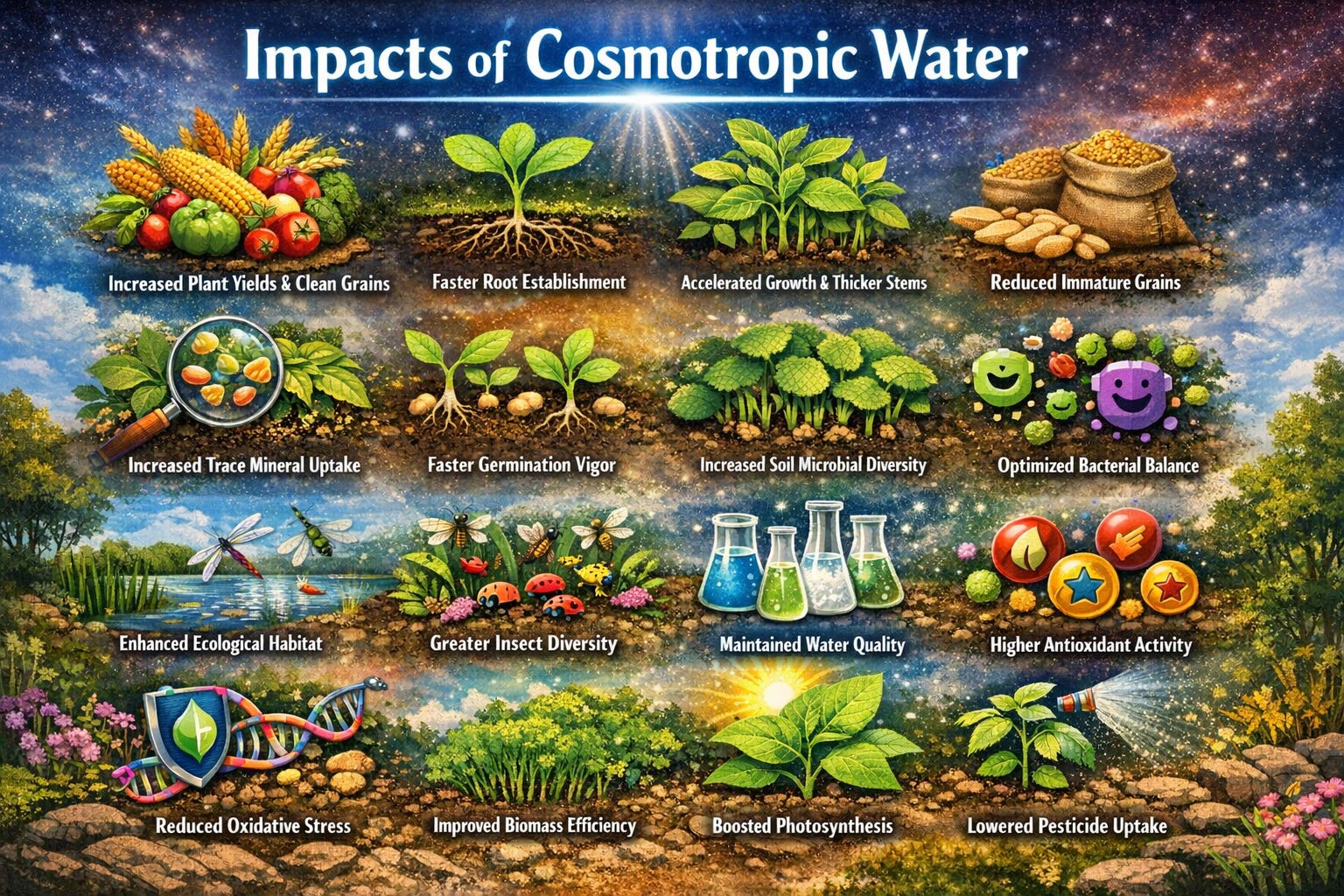
Water treated with a biotite-derived vermiculite mineral extract, a mineral composition with “multiplicative” properties, meaning the addition of small amounts acts on large volumes of water, rendering a much larger water volume in a more electrochemically ordered state, which, across six studies in varied conditions and contexts, demonstrates changes in a multi-domain agricultural impact profile as per this AI-generated image below:
2) Liquid Fish Hydrolysate Complex (Primora Nourish or equivalent)
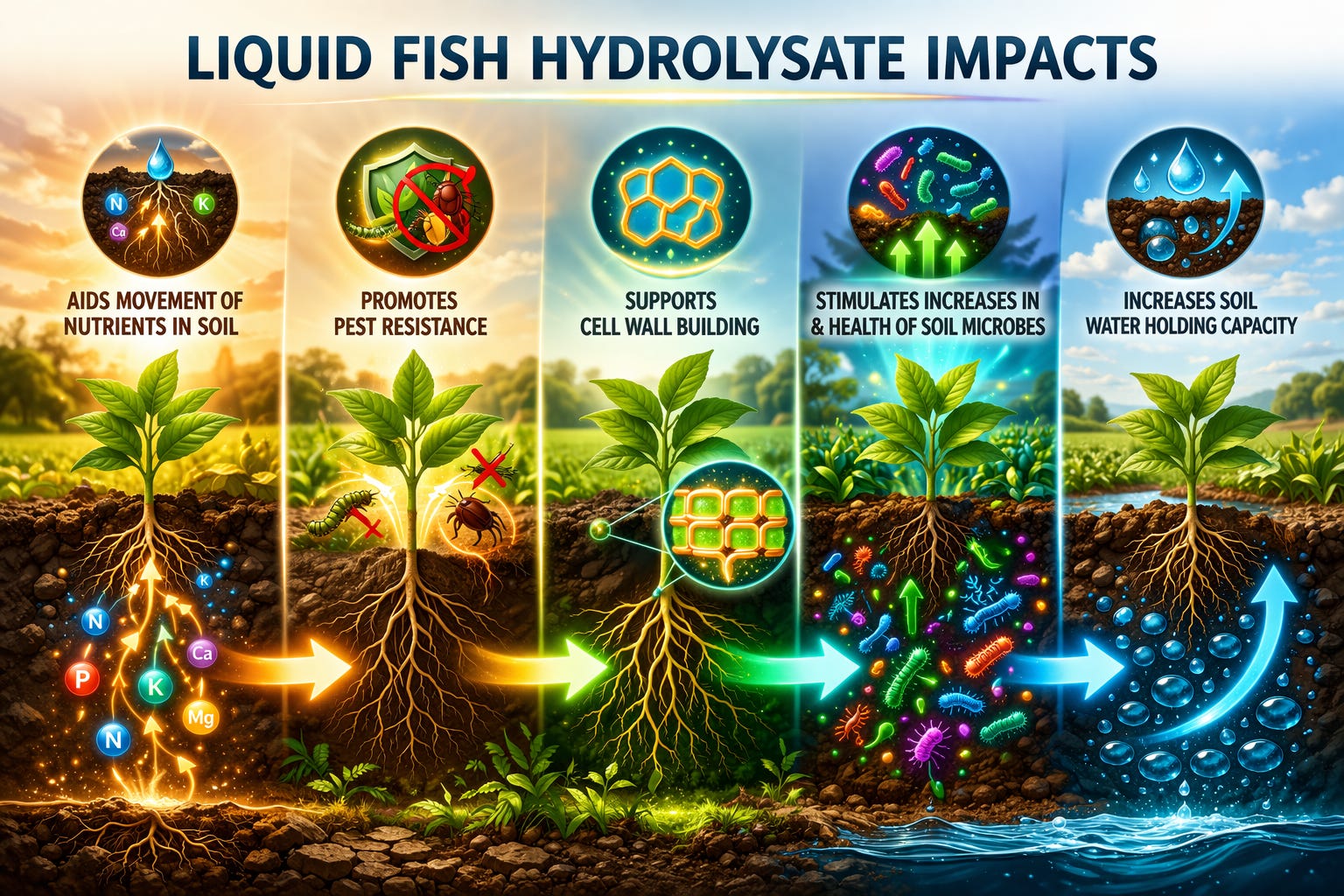
Liquid hydrolysate includes a wide range of minerals, micronutrients, amino acids, and fats which are known tot:
3) Liquid Biochar (Primora Char or equivalent, e.g. American Biochar)
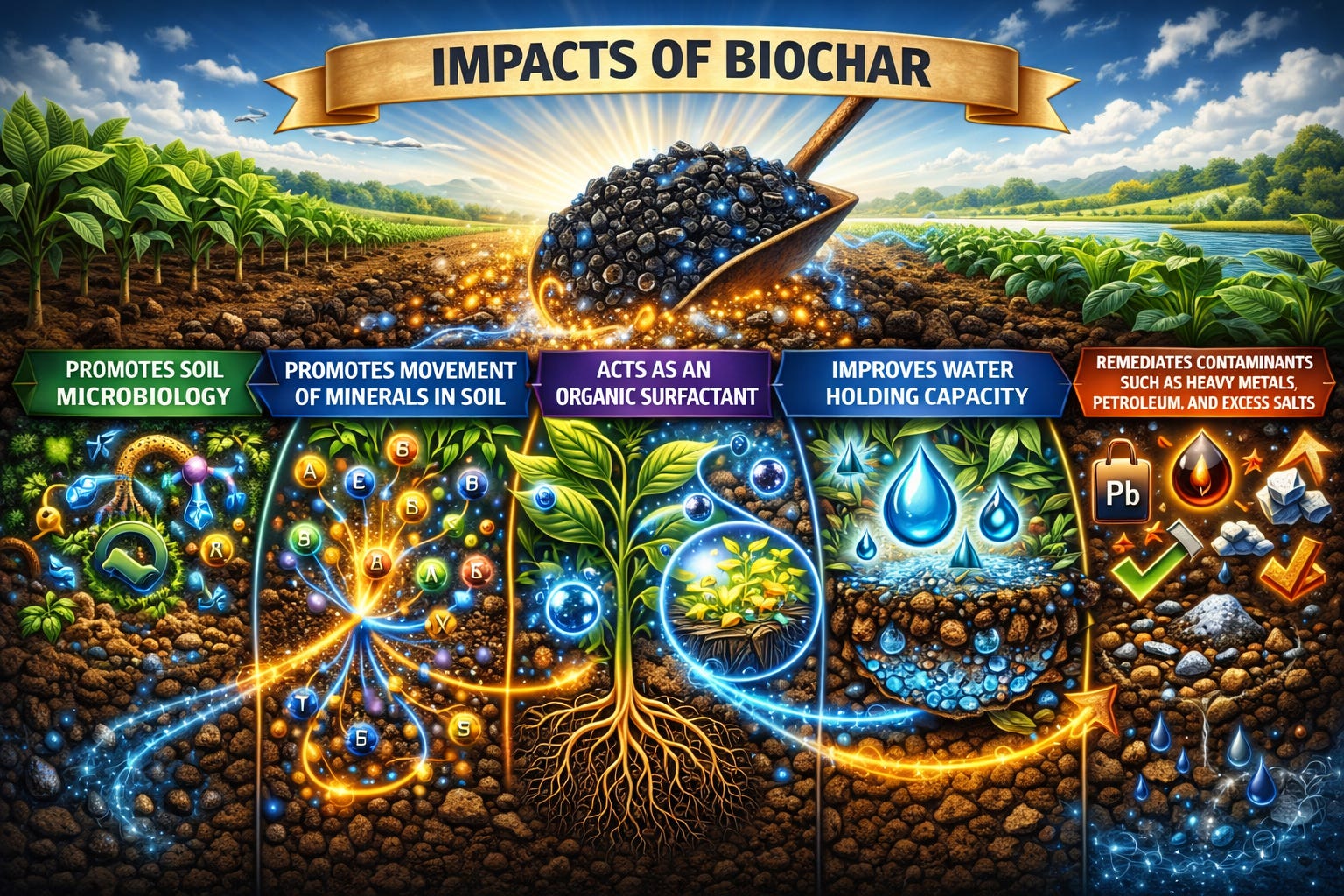
Here, we use a 5-micron-sized activated wood biochar combined with humate, a size that allows for a liquid formulation, thus enabling all three inputs to be combined in a single application with a water sprayer:
Sequence and Technique of Application
1) Beginning of Season (Pre-Planting) Combination Soil Spray - Use All Three Interventions
A) Cosmotropic Mineral Concentrate
Seasonal soil spray frequency is once every 4-5 years. Recommend doing this for first year of protocol as it won’t hurt, but, depending on starting spoil, may not be necessary.
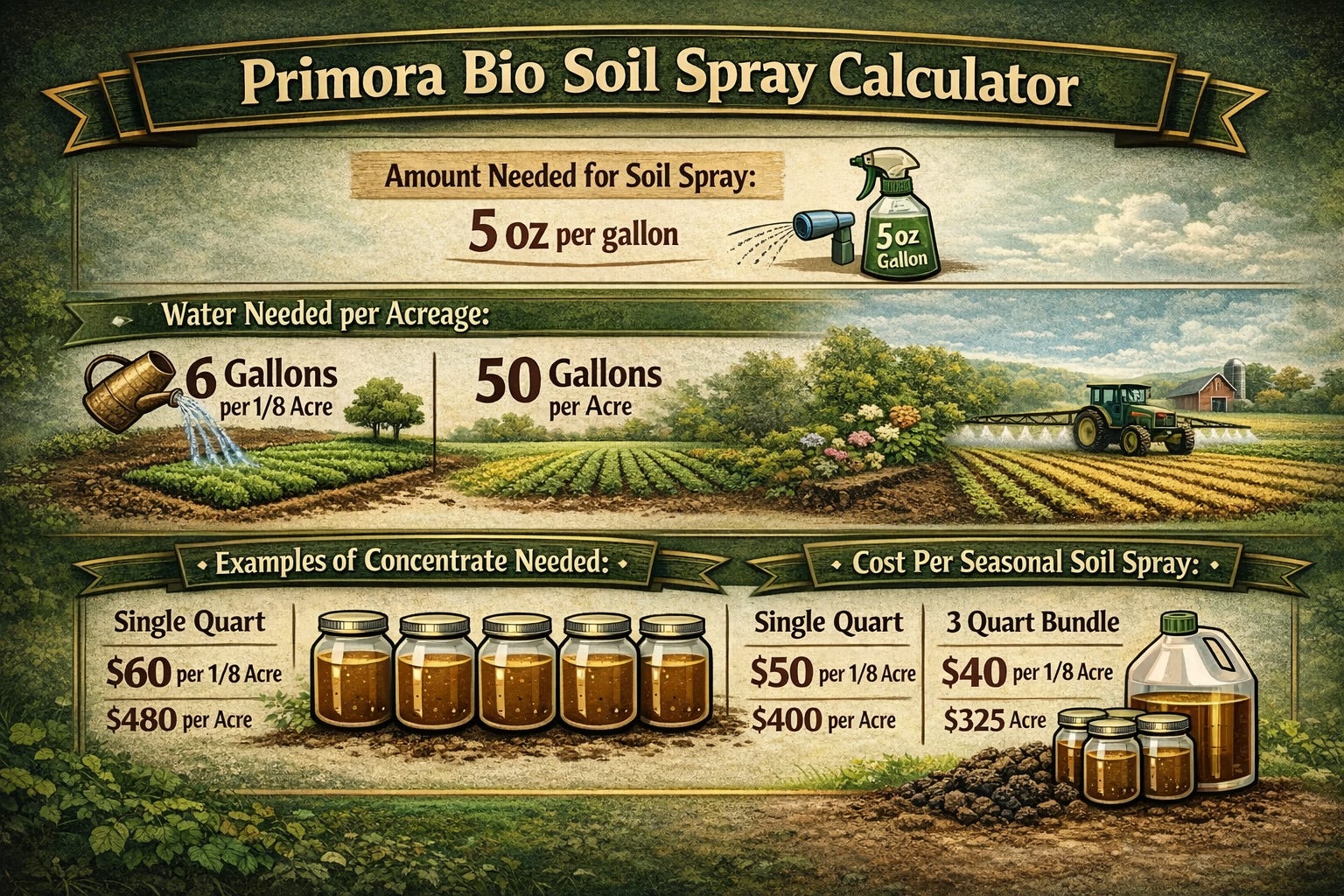
Calculate the recommended amount of Primora Bio for the volume of water estimated for the area of your plot, garden, or farm. Note: the amount needed for the seasonal soil spray is much more than used in weekly or biweekly foliar spraying.
B) Liquid Fish Hydrolysate:
Calculate the recommended amount of liquid fish hydrolysate based on the required water volume, then add it to the water and stir.
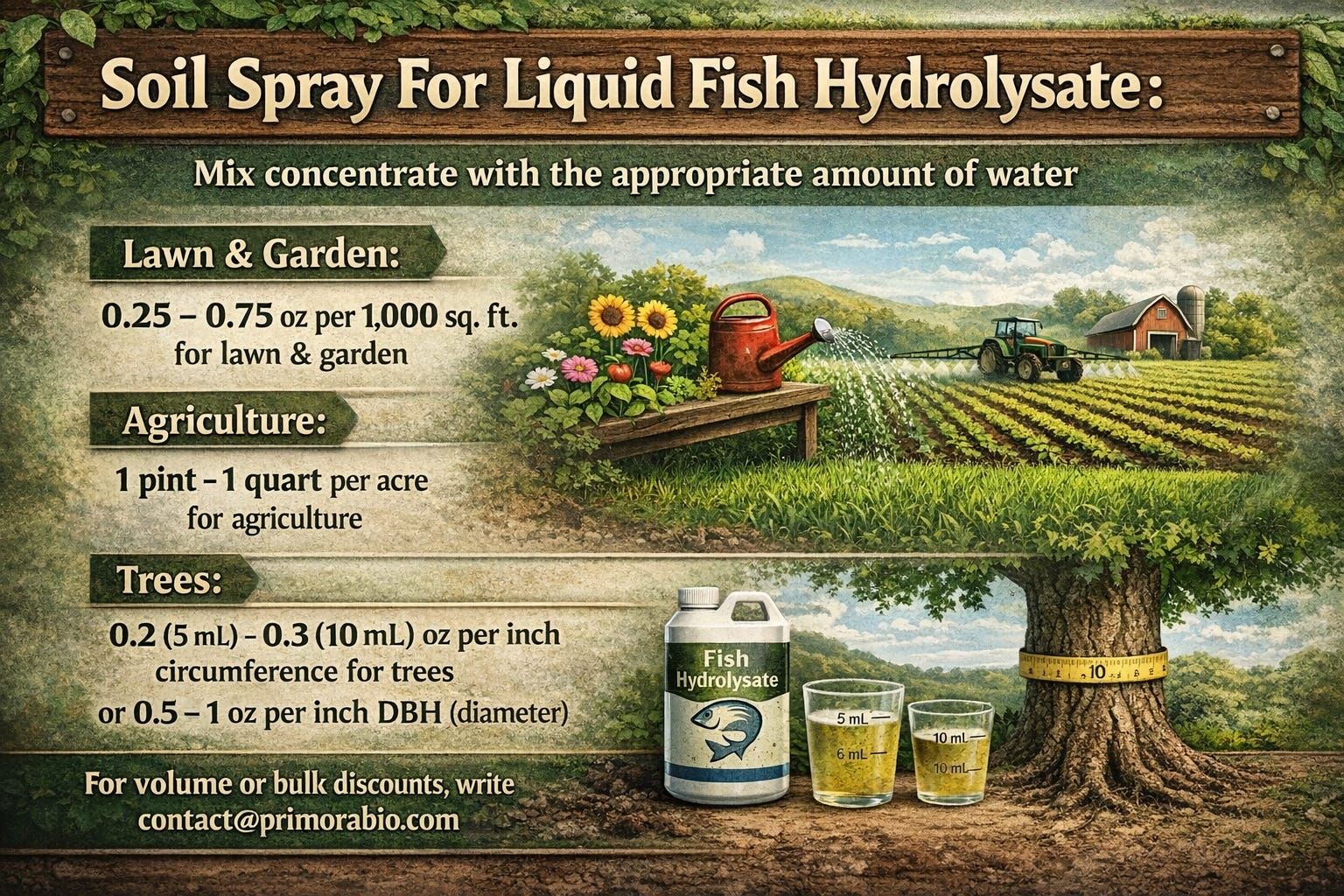
**Note: Fish hydrolysate should be done 2-4 more times this season for optimal results.
C) Liquid Biochar
Calculate the recommended amount of activated liquid biochar based on the required water volume, add it to the water, and stir.

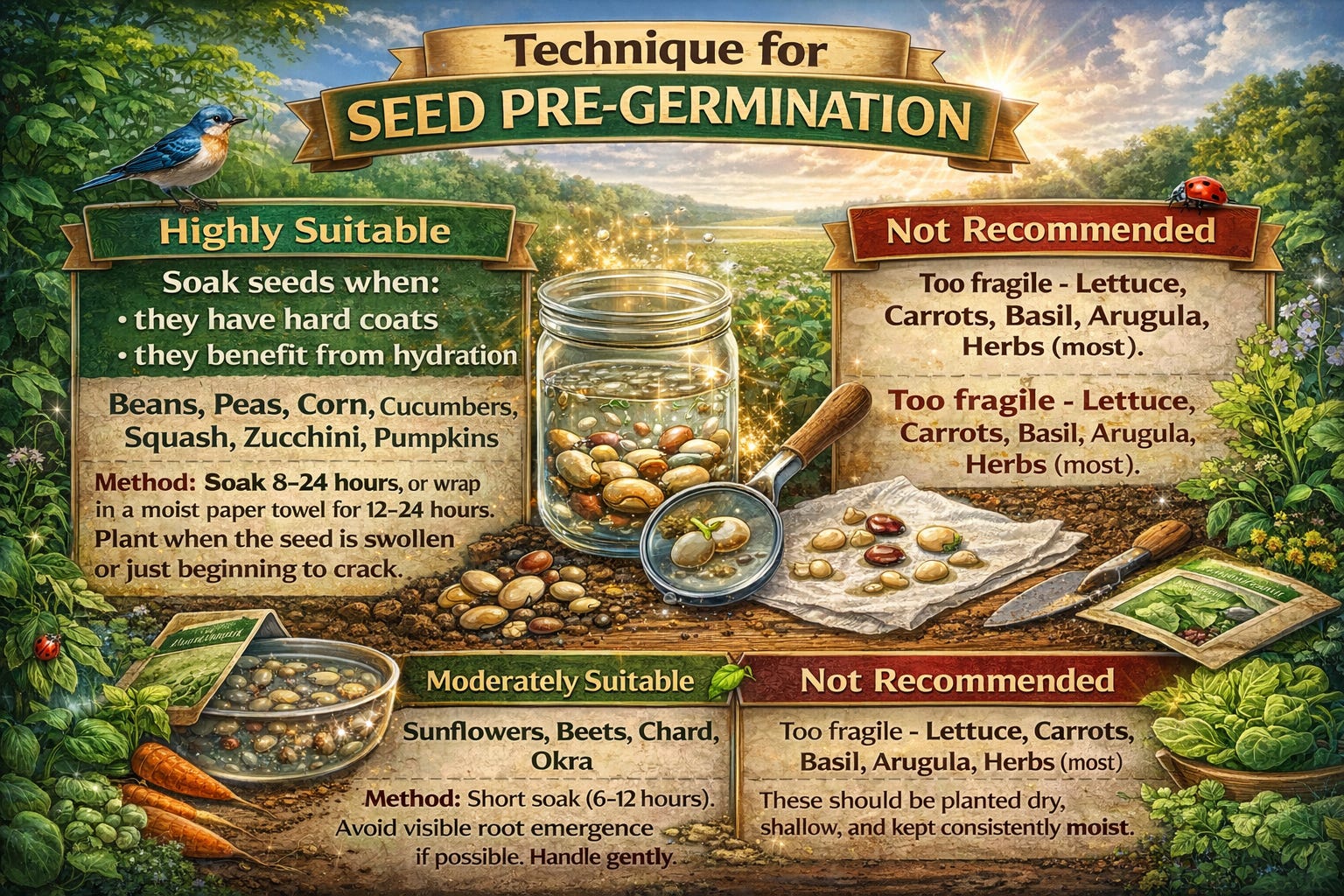
2) Pre-Germinate Seeds (apply only Primora Bio to water for the pre-germination step)
Fill bowls with Primora Bio-treated water for each seed type appropriate for pre-germination. Add seeds to bowls of treated water as follows:
3) Seed Planting
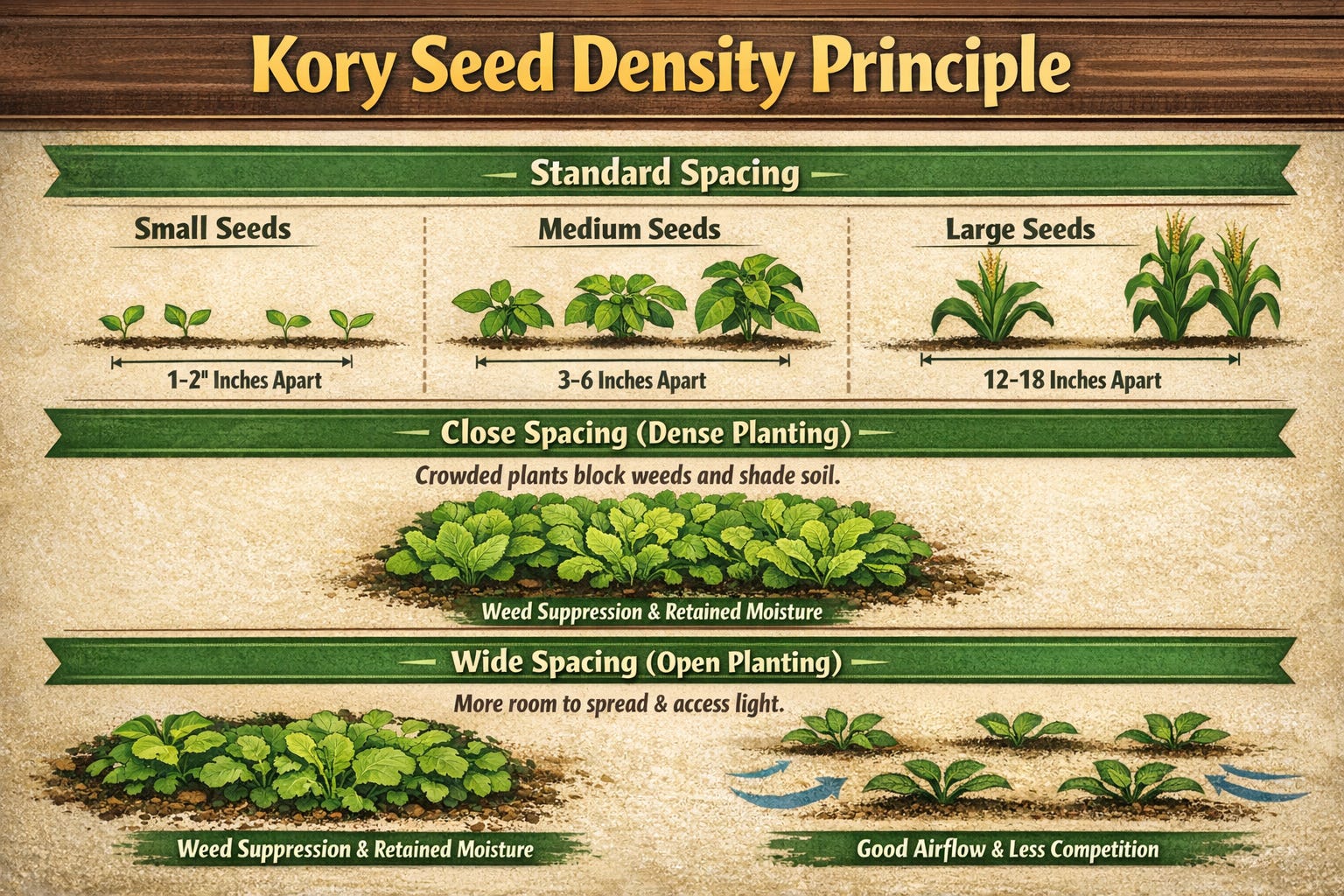
Insert seeds in soil at depths appropriate for size (depth should be 2-3 times their diameter).
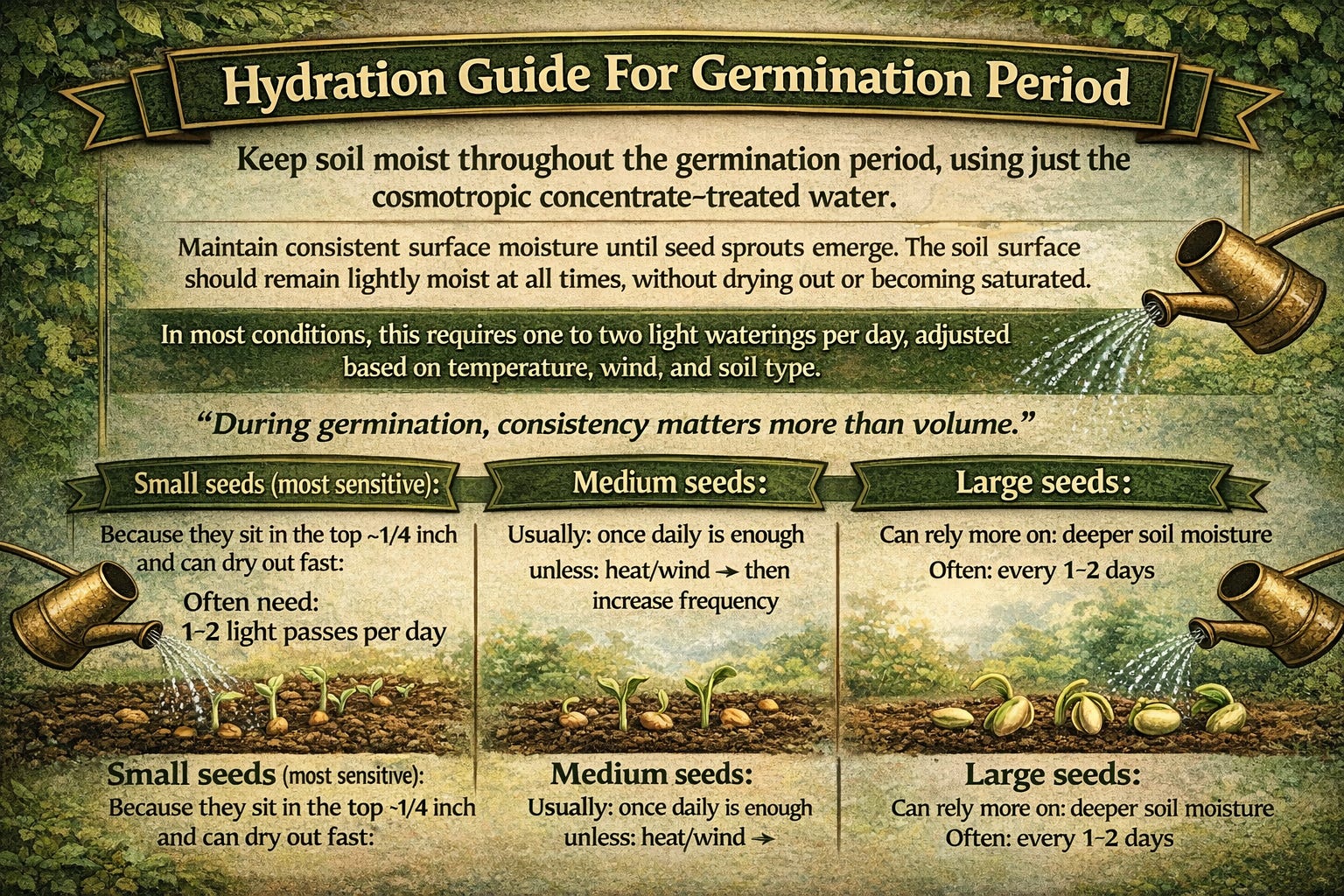
4) Hydration During Germination Period
4) Foliar Spraying With Primora Bio Every 7-14 Days


Well, folks, I hope that was helpful. To all those who have gone “all in” and purchased one or all of these agricultural interventions, I wish you the absolute best growing season possible, and we at Asao Group look forward to hearing about all the amazing results!
Primora Bio Control Trial Photo Contest
To that end, several customers have already written in about plans to treat some of their pots, gardens, greenhouses, and even orchards with the REVIVE protocol (or some variation of it), compare them to the plants they have not treated, and then share their results with us.
This is behavior we absolutely want to encourage, so this year we are holding a seasonal harvest photo contest, with which we will build "Use Case” page(s) on our website.
We invite anyone interested to take serial photos this season to compare the speed of germination, growth, size, vigor, and color of their treated vs. untreated plants, and we will use those photos for our first Annual Photo contest below.
Prizes
Anybody who submits a comparison photo of even just a single treated plant vs. a non-treated plant will receive a 50% discount on their next purchase, up to a 3-quart bundle, and the three top photo entrants will receive a one-year supply!
Please include documentation of the dates of soil spraying, planting, foliar spraying, and the date each photo was taken. Most importantly, please document what combinations of Primora Bio, Primora Char, and/or Primora Nourish that your plants were or were not treated with.
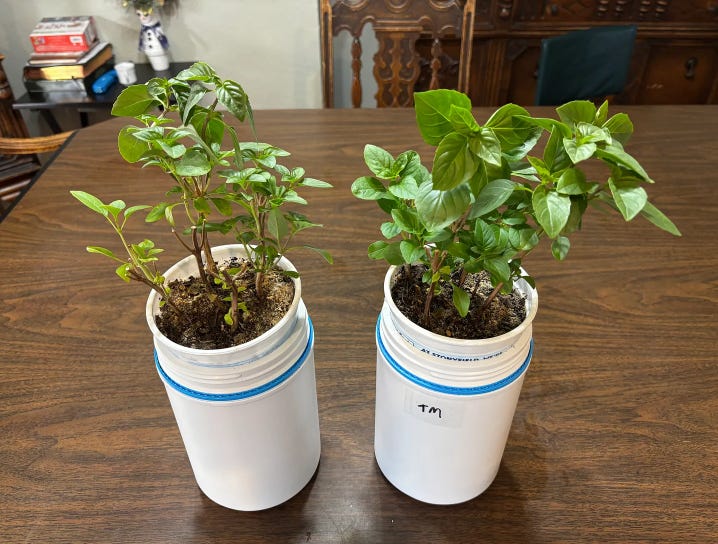
See this example from Jeff of the Curious Outlier Substack of two basil plants after 18 days, published here:
Invitation For Research Opportunities
Now, for those who want to go “all-in,” venturing beyond photos, into carefully and serially measuring “hard data” at baseline and harvest, such as soil pH, soil nutrient levels, leaf nutrient levels, biomass levels, please email contact@primorabio.com. We would be happy to discuss the possibility of subsidizing your effort with product and/or funding, depending on research experiences, capabilities, and skills.
*If you value the late nights and deep dives into all the “rabbit holes” I write about (or the Op-Eds and lectures I generate for the public), your support is greatly appreciated.
Silly Humor Section:
Check out virtual farmer Pierre working in his virtual garden this weekend:
From Research to Practice - Links Below Images
Well, Dr. Kory you haven't really changed careers. Good health starts from the ground up. You are now taking a different approach to restore people to good health and help people start a path to good health before they need your services in the ICU. We need to start cultivating a society that understands health is never going to be found at the end of a needle or in a bottle of pills. Of course they have their place because there are illnesses that are genetic and rare that no matter how well you take care of your body science needs to assist. But the majority of illness today is cause by an unhealthy lifestyle over many years. I have worked hard for the last 47 years to live healthy and at 77 I do not take as much as an aspirin. I think you are on the right track and a wide open field to really help people live healthy lives. THANK YOU
What an amazing human you are Dr. Kory. From the day you stood against the Satanic giant killing humanity to now, I can't thank you enough. May God protect you as you continue to bless humanity with your courage and ingenuity. Just wish I had more years ahead of me as this battle between good and evil continues. Want to try your products for growing a few herbs, carrots and tomatoes in my pots.